Picture this: you just landed in China. Phone in hand, stomach empty, zero idea how to pay for anything. Your Apple Pay? Many places do not accept it. Google Maps? Outdated. Uber? Does not exist.
Now imagine the other version: you spent the week before your trip downloading the right apps, linked your credit card at home, and walked off the plane like you belong. You scan a QR code for a taxi, order dumplings from a street stall with one tap, and check into your hotel without breaking a sweat.
The difference between those two versions? This list. Here are the 12 apps before traveling to China, organized not by category, but by the exact moments you will need them on Day One.
Quick overview — the 12 apps:
| Moment | Apps |
|---|---|
| Days before you leave | Alipay, WeChat Pay, eSIM app |
| Plane lands | Amap (English!), Doubao AI |
| First meal | Meituan (English interface) |
| First ride | Didi, 12306 |
| First night | WeChat (messaging), Xiaohongshu (Day 2+) |
Days Before You Leave: Sort Out Your Money & Data
Do this at home, not at the airport. You have WiFi, your passport is on the desk, and you have time to figure out verification codes. At 2 AM in a foreign airport, none of that is true.
Why this matters first: Over 1 billion people use mobile payments daily in China (Statista, 2025). Mobile payments account for over 86% of consumer transactions. Cash is nearly extinct. You can go weeks without a banknote. You cannot go one hour without a payment app.
For the full walkthrough on foreigner payment setup, our How to Pay in China guide covers every step.
Alipay (支付宝)
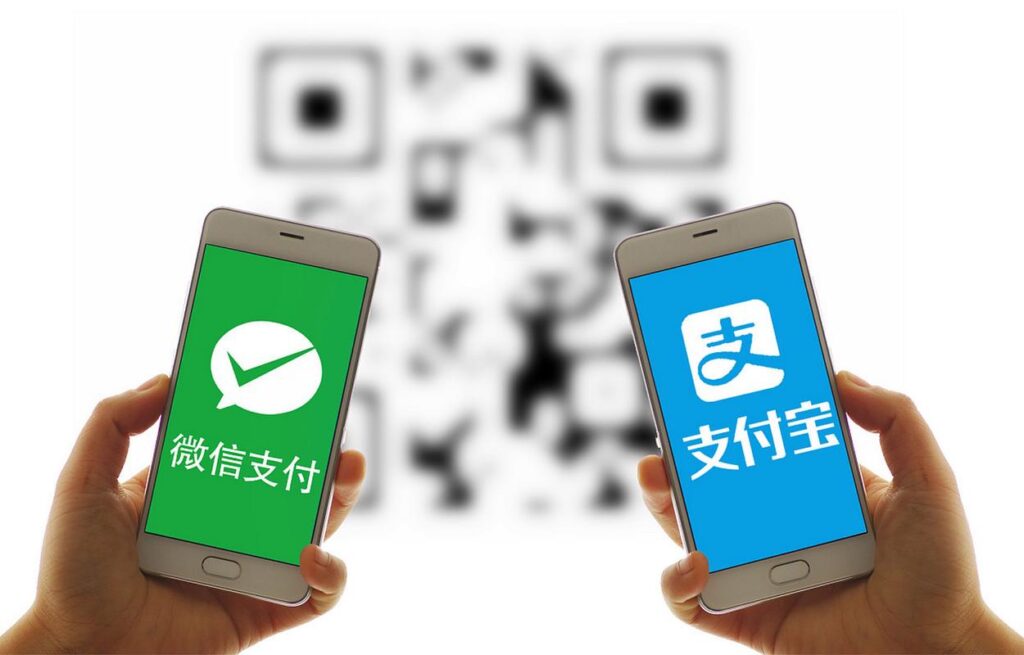
Alipay tends to be slightly easier for foreigners to set up. Download it, add your Visa or Mastercard, verify your passport — about 10 minutes of work. It also doubles as a metro pass in many cities and has built-in bike-sharing. Once approved, you can pay for almost anything by scanning a QR code — from a ¥15 bowl of noodles to a ¥500 hotel night.
Pro tip: Verification can take a few hours. Do not wait until the day before your flight — do it at least 3 days out. Test with a tiny transaction to make sure everything works.
WeChat Pay (微信支付)
WeChat Pay is the other payment giant. Some vendors only show a WeChat Pay QR code, so having both Alipay and WeChat Pay ready is non-negotiable. Download WeChat, go to Wallet, add your card, verify your passport.
Note: You will also use WeChat later for messaging, hotel check-ins, and scanning QR codes at restaurants — it is the connective tissue of daily life in China (more on that in the “First Night” section).
eSIM / Travel Data
None of the apps on this list work without internet. Order an eSIM from a provider like Airalo, Holafly, or China-specific options. Install it before departure—most activate automatically when you land.
How much data do you need? A safe estimate is 1GB per day for normal use — maps, translation, photos, and messaging add up faster than you think. If you plan to stream video or upload a lot, get more. Our China eSIM guide covers the fastest options.
Plane Lands: Get Connected, Get Oriented
Wheels touch down. Before you even leave the airport, two things need to work: internet and navigation.
Your eSIM should activate automatically. If you picked up a physical SIM at the airport, insert it now. By the time you reach baggage claim, you should be online.
Amap / Gaode Map (高德地图) — Now in English!
Google Maps is technically accessible in China, but the data is stale, locations drift, and walking directions rarely work. Amap is what locals use — real-time traffic, accurate walking routes, transit schedules, even indoor maps for shopping malls.
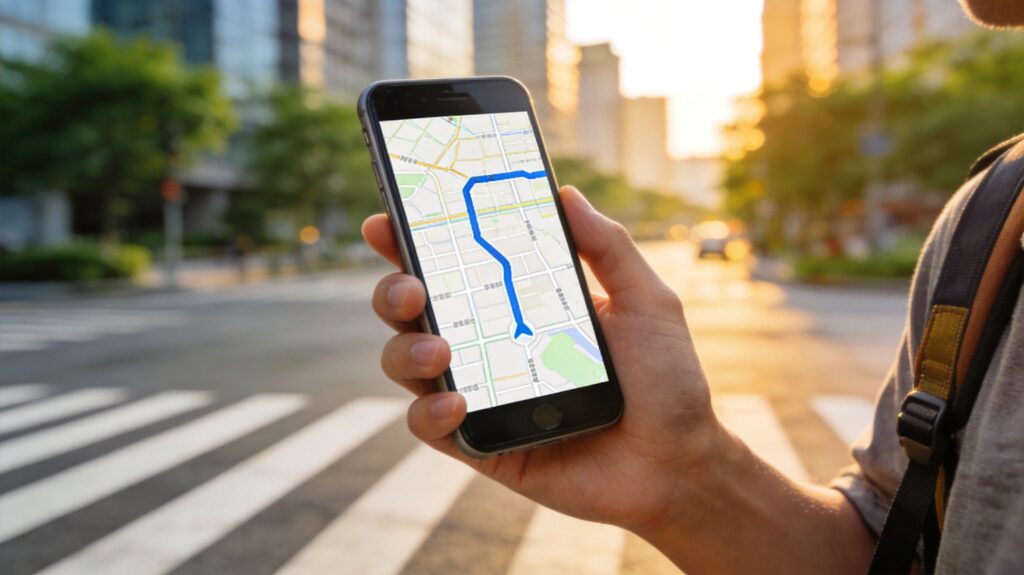
Great news (2025 update): Amap launched a full English interface in January 2025, and now supports 15 languages including Spanish, French, and Japanese. Switch it on before you fly: open the app → tap “Me” → Settings → General → Language → English. The app restarts in English, and you can search by English place name or pinyin.
By the way, if Shanghai is your first stop and you want to hit the ground walking, our Bund City Walk tour covers every highlight along the waterfront — no map-reading required.
Doubao AI (豆包)
ByteDance’s AI assistant handles Chinese translation far better than Google Translate. Snap a photo of a menu, speak a question, or type something — it translates with proper context.
Think of Doubao as your real-time language partner. Menu in all Chinese? Camera mode. Need to ask for directions? Voice mode. It will not make you fluent, but it will keep you from staring blankly at a wall of characters.
The “hack” for real conversations: Use voice mode in a back-and-forth way. Let the local speak a sentence in Chinese → Doubao translates it to English for you. Then you speak your reply in English → Doubao translates it to Chinese for them. This way, you can have an actual conversation with someone who speaks zero English — a taxi driver, a shop owner, a stranger on the street. It feels like magic the first time it works.
First Meal: Find Something Good to Eat
You are hungry. The airport food court is mediocre. Where do you find a real meal nearby?
Meituan (美团) — English Interface Built In
2026 update: Meituan now has an English interface in the standalone app. Download it from the app store, go to “我的” (My) → “设置” (Settings) → “多语言” (Multilingual) → select English. Some restaurant names and reviews remain in Chinese, but the core navigation and ordering flow work in English.
Meituan does it all: restaurant search with ratings and photos, food delivery (30 minutes or less), discounted vouchers (sometimes 20-30% off), and even hotel bookings.
How to use it: Open the Meituan app → search in English or pinyin → filter by rating or distance → order. You can also use the built-in translation tool (tap the 🌐 icon) for real-time translation of menus and reviews.
Jet lag not letting you sleep? Meituan delivers. Food, drinks, snacks, even phone chargers — it all shows up at your hotel door in 30 minutes or less.
First Ride: Get from A to B
Time to leave the airport or explore the city. Forget hailing a cab on the street — use an app.
Didi (滴滴出行)
Didi is China’s Uber, processing over 30 million rides per day (Didi Global). It has an English interface, accepts international credit cards, and works in virtually every city in the country.

Open the app, paste your destination in Chinese (grab it from Amap), confirm, and a car arrives within minutes. Express is the cheapest option. Premium is worth it for late-night rides or longer trips.
China Railway 12306 (铁路12306)
Not going by car? If you are hopping between cities, the bullet train is the way to go. The 12306 app is the official railway booking platform. Beijing to Shanghai, a 4.5-hour ride at around $80 in second class, runs dozens of times daily.

Tickets for popular routes sell out fast, especially around holidays. Book as early as you can. For a full breakdown of routes, seat classes, and booking tricks, our China High-Speed Train Guide has everything.
If you prefer the English version, Trip.com (Ctrip’s international arm) also sells train tickets with the same inventory.
First Night: Settle In, Plan Tomorrow
You made it through Day One. Now you are back at the hotel, phone charged, and thinking about tomorrow.
WeChat (微信) — More Than Just Payment
You already installed WeChat for WeChat Pay. Now discover what else it does. In China, WeChat is how you check into hotels (some send confirmation via WeChat), scan QR codes to order food at restaurants, call rides, and stay in touch with your guide or travel companions.
Your tour guide will add you on WeChat. That restaurant you found on Meituan? You might order and pay through WeChat. It is the connective tissue of daily life in China — messaging, payments, mini-programs, all in one app.
Xiaohongshu (小红书 / RED) — For Day 2+ Exploration
2026 update: Xiaohongshu now has an English interface and built-in auto-translation for posts. You no longer need external translation tools. Switch the app to English in Settings, and tap the translation button on any post to see it in your language.
It is a goldmine of real traveler experiences — hidden cafes, scenic photo spots, neighborhood walks that no guidebook mentions. Think of it as Instagram with hyper-local travel tips.
How to use it: Search in English or Chinese keywords, browse the photo-first feed, and let the auto-translation handle the rest. Many posts are also tagged in English, making discovery easier.
Spend 15 minutes scrolling for your next destination. You will find ideas that TripAdvisor would never surface. But save this for Day 2 or later — on Day 1, you just need survival.
Before You Go: The Setup Checklist
Do not wait until the airport. Here is your pre-departure action plan:
- Download all apps at least 3-5 days before your flight.
- Alipay & WeChat Pay: Link your international credit card and complete passport verification.
- Didi: Create an account and add a payment method.
- 12306 or Trip.com: Register so you can book train tickets the moment they open.
- Amap: Switch to English in Settings before you leave home.
- eSIM: Purchase and test before departure. Aim for at least 1GB per day. Check our visa and entry guide for the latest rules.
Common Mistakes That Ruin Day One
- Skipping payment setup before arrival. Without Alipay or WeChat Pay, you cannot buy a bottle of water. Period.
- Relying on Google Maps. It is unreliable in China. Use Amap (now in English!) from the start.
- No mobile data. Without internet, none of these apps work. Get an eSIM sorted before you leave home.
- Waiting until the last minute. Payment verification can take hours. Set up at least 3 days before your flight.
- Only installing one payment app. Some vendors only accept one or the other. Have both Alipay and WeChat Pay ready.
Related China Travel Guides
Apps are your toolkit. These guides fill in the rest:
- How to Pay in China as a Foreigner (2026) — 外国人如何在中国支付
- China eSIM for Tourists 2026 — 游客中国eSIM指南
- China Visa Guide 2026 — 中国签证指南
- China High-Speed Train Guide — 中国高铁指南
- Is China Safe for Tourists? (2026) — 中国对游客安全吗?
Your Trip Starts Before You Land
By the time your flight touches down, you will have payment ready, internet connected, navigation loaded, and a plan for your first meal and first ride. That is not survival — that is a head start.
If you want to go further and have a local expert plan your entire trip, our trip designers build custom itineraries around your pace. Check out our full list of tours, or start with our guides for Beijing and Shanghai.
Your China trip starts now. Not at the airport — at home, a few days before you leave.