Visa-Free Entry: You Might Already Be In
If you’re from Europe, North America, Australia, or many parts of Asia, you can enter China visa-free right now. In other words, no application, no fee, no waiting room. Simply pack your bags and go.
As of May 2026, China offers unilateral visa-free access to passport holders from 50 countries for stays up to 30 days. Specifically, this policy is currently valid through December 31, 2026. However, note that Russia’s access is valid through September 14, 2026, and Brunei’s is indefinite.
Eligible Countries
Europe (35): France, Germany, Italy, Spain, the Netherlands, Switzerland, Ireland, Hungary, Austria, Belgium, Luxembourg, Poland, Portugal, Greece, Cyprus, Slovenia, Slovakia, Norway, Finland, Denmark, Iceland, Andorra, Monaco, Liechtenstein, Bulgaria, Romania, Croatia, Montenegro, North Macedonia, Malta, Estonia, Latvia, Russia, Sweden, United Kingdom
Oceania (2): Australia, New Zealand
Americas (6): Canada, Brazil, Argentina, Chile, Peru, Uruguay
Asia (7): Brunei, Japan, South Korea, Saudi Arabia, Oman, Kuwait, Bahrain
⚠ Important for US Citizens: If you hold a US passport, you are NOT on the 30-day visa-free list. Fortunately, you still have options. First, you can use the 240-hour transit exemption if you’re flying through China to a third country. Alternatively, you can apply for an L Tourist Visa. See the sections below for details.
For the complete list of all 50+ countries, check the official National Immigration Administration website: en.nia.gov.cn
Ministry of Foreign Affairs of the People’s Republic of China — Visa-Free Policy Announcement
National Immigration Administration — Visa-Free Entry Policy Details
What You Can Do
- Purpose: Tourism, business visits, visiting friends/family, or transit
- Duration: Up to 30 days per visit
- Multiple entries: Unlimited within the validity period
- No application needed: Just show up at the border with a valid passport
Ready to plan your trip? Explore our curated Shanghai Bund Walking Tour or the popular Chengdu Panda & Hot Pot Day Trip — perfect for visa-free travelers.
What You Cannot Do
This visa-free entry does not cover:
- Working or employment in China
- Studying (student visas require separate applications)
- Journalism or media activities
- stays longer than 30 days (you’ll need a proper visa)
What It’s Like: Shanghai Entry
Here’s a real scenario. You land at Shanghai Pudong International Airport (PVG) at 3 PM on a Tuesday. Then, you hand your passport to the immigration officer. They scan it, take your photo, stamp it, and wave you through. In total, the process takes about 3 minutes. As a result, you’re now legally in China for 30 days, no visa required.
In fact, the whole process is surprisingly smooth. We’ve seen it happen countless times for friends and clients arriving here.
240-Hour Transit Visa-Free: 10 Days, No Visa Application
Even if your country isn’t on the visa-free list, you might still enter China without a visa. In fact, you only need to be passing through.
The 240-hour transit exemption is an upgrade from the older 144-hour policy. Specifically, it allows eligible travelers from 55 countries to stay in China for up to 10 days without any visa application.
Eligible Countries
The 240-hour transit exemption covers citizens from 55 countries:
Europe (40): Including France, Germany, UK, Italy, Spain, Netherlands, Switzerland, Ireland, Belgium, Luxembourg, Austria, Hungary, Poland, Portugal, Greece, Cyprus, Slovenia, Slovakia, Norway, Finland, Denmark, Iceland, Sweden, Estonia, Latvia, Lithuania, Malta, Bulgaria, Romania, Croatia, Russia, Ukraine, Belarus, and more
Americas (6): United States, Canada, Brazil, Mexico, Argentina, Chile
Oceania (2): Australia, New Zealand
Asia (7): South Korea, Japan, Singapore, Brunei, United Arab Emirates, Qatar, Indonesia
Core Requirements
- Confirmed onward ticket to a third country: You must be flying INTO China and OUT to a country that is neither your origin nor your home country. Example: USA → Shanghai → Japan ✔. But USA → Shanghai → USA ✖ (that doesn’t qualify as “third country” transit)
- Valid passport: At least 3 months validity from your arrival date
Good news for US citizens: The United States IS on the 240-hour transit exemption list! Therefore, if you’re flying from the US to another country (e.g., Japan, Thailand) with a layover in China, you can spend up to 10 days in China visa-free. However, your final destination must not be the US.
The 240-hour transit covers 65 ports of entry and 24 provincial-level regions (National Immigration Administration — 240-Hour Transit Policy). Specifically, this means you can:
- Enter through one port (e.g., Shanghai) and leave through another (e.g., Beijing)
- Travel across multiple provinces within those 10 days
Example route: Land in Shanghai → take the high-speed train to Hangzhou (1 hour) → visit Suzhou’s classical gardens (30 min by train from Shanghai) → return to Shanghai and fly out. All completely legal under the 240-hour transit policy.
Time Calculation
Your 240 hours (10 days) starts from 00:00 the day after your arrival, not from your actual arrival time. Consequently, this gives you more time than it sounds. For example, if you arrive Monday at 10 PM, your 240 hours starts Tuesday at 00:00.
Common Misconception
Wrong: “I’ll fly from New York to Shanghai, then back to New York on my return flight.”
This doesn’t qualify. You need to be transiting to a third country, not returning home.
Right: “I’ll fly from New York to Shanghai, then from Shanghai to Tokyo.”
This qualifies. New York → Shanghai → Tokyo = valid third-country transit.
Countries with Mutual Visa Exemption
In addition to unilateral visa-free policies, China has mutual visa exemption agreements with 29 countries. Under these agreements, both countries grant visa-free access to each other’s citizens.
Key Countries with Mutual Visa Exemption
| Country | Maximum Stay |
|---|---|
| Singapore | 30 days |
| Malaysia | 30 days |
| Thailand | 30 days |
| United Arab Emirates | 30 days |
| Serbia | 30 days |
| Belarus | 30 days |
| Mauritius | 60 days |
| Fiji | 30 days |
Other countries include: Albania, Bosnia and Herzegovina, Kazakhstan, Maldives, San Marino, Seychelles, Solomon Islands, Armenia, Georgia, Azerbaijan, Qatar, Antigua and Barbuda, Barbados, Bahamas, Dominica, Grenada, Ecuador, Suriname, Tonga, Uzbekistan, Samoa, and more.
Always verify current requirements with your nearest Chinese embassy, as agreements may be updated.
Tourist Visa (L Visa): When You Need One
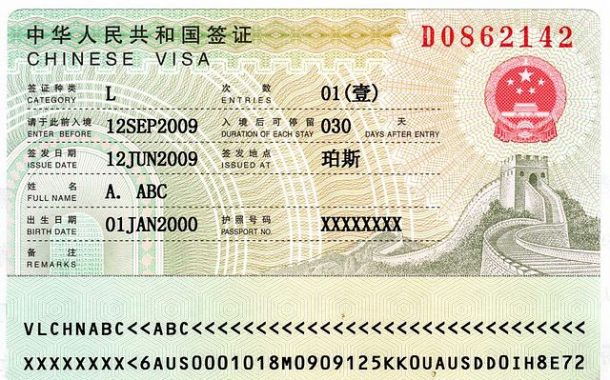
If your country isn’t on any of the lists above, you’ll need to apply for a Tourist Visa (L Visa). Additionally, this applies if you need to stay longer than 30 days or have exceeded the 10-day transit limit.
When to Apply for an L Visa
- Your country has no visa-free or transit exemption agreement with China
- You need to stay longer than the permitted visa-free period
- You’re planning activities that require a visa (e.g., extended business visits)
Types of L Visa
- Single Entry: One visit, up to 30-60 days (extendable)
- Double Entry: Two separate visits within 6 months
- Multiple Entry: Several visits within 6-12 months (for frequent travelers)
Where to Apply
The official online application portal is: consular.mfa.gov.cn/VISA/
Required Documents
- Passport: Valid for at least 6 months with at least 2 blank pages
- Photo: 48×33mm, white background, taken within 6 months
- Round-trip flight booking: Confirmed tickets (not standby)
- Hotel reservation: Or an invitation letter from a Chinese host
- Itinerary: Brief plan of your activities in China
Fees and Processing
- Visa fee: $50–$140 USD (varies by nationality and processing speed)
- Processing time: 4–7 business days (express service available for additional fee)
Please note that as of May 2026, these are general guidelines. Therefore, always check with your local Chinese embassy or consulate for the most current fees for your nationality.
Step-by-Step: How to Apply for a Tourist Visa
Step 1: Determine Your Entry Method
Before applying, first check if you even need a visa. Use the decision flowchart above:
- Is your country on the 50-country visa-free list? → Yes: No visa needed
- Is your country on the 55-country transit list? → Yes: Apply 240-hour transit exemption
- Is your country on the 29-country mutual exemption list? → Yes: No visa needed
- None of the above? → Apply for L Visa
Step 2: Complete the Online Application
Fill out Form V.1 on the official portal: consular.mfa.gov.cn/VISA/
- Answer all questions truthfully and completely
- Double-check all information before submitting
- Print the confirmation page and the application form
Step 3: Prepare Your Documents
- Valid passport (6+ months, 2 blank pages)
- Photo (48×33mm, white background, recent)
- Confirmed round-trip flight booking
- Hotel reservation or invitation letter
- Proof of financial means (sometimes required)
Step 4: Submit Application and Biometrics
- Book an appointment at your nearest Chinese embassy or consulate
- Submit documents in person
- Provide fingerprints (some applicants may be exempt)
- Pay the application fee
Step 5: Wait and Collect Your Visa
- Standard processing: 4–7 business days
- Express processing: 2–3 days (additional fee)
- Collect your passport with the visa inside
- Check that all details are correct before leaving
5 Mistakes That Get Your Visa Application Rejected
1. Photo Problems (Most Common)
Your photo must be exactly 48×33mm with a white background. Specifically, glasses, heavy shadows, or old photos are automatic rejections. So, take a new one specifically for the visa application.
2. Inconsistent Itinerary
If you enter through Shanghai but your itinerary says you’re leaving from Beijing, that’s fine for most visas. However, for the 240-hour transit, make sure your onward flight is to a third country (not your home country).
3. Unconfirmed Return Flight
You need a confirmed ticket, not a booking hold or standby. Flight itineraries showing “pending” or “on hold” are not accepted.
4. Passport Validity Issues
Your passport must be valid for at least 6 months from your planned entry date. Otherwise, if it expires in 5 months, you need to renew first.
5. Applying from the Wrong Country
You must apply at a Chinese embassy or consulate in your country of citizenship. However, if you’re living abroad but hold a different country’s passport, you may need additional proof of legal residency.
Frequently Asked Questions
Can I extend my 30-day visa-free stay?
Generally, no. However, in genuine emergencies only (medical issues, natural disasters, etc.), you can apply for an extension at the local Entry-Exit Administration Bureau. Extensions are not guaranteed. Therefore, plan your stay within the allowed period.
What if my 240-hour transit flight gets delayed?
If your outbound flight is delayed and you might exceed 240 hours, contact Chinese immigration immediately at the port of entry. They may grant a short extension, but don’t count on it. Instead, always build buffer time into your connection.
Do I need a visa for Hong Kong or Macau?
No. Hong Kong and Macau have separate immigration policies from mainland China. Most nationalities can visit Hong Kong visa-free for 7–180 days and Macau visa-free for 30 days, regardless of your China visa status.
Can I enter from Shanghai and leave from Beijing on 240-hour transit?
Yes! Different ports of entry and exit are perfectly fine. You can enter through Shanghai and fly out from Beijing, or enter through Guangzhou and leave from Hangzhou. The policy allows travel across 24 provincial-level regions.
How early should I apply for a tourist visa?
We recommend applying at least 2 months before your planned departure. This way, you’ll have enough time to fix any issues, handle processing delays, and make travel arrangements without stress.
For more China travel tips and curated experiences, visit IntoChinaTrip. If you’re wondering about safety in China, see our guide: Is China Safe for Tourists?
Last updated: May 2026. Visa policies change frequently. Always verify current requirements with your nearest Chinese embassy.
Ministry of Foreign Affairs — Official Visa Application Portal
National Immigration Administration of PRC — Entry-Exit Policies