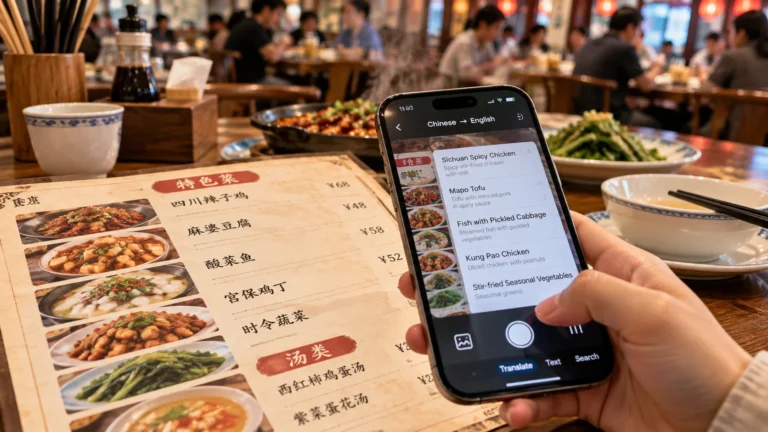
I am a Chinese woman who has lived in China my whole life. I take the subway alone at 10 PM. I walk home from dinner with my phone in one hand and milk tea in the other. I cannot remember the last time I saw a pickpocket, or felt nervous on a dark street. When friends abroad ask me about solo female travel in China, I tell them this: it is one of the easiest places in the world to travel alone as a woman, as long as you know a few things.
This is not a guidebook answer. It is what I actually tell my friends before they visit, based on how daily life works here. I will cover why theft has become rare, what the cameras really mean, where scams actually happen, how to avoid being overcharged, and the small tricks that make everything smoother.
No Wallet, No Cash, No Pickpockets: How Mobile Payments Changed Everything
The biggest change over the past ten years is that China went almost completely cashless. I pay for everything with my phone — breakfast at a street stall, subway tickets, a bottle of water, even a bunch of scallions at the wet market. I rarely carry a wallet, and I almost never carry cash.
This matters for safety more than you might expect. If nobody carries cash, there is not much for a pickpocket to steal. Most people hold their phones in their hands all day, which is also the hardest place to steal from. I genuinely cannot remember the last time I heard someone around me get pickpocketed. It has been years.
That said, it would be dishonest to say theft has disappeared completely. In very crowded places — train stations during holidays, packed subway cars at rush hour, popular night markets on weekends — you should still keep your bag zipped and your phone in your front pocket. The risk is low, but not zero, and basic awareness costs nothing.
For your trip, set up Alipay and link a foreign Visa or Mastercard before you land. You can pay with it almost everywhere. We wrote a step-by-step guide to paying in China if you want the full setup walkthrough.
Cameras, Lit Streets, and Why Women Here Walk Home Alone
Yes, China has a lot of surveillance cameras. Foreign media sometimes frames this as something sinister. From the perspective of a woman walking home at night, the reality is more straightforward: cameras make me feel safer, because they mean that if anything did happen, there is a record, and that fact alone discourages people from doing something stupid.

The numbers back up the feeling. China has an intentional homicide rate of 0.5 per 100,000 people, compared to 6.3 in the US and a global average of 5.2 (source: UNODC via World Bank). The Gallup 2025 Global Safety Report ranked China 3rd worldwide in residents feeling safe walking alone at night, with 94% saying they would do so. In Numbeo’s 2026 safety index, China scores 84 out of 100.
What this feels like in daily life: at 11 PM in Shanghai, Chengdu, or Hangzhou, streets are still full of people eating, walking dogs, jogging along the river, and queuing for late-night snacks. The lighting is good. In smaller cities it is quieter, but I have never felt uneasy. My female friends and I all travel alone, walk alone, and come home alone late. It is simply normal.
The one thing I will say: prefer busy, well-lit main roads over empty side streets at night, not because danger is likely, but because there is no reason to test it. This is the same advice I would give anywhere.
Where You Actually Meet Scammers: Jade Shops, Tea Shops, and Cheap Tours
Here is the part most safety articles get wrong. You are unlikely to be robbed, mugged, or harassed in China. But you can absolutely end up in a shop being pressured to buy something that is worth a fraction of the price. This is the most common “scam” travelers encounter, and it follows a predictable pattern.
The Jade, Tea, and Specialty Shop Setup
Certain shops — jade stores, traditional tea shops, “Chinese medicine” boutiques, local specialty stores — sell products at wildly inflated prices to tourists. A jade bracelet might be priced at ¥8,000 when its actual value is a few hundred. A “rare aged tea” cake turns out to be ordinary tea in fancy packaging.
You usually encounter these places in one of two ways: a taxi driver or guide “recommends” a shop and gets a commission, or you booked a very cheap tour that is subsidized by forced shopping stops. The shop staff are polite, the environment looks legitimate, and the pressure is social rather than violent — but you can easily walk out having spent money on something worthless.
How to protect yourself:
- Be wary of tours priced far below what transport and tickets alone would cost. If a one-day tour is ¥49 including lunch and tickets, the operator is making money somewhere, usually through shops.
- If a guide or driver strongly recommends a specific jade, tea, or medicine shop, treat it as a sales pitch, not local advice.
- You are allowed to say no and leave. Polite refusal works. Nobody can physically force you to buy.
- If you actually want to buy tea or jade, buy from ordinary shops where local people are shopping, not from places attached to tourist parking lots.
- The best defense is to avoid cheap group tours altogether. If you want a guide, choose something like IntoChinaTrip, which runs fully private, no-shopping tours — you pay a fair price upfront and nobody is getting commission from a jade counter.
The tea ceremony scam some guides mention — where a stranger invites you in and a huge bill appears — is rarer than the shop-pressure pattern, but the rule is the same: do not follow strangers into establishments in tourist areas.
Unlicensed Taxis and Fake Prices: Let the App Handle It
The second issue travelers run into is overcharging by unlicensed or dishonest drivers, especially outside train stations and airports in smaller cities. Someone quotes you a price that is 3 or 4 times the real fare, or a taxi claims the meter is broken.
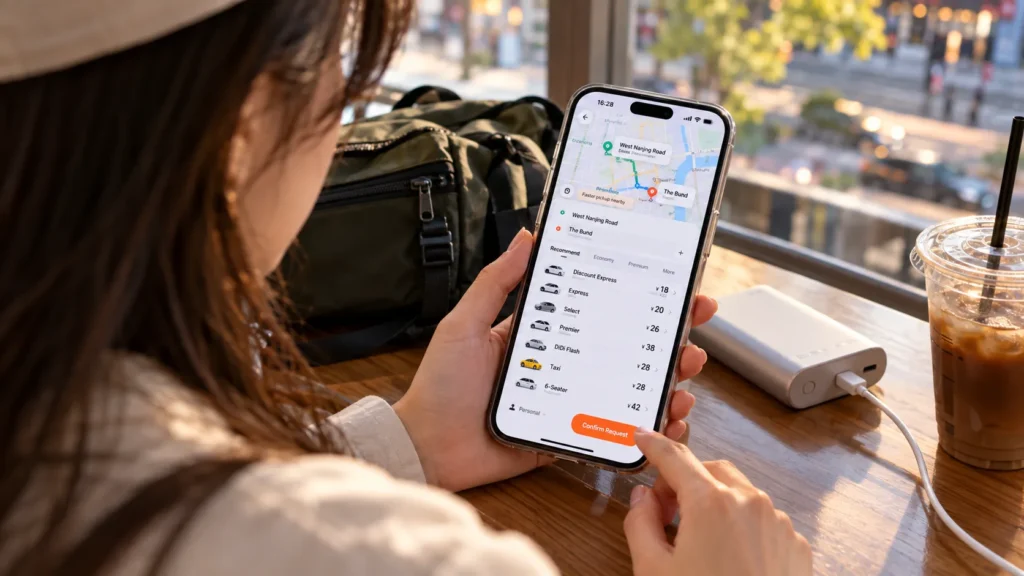
The fix is genuinely simple: do not negotiate with street hawkers. Use a ride-hailing app instead.
- DiDi is the main one. It shows the fixed price before you book, tracks the route, and registers every driver. For women traveling alone, it also has an emergency button that shares your live trip location with an emergency contact.
- Amap (Gaode) is primarily a maps app but also lets you call a car, and it is useful for checking roughly what a journey should cost.
Both apps have English interfaces and accept foreign cards through Alipay. Once you use them, the “fake taxi price” problem basically disappears. If you are in a place where apps do not work well, ask your hotel or restaurant to call a car for you and confirm the price upfront.
For getting between cities, China’s high-speed trains are punctual, clean, and extremely safe for solo women. Our high-speed train guide explains how to book with a passport and navigate stations.
“Seeing Who You Are”: Foreigner Pricing and How to Avoid It
This one is subtle. A small number of vendors — usually at markets, stalls, and small shops without marked prices — quote different numbers depending on who is asking. Locals pay one price; a foreign visitor who does not know the market gets a higher one. It is rarely aggressive. It is mostly a quiet assumption that you will not know the real value.
This is not unique to China, but there are easy ways around it:
- Compare three places before buying. If the first vendor quotes ¥300 for something and the identical item is ¥80 two stalls away, you have your answer.
- Look for marked, fixed-price shops. Supermarkets, chain stores, and most proper shops display prices. Bargaining is really only expected at open street markets.
- Ask a Chinese person to help ask the price. This is the single most effective trick. Hotel staff, a guide, even a young person nearby will usually help if you explain politely. Shopkeepers drop the “visitor price” immediately once a local is involved.
- Learn a few numbers in Chinese. Being able to understand “yi bai” (100) or “wu shi” (50) removes most of the information gap.
Chinese people are generally curious and willing to help foreigners. Asking for a hand with pricing is not an imposition. Most people find it amusing and are glad to step in.
What Makes Traveling Here Easy: Apps, Trains, and Friendly People
Beyond safety, China is simply a convenient country to travel solo once you have the basics set up. The subway systems in major cities are clean, signed in English, and cheap. High-speed trains connect almost every destination. Signs and announcements at tourist sites routinely include English. Translate apps handle menus and signs through your camera.

Before you fly, I recommend setting up these four things:
- Alipay linked to your foreign card, for payments everywhere.
- DiDi for safe, fixed-price rides.
- Amap for accurate navigation, since Google Maps is unreliable in China.
- A translation app such as Pleco or the translate function inside Alipay.
Buying an eSIM before arrival means data works the moment you land. Our apps and eSIM survival guide walks through all of it. If you would rather have your first day organized, a short local walk — such as this Shanghai Bund walking tour — is an easy way to learn the city from someone who actually lives here.
A Few Honest Tips From Local Women
- Keep your phone charged and on you. In China, your phone is your wallet, map, translator, and emergency line all at once. A power bank is worth carrying.
- Carry your passport. Hotels need it for check-in, and it is the ID police recognize. Keep a photo of it on your phone as backup.
- Staring is usually curiosity. Outside big tourist cities, people may look at you or want a photo. A smile and a shake of the head is enough. It is not hostility.
- Trust your instincts. If a shop, a guide, or a situation feels off, walk away. You do not owe anyone your time or money.
- Share your live location with someone back home when traveling between cities or heading somewhere remote.
- Learn three phrases. “Duoshao qian?” (how much?), “Tai gui le” (too expensive), and “Bu yao, xiexie” (no, thank you). They carry surprising power.
Frequently Asked Questions
Is China safe for solo female travelers in 2026?
Yes. Violent crime is rare — the homicide rate is 0.5 per 100,000 — and 94% of residents in China say they feel safe walking alone at night, per Gallup. The main things to watch for are overpriced shops linked to cheap tours and occasional overcharging, not violence.
Do women really walk alone late at night?
In major cities, routinely. Streets stay busy and well-lit, cameras are widespread, and the subway and ride apps run late. I would still choose main roads over empty alleys, as in any country.
Will I face catcalling or street harassment?
It is very uncommon. People may stare out of curiosity, especially in smaller places, but verbal harassment of the kind common in some Western cities is rare.
How do I avoid being overcharged?
Compare prices, prefer fixed-price shops, use DiDi instead of negotiating with street drivers, and ask a local person — hotel staff or even a passerby — to help you ask the price.
Are cheap package tours safe to book?
They are usually not dangerous, but the very cheapest ones make money through forced stops at jade, tea, or medicine shops. If the price seems too low to cover transport and tickets, assume shopping is involved.
What should I do if I get lost or need help?
Show your destination in Chinese on Amap, ask a hotel or shop to call you a car, or find a police post. Officers in tourist areas generally deal with foreigners, and many people around you will volunteer to help.
One more thing worth mentioning: China has a well-established emergency number system. Dial 110 for police and 120 for ambulance. Both are free from any phone, including without a SIM card. Many operators in tourist areas have English-speaking staff, or you can simply hand your phone to a nearby local who can translate for you.
Another practical detail: most hotels in China require foreigners to register at check-in. This is not a hassle — it is a legal requirement for the hotel, not a problem for you. Just hand over your passport and it takes about two minutes. If a small guesthouse says they cannot accept foreigners, it is usually because they do not have the registration system set up, not because you are not welcome. Stick to hotels with clear foreigner-friendly policies and you will not run into this.
My Honest Bottom Line
I genuinely think China is one of the best countries for solo women to travel. You can move around at night without fear, pay for everything with one device, rely on excellent trains, and count on strangers helping you when you look lost. The risks that do exist — inflated shop prices, the odd dishonest driver, being quoted a “visitor rate” — are annoying rather than dangerous, and all of them are easy to manage with a bit of local knowledge.
Travel openly and warmly, but keep your wits about you the same way you would at home. That is really all it takes.
If you would like help planning a route designed around solo travel, we can put together a private itinerary at your pace with English-speaking local guides. Tell us where you want to go, and we will handle the details.