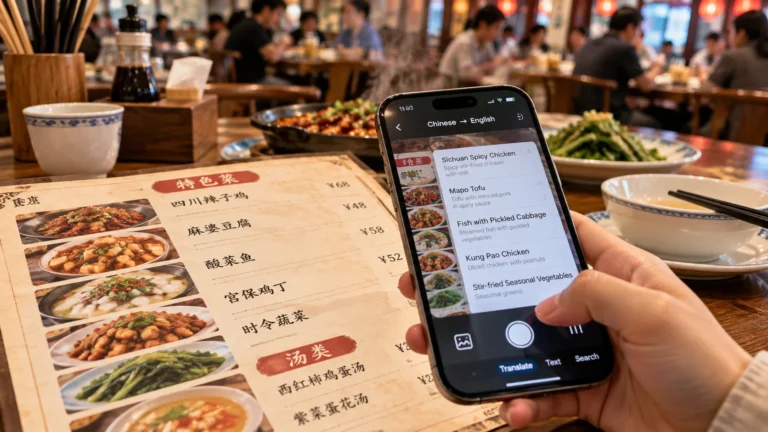
If you have spent any time on TikTok or Instagram lately, you have probably seen the word chinamaxxing. It is the latest travel buzzword coming out of China, and it is not just another hashtag. In short, chinamaxxing means living like a local in China to the fullest degree. Not just visiting the Great Wall and snapping a photo. Not just checking off a list of temples either. Instead, it means drinking hot water at a neighborhood tea house, doing morning exercises with grandpas in a park, riding a bullet train to a random small town, and buying fresh dumplings from a street vendor who does not speak a word of English.
The term exploded on social media in 2026. In fact, related tags have crossed 4 billion views on overseas platforms, according to a report by Xinhua News Agency in October 2026. The trend grew out of the earlier “China Travel” wave, when visa-free policies first brought a flood of curious foreigners to Chinese cities. But chinamaxxing goes several steps further. Rather than sightseeing, it is about immersion. As a result, you stop being a tourist and start living a Chinese routine, even if just for a few days.
Why is this happening now? The answer is simple: access. First, China now offers visa-free entry to citizens of 50 countries, and the 240-hour transit visa covers 60 ports across the country. Second, foreign card payments now work on Alipay and WeChat Pay. Third, high-speed trains connect almost every major city. As a result, the barriers that once made China feel hard to visit have largely come down. What remains is an entire country of everyday experiences waiting to be discovered.
[Image: A foreign traveler joins local residents for morning tai chi in a Shanghai park at sunrise]
Why Chinamaxxing Is Taking Off
The numbers tell the story. In the first eight months of 2026, 23.72 million foreigners entered China under visa-free policies. Specifically, that is a 26.8 percent increase year on year, per China National Immigration Administration data reported by Xinhua. Meanwhile, the average stay has grown to 5.1 days, up 11 percent from the previous year. In other words, travelers are not just passing through anymore. Instead, they are staying longer and going deeper.
What they find when they stay longer surprises most of them. For starters, China is one of the safest countries in the world for solo travelers. Also, public transport is fast, cheap, and clean. On top of that, the food is incredible and costs a fraction of Europe or North America. But perhaps the biggest draw is this: daily life in China is genuinely interesting. From robotic food delivery to cashless payments to ancient morning markets, the ordinary becomes extraordinary when you see it for the first time.
Beijing Second Foreign Studies University professor Wu Liyun explained the shift this way. Early trends like “looksmaxxing” and “sleepmaxxing” focused on the self. In contrast, chinamaxxing redirects that energy outward, toward a whole culture. “It is especially something to be proud of,” she told reporters, as quoted by China News Service in September 2026. Ultimately, the real China turns out to be very different from the one many foreigners grew up reading about.
The Visa and Entry Setup
Before you can chinamaxx, you need to get into the country. Fortunately, the good news is that it has never been easier. Here is a quick overview of your options:
- Visa-free entry: First, citizens of 50 countries can enter China without a visa for stays up to 30 days. Check the official China National Immigration Administration website for the full list of eligible nationalities.
- 240-hour transit visa: Also, if you are transiting through China to a third country, you can stay up to 240 hours (10 days) without a visa. This covers 60 ports including Shanghai, Beijing, Guangzhou, Chengdu, Xi an, and many smaller cities.
- Hainan 30-day visa-free: In addition, Hainan island has its own visa-free policy covering 61 countries. If your trip includes Hainan, this is a separate and very generous option.
- Standard tourist visa (L visa): Finally, if your country is not on the visa-free list, the L visa application is straightforward. You will need a passport, a completed form, a photo, and proof of hotel booking or an invitation letter.
One tip: always keep your passport with you. For instance, many hotels, train stations, and attractions require passport scanning for entry. It is not a sign of suspicion. Rather, it is just how the system works.
How to Pay Without Cash
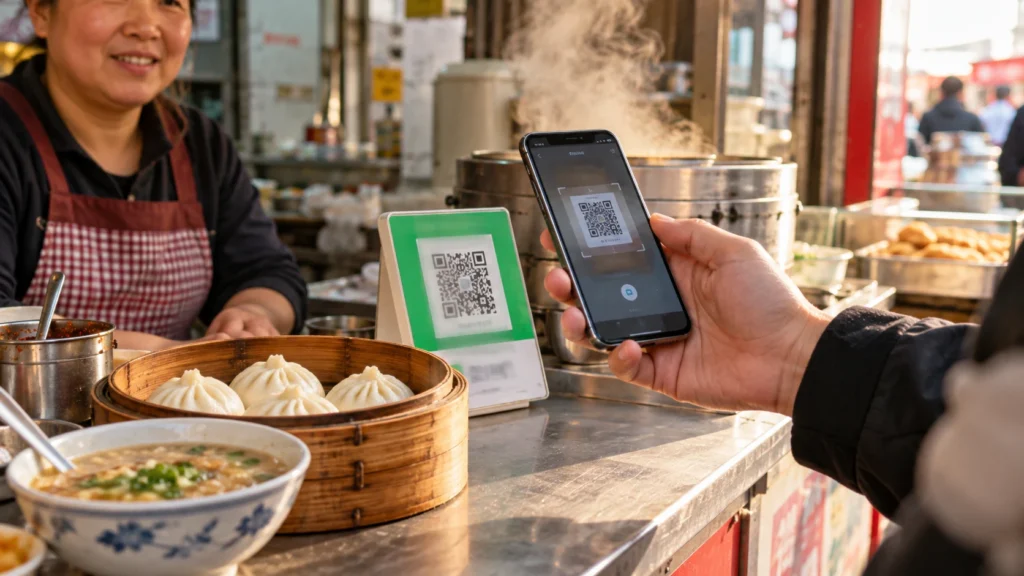
China is almost entirely cashless. For example, street vendors, taxis, museums, and even temple donation boxes accept mobile payments. If you arrive without a payment setup, you will struggle to buy a bottle of water. So here is how to get set up on day one:
- Download Alipay or WeChat. First, both apps now support international credit cards (Visa, Mastercard, JCB). Alipay is slightly easier for foreigners to register.
- Link your foreign card. Next, in Alipay, go to Me > Bank Cards > Add Card, and enter your card details. There is a small transaction fee (around 3 percent) for payments over 200 yuan, but payments under 200 yuan are free.
- Verify your identity. Then, you will need to upload a photo of your passport and do a face scan. Approval usually takes a few hours to one business day.
- Start small. Finally, your first payment might feel nerve-wracking. So buy a coffee or a snack. Once you see it works, the rest is easy.
Still, if mobile payments feel uncomfortable, most major hotels and larger stores accept international credit cards directly. But for the full chinamaxxing experience, mobile payment is the way to go.
Getting Around: Trains, Bikes, and Walking
China has the largest high-speed rail network in the world, with over 45,000 kilometers of track. For example, a train from Shanghai to Beijing covers 1,318 kilometers in about 4.5 hours. In fact, that is faster than most domestic flights. Booking trains is also easy through the official 12306 app, which has an English interface and accepts foreign credit cards. Alternatively, you can book through Trip.com for a small service fee.
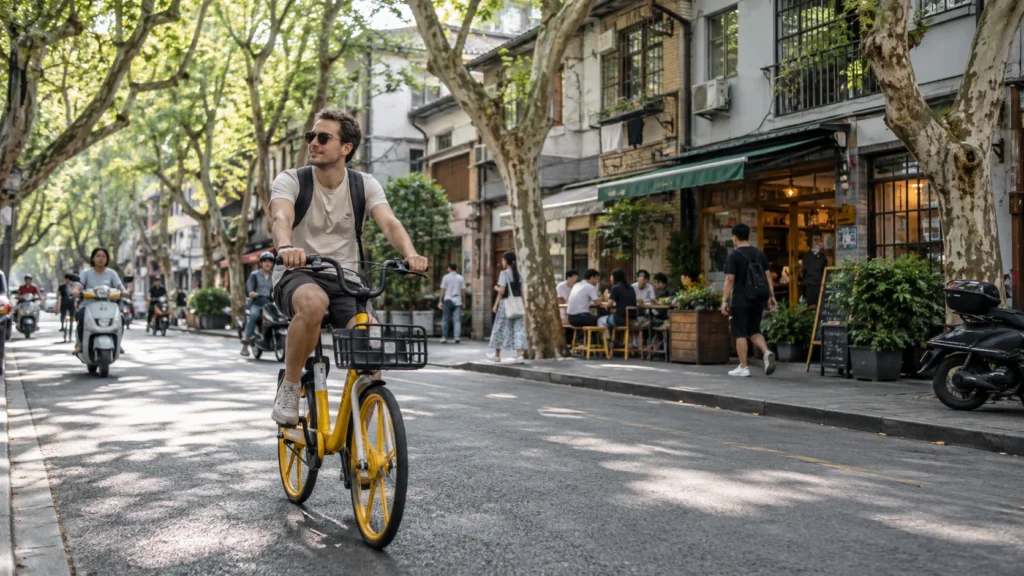
For shorter distances, shared bikes are everywhere. Simply scan a QR code on a Hello Bike or Meituan bike, and you ride for about 1.5 yuan per 30 minutes. Without a doubt, it is the best way to explore at your own pace. Many cities also have excellent metro systems. For instance, Shanghai Metro has 20 lines covering the entire city, while Chongqing has a monorail that literally passes through residential buildings. That alone is a favorite chinamaxxing moment.
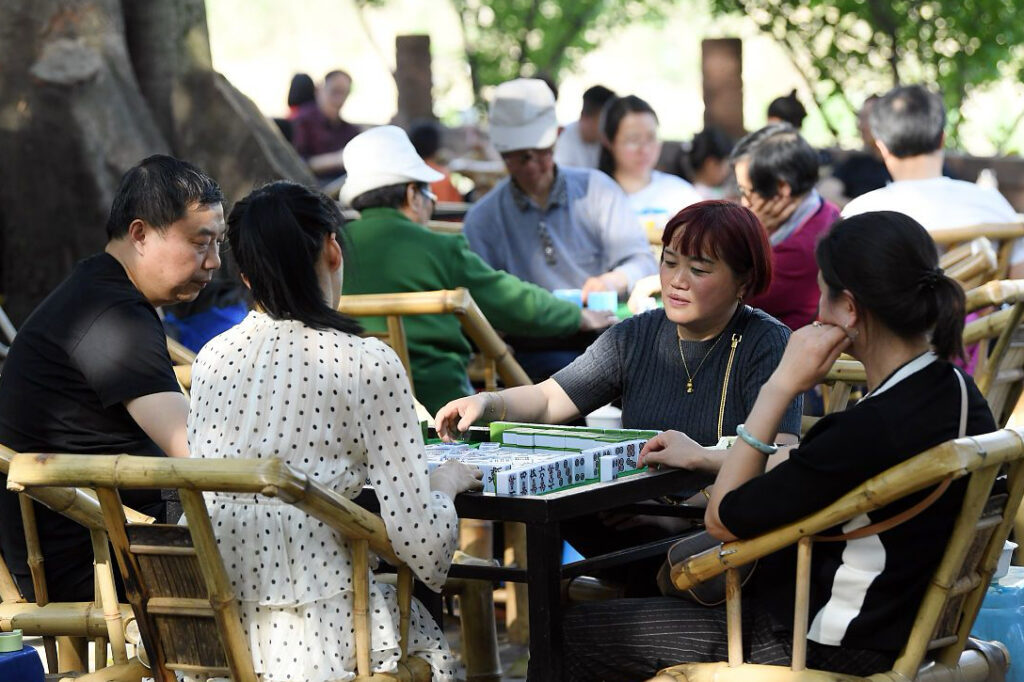
Walking is also underrated. In fact, Chinese cities are incredibly walkable at the neighborhood level. A single block can have a breakfast stall, a mahjong parlor, a 30-year-old barber shop, and a tiny temple behind a laundry. In Suzhou, the Pingjiang Road deep alley walk leads through lanes where local families have lived for centuries. Even so, no tourist map covers them. So slow down and look up. That is where the real China is.
[Image: A foreign traveler rides a shared bike along a tree-lined street in Chengdu]
What to Do: The Chinamaxxing Experience List
This is the heart of it. Here are the everyday activities that make chinamaxxing different from regular tourism. Each one is something a local Chinese person might do on a normal day.
Morning Exercise in a Public Park
First, show up at any public park in China between 6 and 8 in the morning. You will find people doing tai chi, square dancing, badminton, or Baduanjin. Just join in. Nobody will ask you to leave. In fact, most people will smile and make space for you. Without a single word, it is the most authentic cultural exchange you can have. In Suzhou, the early morning garden tour gets you into the Humble Administrator’s Garden at 6:45 AM, so you arrive before the tour buses, with nothing but birdsong and morning mist.

Tea at a Neighborhood Tea House
Next, skip the fancy hotel lobby tea service. Instead, find a small tea house tucked into an alley or next to a wet market. Order a pot of jasmine or tieguanyin. Then sit on a low wooden stool and watch regulars argue about the news over their morning cups. That is the tea culture chinamaxxing is about. It is not a performance; rather, it is just a regular morning at a regular place.
Street Food and Night Markets
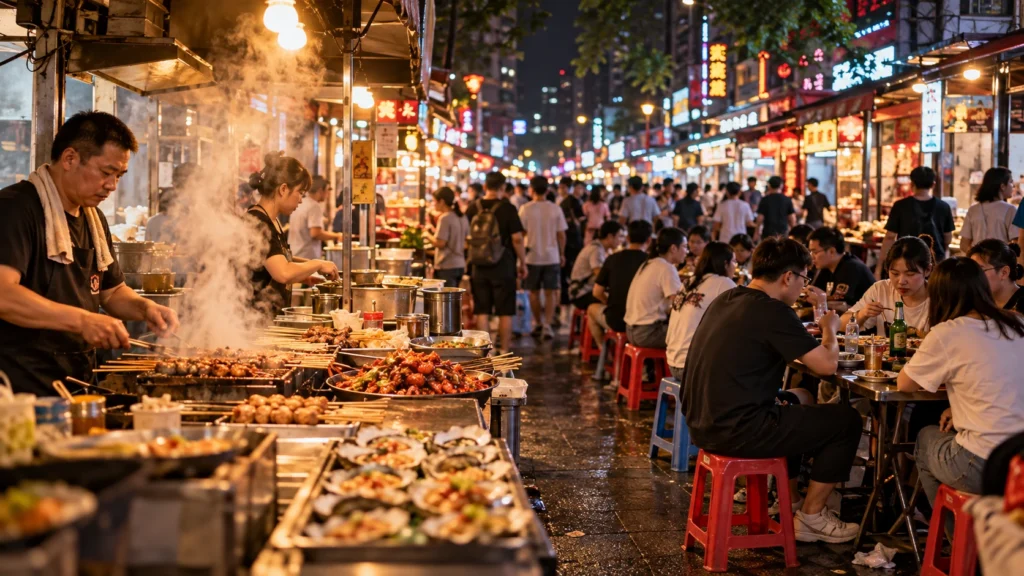
Every Chinese city has a night market or a food street. For example, in Chengdu you can sit on a plastic stool and eat mapo tofu for less than 20 yuan. Further west, hotpot restaurants line every block in Chongqing. Meanwhile in Xi an, the city wall and food tour takes you from the ancient ramparts down into the Muslim Quarter, where grilled lamb skewers and roujiamo are everywhere. Also, the Chongqing city walk covers some of the best street food zones in southwest China.
Traditional Medicine Experience
Traditional Chinese medicine is not just for locals anymore. In fact, many clinics in major cities now cater to foreign visitors. For instance, an acupuncture session or cupping therapy is a deeply Chinese experience, and you cannot get the same thing anywhere else. In Shanghai, you can book a TCM acupuncture and cupping session rooted in 2,000 years of healing tradition.

Take a Hobby Class
Another great option is to sign up for a drop-in hobby class. Many studios across major cities now welcome foreigners for single sessions. For example, try your hand at Chinese calligraphy, ink painting, glassblowing, metalwork, or even sewing on a vintage machine. You might sit at a wooden desk with brushes and ink, learning the same strokes that Chinese students have practiced for centuries. Or you could spend an afternoon shaping molten glass in a workshop tucked inside a creative park. Usually these classes cost around $50, and you walk away with something you made with your own hands. Above all, it is a side of China that almost no guidebook covers.
Like a Chinese White-Collar Worker
Think about what a young professional in Shanghai or Hangzhou does on a weekend. For example, they might take the high-speed train to a tea mountain, walk through the fields where Longjing green tea is grown, and have lunch at a farmhouse kitchen. Or they grab a shared bike and ride along Taihu Lake’s quiet island roads, stopping at fishing villages for a bowl of noodles. On another weekend, they might instead wander through alleyways in Suzhou where local families have lived for centuries, completely unknown to tourists. This is how chinamaxxing works: you do not visit attractions, but rather borrow someone else’s routine for a day.
Traditional Festivals
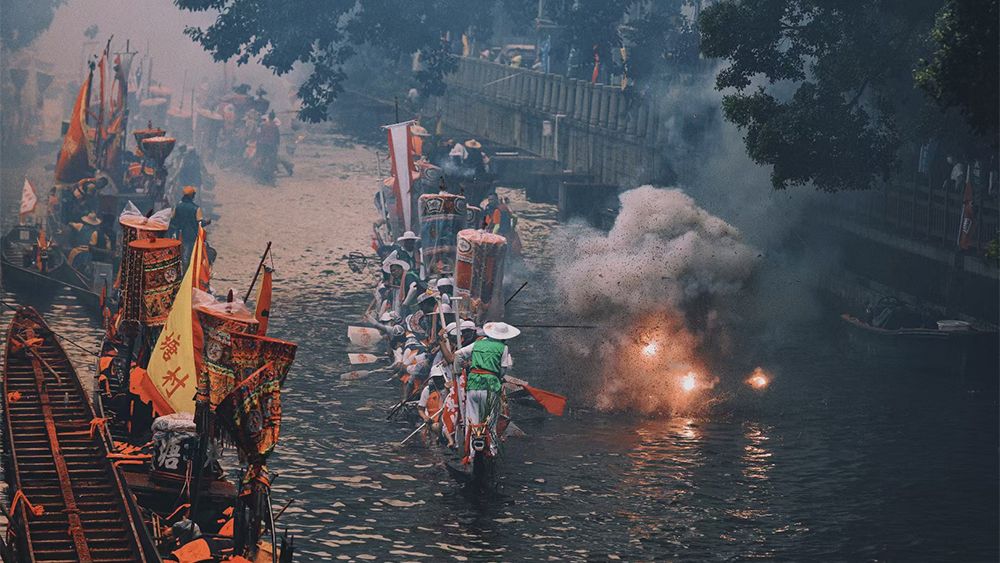
Finally, if your trip lines up with a Chinese festival, drop everything and join in. For instance, the Dragon Boat Festival in Guangzhou is one of the most visceral cultural experiences in the country. With dragon boat races, zongzi wrapping, and real neighborhood celebrations, it has been going on for over 2,000 years. This is chinamaxxing at its purest.
Basic Chinese Phrases That Open Doors
You do not need to speak fluent Mandarin to chinamaxx. But learning a few basic phrases will change how locals treat you. For example, when a foreigner says “nihao” (hello) or “xiexie” (thank you) with a smile, the reaction is almost always delight. In seconds, you go from being a stranger to being a welcomed guest.
Here are the phrases worth knowing:
- Nihao (nee-how): Hello. First, the universal greeting.
- Xiexie (shyeh-shyeh): Thank you. Also, use it everywhere.
- Duoshao qian? (dwuh-shao chyen): How much? Essential at markets and street stalls.
- Zheli (juh-lee): Here. Then, point and say “zheli” to order food, buy tickets, or get a taxi.
- Meiyou (may-yo): Do not have / no. Finally, useful when you want to decline something politely.
Even if your pronunciation is terrible, locals will appreciate the effort. In fact, many will switch to helping you with gestures and translation apps. The key is to try. Ultimately, that attempt is the chinamaxxing spirit in action.
Where to Stay
Forget the international hotel chains for at least part of your trip. Instead, the best chinamaxxing stays put you inside a real neighborhood. Here are some options to consider:
- Boutique guesthouses (minsu): First, these are small, family-run inns often located in old buildings or traditional courtyard houses. Not only are they cheap and clean, but they are also full of character. Platforms like Trip.com and Booking.com now list thousands of them.
- Old city neighborhoods: Also, stay in the historic district of whatever city you visit. In Shanghai, that means the Former French Concession or the Shikumen lanes of the North Bund, where you can book a Shikumen and North Bund day tour to understand the architecture before exploring on your own. Up north, Beijing offers the hutongs near the Forbidden City. Out west, Chengdu has the Kuanzhai Alley area, while down south Guangzhou is famous for the Xiguan merchant quarter.
- Tea plantations and rural homestays: Finally, for a truly immersive experience, spend a night at a tea farm in Hangzhou or a countryside inn in a nearby village. You wake up to mist, birdsong, and the smell of fresh tea leaves. This is the kind of stay that turns a regular trip into a memory.
Common Mistakes to Avoid
Of course, chinamaxxing is not without its pitfalls. Here are the most common errors first-time visitors make:
- Trying to do too much in one city. First, pick one neighborhood and explore it slowly. In fact, you will see more by walking three blocks than by rushing across ten attractions.
- Only eating at hotels and tourist restaurants. Second, the best food is on the street, in the markets, and in the small shops that have no English menu. So just point at what looks good. You will be fine.
- Not downloading the apps you need. Third, Alipay, WeChat, a map app, and a translation app are essential. Apple Maps works well in China. Therefore, get them set up before you leave your hotel on day one.
- Ignoring the morning hours. Finally, the best part of any Chinese city happens between 6 and 9 in the morning. Parks come alive, breakfast stalls open, and the city feels most human. So do not sleep in.
Plan Your Chinamaxxing Trip
The best way to chinamaxx is with a plan that leaves room for spontaneity. On one hand, you want the key experiences lined up. On the other hand, you also want time to wander into a random alley and find something no guidebook mentions. So book the must-do experiences in advance, like a TCM session or a tea trail hike. Then leave half-days open for whatever catches your eye.
Whether you want a full immersion trip across multiple cities or a focused deep-dive into one place, we can design an itinerary that gets you off the tourist trail and into the real China. In short, our guides know the neighborhoods, the food stalls, the hidden parks, and the local rhythms that make everyday life in China so compelling.
Contact us and tell us what kind of everyday China experience you are after. Then we will build the trip around it.