Xi’an is one of the oldest cities in China. Thirteen dynasties made it their capital. In fact, the Silk Road began right here. Moreover, the world’s largest army was buried underneath a nearby hill. As a result, for most international visitors, it is the first place they go to touch something real about Chinese history.
However, Xi’an is not a museum. The city lives around its history. For example, people eat breakfast in the shadow of ancient walls. Markets sell spices that traveled from Central Asia centuries ago. Meanwhile, at night, the streets around the Muslim Quarter fill with locals and visitors eating the same foods their families have made for generations.
This guide covers the main things people come to see in Xi’an. Additionally, it provides the context that makes each attraction meaningful. You will also find practical suggestions for planning your time, getting around, and fitting the right experiences into your trip.
Why Visit Xi’an
Xi’an sits in the middle of Shaanxi Province, surrounded by the Guanzhong Plain. In fact, the city was the capital of China for over a thousand years. That is longer than Beijing and longer than Nanjing. Every dynasty that ruled from here left marks: temples, tombs, walls, and stories that still circulate in the city today.
The Terracotta Warriors are the name most people know first. But Xian’s appeal goes deeper than one attraction. The ancient city wall is one of the best-preserved in China and still walkable for its full 13.7 km circuit. The Muslim Quarter is one of the oldest and most active Islamic communities in China. And the surrounding area — the Shaanxi History Museum, the Giant Wild Goose Pagoda, the city itself — all connect to the same imperial history.
Therefore, for travelers who want to understand Chinese civilization as something lived and not just observed, Xi’an is one of the best starting points in the country.
Top Xi’an Experiences
Terracotta Warriors: Face to Face with China’s Ancient Army
The Terracotta Warriors are not a legend. They are a real excavation. In 1974, farmers struck clay while digging a well. Since then, archaeologists have uncovered three main pits containing an estimated 8,000 terracotta soldiers, horses, and chariots. Each face is different, and each posture is unique. Moreover, each figure was originally painted in bright colors that have faded over centuries.

photo by @xiquinhosilva from Wikipedia
The warriors were buried to protect the tomb of Emperor Qin Shi Huang, the first emperor of unified China. In fact, they were meant to accompany him into the afterlife. Specifically, the same army helped him conquer and unify the country in 221 BC. The scale is what surprises most visitors. Walking into Pit 1, the largest pit, you see row after row of figures stretching into the distance. As a result, the experience is very different from any photograph.
Most visitors spend two to three hours at the Terracotta Warriors Museum and leave satisfied. However, the nearby Lishan Garden — the actual burial site of Emperor Qin Shi Huang — is often skipped by tour groups. It holds the bronze chariots. These are two full-size bronze carriages with horses, unearthed in 1980. They are considered among the finest bronze artifacts in the world. Additionally, UNESCO World Heritage: Mausoleum of the First Qin Emperor recognizes this entire complex as a site of outstanding universal value. A good guide explains why this site was chosen and what the excavation has revealed.
Our Terracotta Warriors Day Trip is built around a guided visit to the museum and Lishan Garden. In addition, it includes a local lunch, a hands-on warrior-making workshop, and drop-off at the Muslim Quarter at the end of the day.

Xi’an City Wall: The Original Outline of the City
The Xi’an city wall was first built in the early Ming Dynasty. Its foundations date back to the Tang Dynasty and earlier. Over the centuries, it has been rebuilt and reinforced many times. Today it stands 12 meters high and 18 meters wide at the base. Furthermore, it covers a circuit of 13.7 km. This makes it one of the most complete ancient defensive walls surviving anywhere in the world. For more details, see Wikipedia: City Wall of Xi’an.
Most visitors walk or cycle along the wall from one gate to another. Specifically, the south wall is the most intact. The north wall runs alongside the railway. It is less scenic but sometimes quieter. Meanwhile, the east and west walls connect the major gates.

Cycling the full circuit takes two to three hours at a comfortable pace. Rentals are available at the main gates. Walking is possible but slower. However, the top of the wall is flat and wide enough for pedestrians. Additionally, bicycle rental shops offer tandem bikes and electric carts. These are good options if walking feels too far but cycling feels too energetic.
The wall is best visited early morning or late afternoon. In fact, midday sun in summer is strong, and the wall offers little shade. On the other hand, in spring and autumn, the weather is comfortable for a full circuit. In winter, the wall can be cold but is often pleasantly quiet.
Shaanxi History Museum: The Province’s Memory
The Shaanxi History Museum is one of the best provincial museums in China. Its collection spans over a million years of history. This includes artifacts from the Zhou and Qin dynasties through the Han, Tang, and into the Song, Yuan, Ming, and Qing periods. Moreover, the museum’s permanent exhibition is organized chronologically. As a result, it is easy to follow the arc of Chinese civilization even without deep prior knowledge.
The Tang Dynasty section is usually the most crowded and most photographed. Specifically, gold and silverware, ceramics, paintings, and tomb figurines from this period reveal a cosmopolitan civilization that traded with Persia, Central Asia, and beyond. Moreover, the museum also holds a substantial collection of early Zhou bronze vessels. These ritual objects changed shape and inscription style over hundreds of years. As a result, they are one of the most important primary sources for ancient Chinese history.
The museum requires free advance booking or offers paid fast-track entry. However, English signage is improving but remains limited in places. Therefore, a guide makes the collection significantly more accessible.
Giant Wild Goose Pagoda: Tang Dynasty Skyline
The Giant Wild Goose Pagoda was built in 652 AD during the Tang Dynasty. It was constructed to hold Buddhist scriptures and relics brought from India by the monk Xuanzang. At the time of its construction, it stood 60 meters tall. Therefore, it was one of the tallest structures in Chang’an, the Tang capital and the largest city in the world at that time.
Today, the pagoda stands at 64 meters after several reconstructions. The surrounding Da Ci’en Temple is one of the great Buddhist temples of the Tang Dynasty. However, most of the original structures are gone. What remains is the pagoda itself and the base of the temple’s main hall. Additionally, a large square at its feet comes alive in the evening with a celebrated fountain show.
The fountain show at Da Ci’en Temple is one of the most photographed evening spectacles in Xi’an. Set against the illuminated pagoda, the fountains move in synchronized patterns to music. They run multiple times each evening. Moreover, it is free to watch and draws crowds of locals as well as visitors.
Muslim Quarter: Where the Silk Road Arrived
The Muslim Quarter in Xi’an is not a tourist construction. In fact, the Hui Muslim community has lived in this area for over a thousand years. They are descendants of merchants who traveled the Silk Road and settled in the imperial capital. Consequently, the neighborhood around Beiyuanmen and the surrounding streets is now one of the most concentrated Muslim communities in China.
The food is the main reason to come here. For example, stalls line the main pedestrian street selling yangrou chuan (lamb skewers) and roujiamo (Chinese hamburger with spiced lamb). You can also find biangbiang noodles, liangpi (cold skin noodles), and various dumplings and pastries. Meanwhile, the atmosphere changes in the evening when the stalls light up. As a result, the street becomes packed with locals and visitors alike.
The Great Mosque of Xi’an is also in this area. Specifically, it is a Ming Dynasty mosque that blends Chinese and Islamic architectural styles. Non-Muslim visitors are welcome during opening hours. Furthermore, the surrounding streets have several small mosques, narrow lanes, and local shops. These feel less touched by tourism than the main pedestrian street.
Experience Folk Culture: Qin Opera and Shadow Puppetry
Xi’an is not only about ancient monuments. Additionally, the city has a living folk culture that goes back centuries. Two of the most accessible and memorable experiences are Qin Opera and shadow puppetry. In fact, these are art forms that developed in Shaanxi and remain central to local cultural identity.
Qin Opera is one of the oldest Chinese opera forms. It originated in the Shaanxi area during the Qin Dynasty, over 2,000 years ago. It is known for its powerful singing, exaggerated facial makeup, and dramatic acrobatics. Performances range from full theater productions to street shows. For example, actors painted in traditional costumes perform excerpts on small stages set up in parks and public squares. Cangmen is the most famous area for traditional Qin Opera performances.
Shadow puppetry uses leather figures cut into detailed shapes. These are manipulated by bamboo sticks against a backlit screen. The storyteller speaks and sings while controlling multiple puppets. As a result, they create entire worlds of characters and action from a single booth. Shows are usually short — just 20 to 30 minutes. However, the skill required to operate multiple puppets while narrating a story is extraordinary. You can find shadow puppet shows at several cultural venues in Xi’an. Moreover, many include a chance to try the puppets yourself.

Best Time to Visit Xi’an
Xi’an has four distinct seasons. Summer is hot — often above 35°C in July and August — and can feel humid. Winter is cold, sometimes below freezing. However, the city is less crowded in winter, and hotel prices drop.
In general, the best seasons for most travelers are spring (April to May) and autumn (September to October). The weather is comfortable, the air is clearer, and the light is good for photography. For a broader guide, see our article on the Best Time to Visit China.
- Spring: Temperate weather, wildflowers around the city walls, manageable crowds.
- Autumn: Clear skies, cooler temperatures, good visibility for photos of the ancient sites.
- Summer: Hot but lively. Start outdoor visits early. The city wall and Giant Wild Goose Pagoda square are pleasant in the evening.
- Winter: Cold but atmospheric. The Terracotta Warriors are indoor-adjacent (large covered pits) and comfortable to visit year-round.
Avoid major Chinese public holidays if possible. Specifically, avoid National Day (first week of October) and Labor Day (first week of May). Xi’an is a popular domestic destination. Consequently, the sites get very crowded during these periods.
How to Get to Xi’an
By air: Xi’an Xianyang International Airport is about 40 kilometers northwest of the city center. Direct flights connect to most major Chinese cities and several international destinations. A taxi or airport express train then connects the airport to central Xi’an.
By high-speed rail: Xi’an is on the Beijing-Xi’an and Shanghai-Xi’an high-speed corridors. From Beijing, the fastest trains take about four and a half hours. From Shanghai, the journey is about five to six hours. Xi’an North Station is the main high-speed rail hub, and it connects directly to the city metro system.
Getting around the city: The Xi’an Metro is clean and extensive. It covers the main tourist areas, including the Bell Tower, the city wall gates, and the Giant Wild Goose Pagoda. For the Terracotta Warriors, take Line 9 with a bus connection. Additionally, taxis and ride-hailing apps are widely available.
Xi’an Travel Tips
- Start early at the Terracotta Warriors. The site opens at 8:30 AM. Arriving when it opens means smaller crowds. As a result, you get better conditions for photos in the first two hours.
- Hire a guide for the Warriors. The museum covers a large area. Moreover, the historical context enriches the visit significantly. Self-guided audio guides are available. However, a local English-speaking guide makes a real difference.
- Cycling the city wall takes 2-3 hours. Plan accordingly. Rent bikes at the nearest gate to where you plan to exit.
- The Muslim Quarter is best in the evening. Come for dinner, not for a quiet afternoon walk. The energy changes completely after dark.
- Watch the Giant Wild Goose Pagoda fountain show at night. It is free and usually runs multiple times from early evening. Arrive 10 minutes early for a good spot.
- Book the Shaanxi History Museum in advance. Free tickets run out quickly. Pay for fast-track entry if you are short on time.
- Experience Qin Opera or shadow puppetry. These are accessible cultural experiences that most visitors miss. Therefore, ask your guide or hotel for current show schedules.
- Payment: Mobile payment (WeChat Pay, Alipay) is standard in Xi’an. However, carry some cash for smaller stalls in the Muslim Quarter if you prefer not to use a phone.
How Many Days in Xi’an
In general, three full days works well for Xi’an. Specifically, plan one day for the Terracotta Warriors, one for the city itself, and one for Mount Hua. A fourth day opens options for the Hukou Waterfall. Here is a practical breakdown:
- Day 1: Visit the Terracotta Warriors and Lishan Garden in the morning and early afternoon. Afterwards, head to the Muslim Quarter for dinner and evening exploration.
- Day 2: Spend the morning on the city wall (cycling or walking). Then, visit the Shaanxi History Museum in the afternoon. Finally, head to the Giant Wild Goose Pagoda in the evening for the fountain show. Consider catching a Qin Opera or shadow puppetry show if scheduled.
- Day 3: Mount Hua — one of the Five Great Mountains of China. The mountain is about two hours from Xi’an by car. A day trip is possible but rushed. Therefore, staying overnight near the mountain gives you better time and energy for the summit.
- Day 4: Hukou Waterfall — the largest waterfall on the Yellow River, about three to four hours from Xi’an by car. Best visited in summer when water volume is highest, though the frozen ice formations in winter offer a different kind of spectacle.
If you have two days, focus on Day 1 and Day 2 above. On the other hand, if you have four days, adding the Hukou Waterfall makes a dramatic finale to a Xi’an trip.
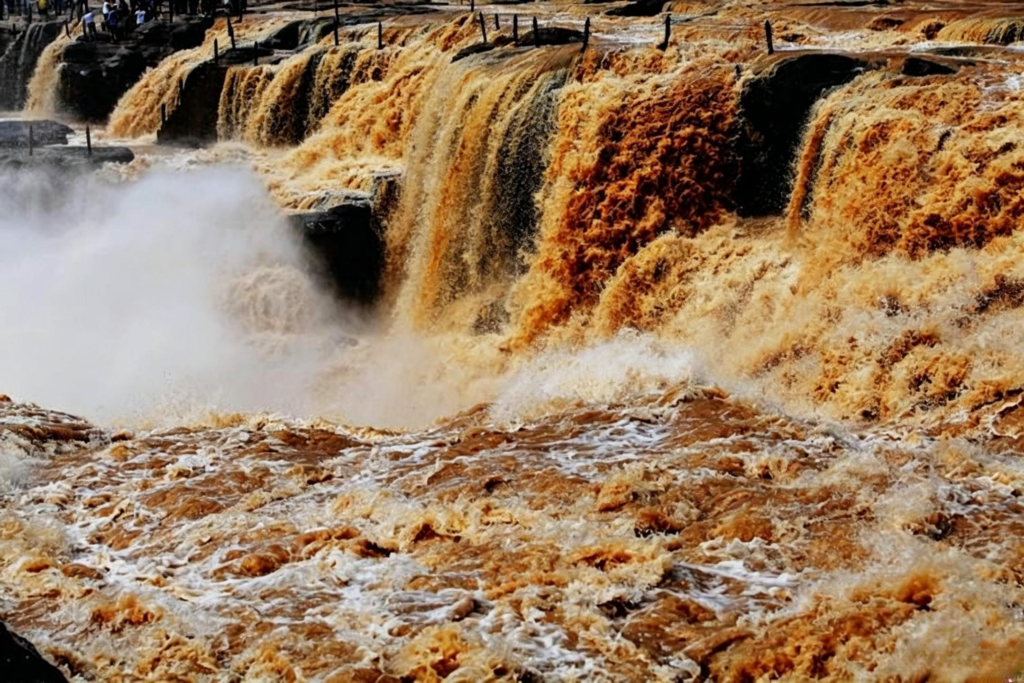
Xi’an also works well as part of a longer China itinerary. The high-speed rail network connects it to Beijing (4.5 hours), Shanghai (5–6 hours), and Chengdu (3–4 hours). Therefore, it is easy to combine with other major destinations.
Frequently Asked Questions About Xi’an
How many days do I need in Xi’an?
In general, three full days is the ideal amount of time for Xi’an. One day covers the Terracotta Warriors, one day explores the city wall and museums, and one day is reserved for Mount Hua. If you have a fourth day, consider adding the Hukou Waterfall. However, even two days is enough for the main highlights.
Is the Terracotta Warriors worth visiting?
Absolutely. The Terracotta Warriors are one of the most significant archaeological discoveries of the 20th century. In fact, seeing 8,000 life-sized soldiers in their excavation pits is an experience that photographs cannot capture. Therefore, we strongly recommend hiring a local guide to bring the history to life.
What is the best time to visit Xi’an?
The best times to visit Xi’an are spring (April to May) and autumn (September to October). During these months, the weather is comfortable and the skies are clear. However, avoid major Chinese public holidays like National Day in October and Labor Day in May.
Can I cycle on the Xi’an city wall?
Yes, cycling is one of the most popular activities on the Xi’an city wall. Bicycle rentals are available at the main gates. The full circuit takes about two to three hours at a comfortable pace. Moreover, tandem bikes and electric carts are also available for those who prefer a more relaxed ride.
How do I get from Xi’an airport to the city?
Xi’an Xianyang International Airport is about 40 kilometers from the city center. You can take a taxi, which takes roughly 40–60 minutes. Alternatively, the airport express train connects directly to the city center. As a result, both options are convenient and affordable.
Explore Xi’an with IntoChinaTrip
If you want to visit the Terracotta Warriors with a local guide who actually lives in Xi’an, our Terracotta Warriors Day Trip covers the museum, Lishan Garden, the warrior-making workshop, and a local lunch in a single day. We finish at the Muslim Quarter so you can continue exploring on foot in the evening. In other words, not just a driver who drops you at the entrance.
Not sure how to fit everything together? Contact us with your travel dates and interests, and we can help you plan a Xi’an visit that fits your schedule. You may also want to read our guide on the Best Time to Visit China for broader trip planning tips.
The Terracotta Warriors and the Mausoleum of the First Qin Emperor are recognized by UNESCO as part of one of China’s most significant World Heritage sites. Learn more through the UNESCO World Heritage: Mausoleum of the First Qin Emperor.