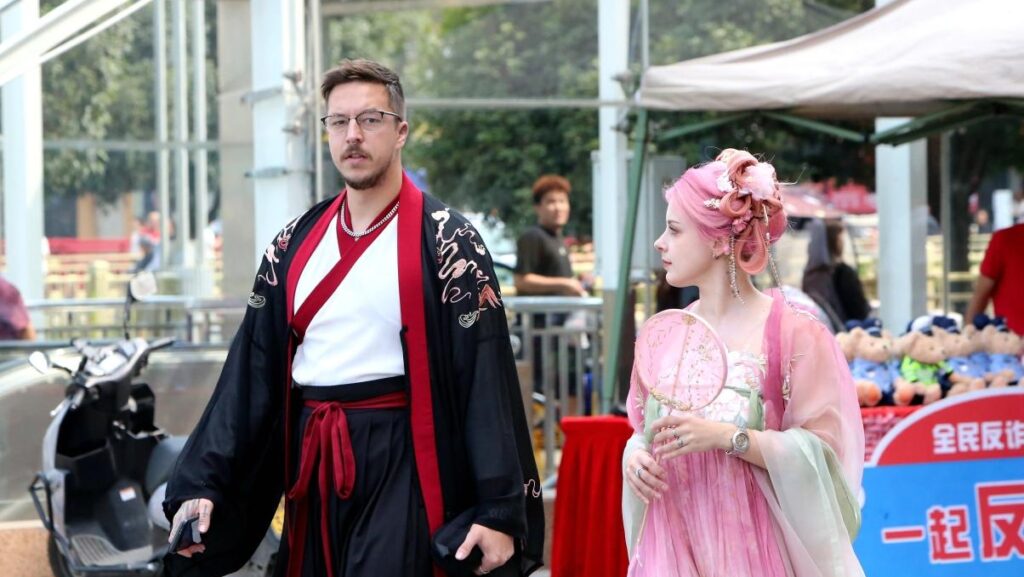
Picture this: you walk through an old Chinese palace. Silk robes flow behind you. A hairpin catches the light. Passersby bow. Not because you are famous — but because you look like royalty from a thousand years ago. This is the hanfu experience in China. It is now one of the top cultural activities for foreign visitors in 2026.
What began as a small hobby for history fans is now a big travel trend. In 2025, 82.035 million foreign nationals entered China. That is 26.4% more than the year before. Of those, 30.08 million came through visa-free policies — a 49.5% jump. Many now add hanfu dressing to their trip plans. They go from sightseers to active participants in one of the world’s oldest living traditions.
This guide covers all you need: where to go, what to expect, what it costs, and how to get the best photos of your hanfu experience in China.
What Is Hanfu — And Why Do People Want to Wear It
Hanfu means “the clothing of the Han people.” It is the traditional dress of the Han Chinese. Its history goes back over 3,000 years. Unlike the qipao (cheongsam), which came later in the Qing Dynasty, hanfu is much older. It carries deep cultural meaning.
Each dynasty had its own style:
- Han Dynasty (206 BC – 220 AD): Wide sleeves, deep colors, and a solemn, clean look.
- Tang Dynasty (618 – 907): Bright colors, open collars, rich patterns. Women’s Tang-style hanfu is very popular for its bold grace.
- Song Dynasty (960 – 1279): Simple, fine lines with soft tones. Think of it as “quiet luxury” in old times.
- Ming Dynasty (1368 – 1644): High collars, layered skirts, fine embroidery. This style is the top pick for photo shoots.
- Qing Dynasty (1644 – 1912): The iconic qizhuang (旗装) — long, straight robes with narrow sleeves and fine borders. It is Manchu, not Han. But rental shops offer it, and it looks great against palace walls.
- Republic Era (1912 – 1949): The qipao (旗袍) — a fitted silk dress from 1930s Shanghai. Not hanfu in a strict sense, but shops in Shanghai often offer it alongside hanfu.
Wearing hanfu today is not cosplay. It is cultural participation. It lets you connect with Chinese heritage in a way that goes beyond museums or temple visits. For foreign visitors, it offers a rare chance: step into a culture, not just watch it.

As China.org.cn reported, TikTok #Hanfu videos passed 320,000 uploads by 2025. It is one of the most viral cultural content types on the platform.
Why Hanfu Is the Hottest Trend for Foreign Travelers
The numbers show why. Travel to China has hit record highs. South Korea alone sent 447,500 visitors to Shanghai from January to May 2026. That is a 25.67% yearly jump, per the Global Times. Hanfu experiences rank as a top pick among these visitors.
Studios near key landmarks have grown fast. Per Xinhua News Agency, foreign guests at hanfu shops near the Forbidden City rose by about 20% since early 2025. Xi an now has over 3,000 hanfu rental shops. That number was hard to imagine just three years ago.
The fastest growth is in Luoyang, an old capital in central China. Its old district went from 18 shops in 2022 to 1,360 by September 2025. That is a 75-fold jump in under three years, per CNA.
What drives this boom? Three things:
- Social media. Short video apps like TikTok and Xiaohongshu make hanfu photos go viral. One great shot in front of a red palace wall can get thousands of likes.
- Visa-free travel. 54 countries now enjoy visa-free entry to China. More travelers come with longer stays and a stronger wish for hands-on experiences.
- Good prices. A full hanfu styling and photo session costs 600 to 1,200 RMB ($84–$168). That fits most travel budgets.
As the National Immigration Administration of China noted in its 2026 report, open borders and rich culture have created the perfect setting for experiential travel to grow.
Best Cities for Hanfu Experience in China
Not all cities give you the same hanfu feel. The best spots mix real architecture, skilled rental shops, and iconic photo backdrops. Here are the top four.
Beijing — Imperial Elegance at the Forbidden City
Beijing is the top pick for hanfu photos. The Forbidden City has red walls, gold roof tiles, and white marble terraces. These make a dramatic backdrop for Ming-style hanfu. The top look here is the “phoenix crown and rosy cape” (凤冠霞帔). It is a grand bridal set that looks stunning against palace walls.
Hanfu shops line the streets near the east and west gates of the Forbidden City. Most offer full packages: garment rental, makeup, hair styling with traditional pieces, and a guided photo walk through the palace grounds.
To get more from your Beijing trip, pair your hanfu day with a Forbidden City & Jingshan Summit Tour (from $89). You walk the same imperial grounds as your photo shoot. This gives each scene deeper meaning.
Xi an — Tang Dynasty Time Travel
If Beijing shows Ming grandeur, Xi an is the top Tang Dynasty spot. The Tang Paradise park and the night scene at Great Tang All Day Mall (大唐不夜城) turn you into a figure from China’s most open and worldly era.
With over 3,000 hanfu rental shops, Xi an has the most studios of any city. Competition keeps prices fair and quality high. Tang-style hanfu — bold colors, long sleeves, rich hair ornaments — fits Xi an’s warm-toned buildings well.
After your hanfu session, walk the old city walls and try local street food on the Xi an City Wall & Food Tour (from $129). Tang robes against a 600-year-old wall make for striking images.
Suzhou — Jiangnan Water Town Grace
Suzhou offers a different feel. Here, hanfu photos use white walls, dark tiles, stone bridges, and narrow canal paths as backdrops. The classical gardens — especially the Couple’s Retreat Garden (耦园) and lanes along Pingjiang Road — give an intimate, poetic mood. Song Dynasty-style hanfu was made for this.
The soft Jiangnan light and misty mornings add a dreamy touch that northern cities cannot match. Early shoots along the canals, when few tourists are about and the light is warm, give the best results.
Pair your Suzhou hanfu day with a Suzhou Classical Gardens Tour. Corridor windows, moon gates, and pond reflections give you more great backdrops.
Shanghai — Qipao and Water Town Charm
Shanghai is the top city for qipao (cheongsam) photos. This fitted silk dress defines 1930s Shanghai style. While Beijing and Xi an focus on hanfu, Shanghai shops offer both. Many visitors pick qipao to match the city’s Art Deco past. The Yuyuan Garden area gives a classic Jiangnan setting. Zigzag bridges, rockery gardens, and old pavilions are all close to rental shops.
For a less touristy option, go to Wukang Road in the old French Concession. Plane trees and old garden walls create a striking mix of qipao and European architecture. For a suburban escape, Guangfulin Relic Park has a 6,000-year-old site with traditional buildings and few tour groups.
Want the full water town feel? Book the Zhujiajiao Water Town Day Trip (from $89). Its canals, stone bridges, and wooden boats make a top photo setting near Shanghai.
If you simply want to try on hanfu for the fun of it without a full-day rental, consider joining an Immersive Cultural Dinner Show in Shanghai. Each show features a different theme with traditional Chinese cultural performances and authentic regional cuisine. You can dress up in period costumes and have professional makeup done — a full banquet experience, as if you were a guest at an ancient Chinese feast.
Another great option is the Shanghai Immersive Dinner Show. This one features a 360° rotating stage with a Jiangzhe cuisine menu, blending Shanghai’s local history with live performances from multiple dynasties. Costume changes and makeup are available as add-ons, making it an easy and fun way to experience traditional culture over dinner.
How Hanfu Rental Works — Step by Step
First time? The process is simple. Here is what a typical session looks like:
- Pick your dynasty and style. Most shops have catalogs by dynasty (Han, Tang, Song, Ming, Qing). Staff help you choose based on your body type, skin tone, and photo spot.
- Professional makeup and hair. This is not a quick fix. Expect 1 to 2 hours of styling. This includes traditional makeup, hair pieces (pins, combs, flowers), and sometimes forehead art (花钿).
- Get dressed. Hanfu has many layers: an inner garment, the main robe, a belt, and sometimes a cape. Staff dress you and adjust each detail.
- Photo session. Many shops include a guided photo walk to nearby spots. Some have in-house studios. Photo packages are priced apart from the rental.
- Return and get your photos. After the shoot, you return the clothes. Edited photos arrive in 3 to 7 days by email or a Chinese file-sharing app.
Styling takes 1–2 hours, based on how complex the look is. The photo shoot takes another 1–2 hours. A full styling-plus-photo package costs 600 to 1,200 RMB ($84–$168). The price depends on the photographer’s skill, the number of final edits, and how many spots you visit.

Best Photo Spots for Your Hanfu Shoot
The right spot can make or break your photos. Here are the best picks in each city:
Beijing:
- The east wall of the Forbidden City (red wall backdrop, free to access)
- Jingshan Park hilltop (full view of palace rooftops)
- The Temple of Heaven (round architecture creates bold shots)
- Beihai Park’s white pagoda area
Xi an:
- The Great Tang All Day Mall at night (lit by lanterns, stunning after dark)
- Tang Paradise (built for Tang Dynasty scenes)
- The City Wall at sunset (dark silhouettes against old ramparts)
- Da Ci’en Temple and the Giant Wild Goose Pagoda
Suzhou (quiet alternatives):
- Pingjiang Road — go before 7 AM for empty canal-side shots
- Couple’s Retreat Garden — the least crowded classical garden, great for close portraits
- Art Garden (艺圃) — a hidden Ming Dynasty gem in a quiet alley. Almost no tourists.
- Leave Garden (留园) — large layout means you can always find a calm corner
Shanghai (off-the-beaten-path, ideal for qipao):
- Wukang Road — plane tree canopy plus old garden walls, qipao meets European style — the city’s most cinematic street
- Xinchang Ancient Town — a real water town with almost no commercial development. Great for qipao shoots.
- Guangfulin Relic Park — old buildings with far fewer crowds than Zhujiajiao
- Zhujiajiao Water Town — go on weekday mornings for the best feel
Pro tip: arrive before 8 AM or after 4 PM. You avoid crowds and get the best light. Midday sun creates harsh shadows that hide the fine textures of hanfu fabric.
Hanfu + Festivals — When to Time Your Visit
Time your trip with a traditional festival. The whole setting — lanterns, decor, shows — matches your outfit. Your photos will look like scenes from a historical film.
The best festivals for hanfu photos:
- Mid-Autumn Festival (September–October): Moonlit gardens, lanterns, and osmanthus flowers. Suzhou and Hangzhou shine at this time.
- Spring Festival / Chinese New Year (January–February): Red decor fills the streets. Beijing’s temple fairs and Xi an’s city wall lantern shows make epic backdrops.
- Qingming Festival (early April): Spring flowers bloom across Jiangnan. Misty rain and willows along Suzhou’s canals create poetic scenery.
- Qixi Festival — Chinese Valentine’s Day (August): The romantic mood pairs well with hanfu. Gardens light up with lanterns. Couples in traditional robes create scenes from a Tang Dynasty love story. The Summer Palace in Beijing and West Lake in Hangzhou are top picks.

For the best mix of good weather and photogenic views, April and October are the top months. Temperatures are mild, skies are clear, and nature is at its most colorful. Cherry blossoms in spring or fall foliage frame your hanfu portraits.
Practical Tips for First-Time Hanfu Renters
A few tips will help your first hanfu experience in China go well:
- Book early in peak season. October (National Day holiday) and Chinese New Year are the busiest times. Reserve 3–5 days ahead. Popular studios in Xi an and Beijing fill up fast.
- Set up Alipay or WeChat Pay first. Most hanfu shops do not take cash or foreign credit cards. Both Alipay and WeChat now let you link foreign bank cards. See the China Payment Guide on IntoChinaTrip for how to set this up.
- Tell the shop your size. Hanfu is loose and flowing, so it fits most bodies. But if you are over 180 cm tall or have a larger build, let the shop know when you book. They will have the right sizes ready.
- Bring your own undergarments. Shops give you outer clothes and accessories. You need your own inner layers. Pick neutral, close-fitting clothes to wear underneath.
- Learn some poses before you go. Search “hanfu poses” on TikTok or Xiaohongshu for ideas. Have 5–6 go-to poses ready. This saves time and improves your shots.
- Go with friends. Many studios welcome groups. It is more fun to pose together in matching dynasty styles. Some shops offer matching accessories for pairs or small groups.
Hanfu Experience in China — FAQs
Here are answers to common questions from first-time visitors:
How much does a hanfu experience in China cost?
A full session with styling and photography usually costs 600 to 1,200 RMB ($84-$168). The price depends on the studio, photographer skill, and number of edited photos. Basic rental without photography starts from around 200 RMB.
How long does a hanfu rental session take?
Plan for 2 to 4 hours total. Styling takes 1 to 2 hours based on the complexity of the look. The photo shoot takes another 1 to 2 hours.
Can foreigners rent hanfu in China?
Yes. Hanfu rental shops welcome foreign visitors. Most shops near major tourist sites have English menus or staff who can help. You just need to pick a style, get styled, and enjoy the shoot.
Which city is best for hanfu photos?
Beijing is the top pick for its Forbidden City backdrops. Xi an is best for Tang Dynasty style. Suzhou offers a soft Jiangnan water town feel. Shanghai is ideal for qipao photos with a mix of old and new settings.
Do I need to book hanfu rental in advance?
For off-peak times, walk-ins are often fine. During peak season (October, Chinese New Year), book 3 to 5 days ahead. Popular studios in Beijing and Xi an can sell out.
If you want to book a hanfu experience in China — from styling and photography to a full cultural day trip — get in touch with IntoChinaTrip. We can help you plan the perfect hanfu session in Beijing, Xi’an, Suzhou, or Shanghai, matched to your itinerary and style preferences.
Final Thoughts — More Than a Photo
The hanfu experience in China is more than a trendy photo op. It opens a door to one of the world’s richest cultural traditions. When you put on a Tang robe and walk through a 1,000-year-old courtyard, something shifts. You stop being a tourist. You become part of a story that has lasted three thousand years.
So pick your city, choose your dynasty, and step into the frame. Whether you end up in Tang robes on Xi an’s lantern-lit streets or a Song outfit gliding through a Suzhou garden, the photos will tell a story that no regular sightseeing trip can match.