Why This List Exists
Step off the plane in Shanghai with a backpack and a head full of stereotypes. You’ll think you’ve prepared. You haven’t — not even close. If you’re looking for honest things I wish I knew before traveling to China, you’re in the right place. China doesn’t just surprise you; it rearranges your expectations entirely.
This list comes from the IntoChinaTrip team — years of designing private journeys across China and learning what actually surprises, confuses, and delights first-time visitors. It covers the mistakes you might make, the culture shocks you’ll experience, and the pleasant surprises that’ll make you laugh at your old assumptions. None of these show up in the guidebooks you’ll read before leaving.
If you’re going soon — or even just thinking about it — read this first. It might save you from a very spicy surprise. It will definitely make your trip smoother and more enjoyable. And before you go, make sure you understand China visa rules and check the best time to visit China for the regions on your list.
1. “Mildly Spicy” Will Destroy You
What “Mild” Actually Means in China
Imagine sitting down at a small restaurant in Changsha. You’ll tell yourself you can handle spicy food — you eat jalapeños for fun, right? So you’ll order the “mild” version of a local dish. Ten minutes later, your mouth will be on fire, your nose will be running, and the waiter will look at you with genuine concern.

Here’s the truth: “Mild” in China is not mild by Western standards. It means “not the spiciest thing we serve” — nothing more. In fact, Chinese food uses Sichuan peppercorns, dried chilies, and chili oil in quantities most Western palates have never experienced. If you’re sensitive to spice, say “no spice at all,” not “mild.” Use hand gestures if you have to. Your taste buds will thank you.
Spice Levels Vary Wildly by Province
China is a big country, and the food in one province tastes nothing like another. If you hate spice, stick to coastal areas — Shanghai, Guangzhou, and Hangzhou serve sweet and mild dishes. If you like a little heat, try Beijing or Xi’an, where dishes have warmth but won’t destroy you.
The danger zones start further inland. Sichuan province — home of Chengdu — is famous for numbing spicy food. Hunan takes it further with straight-up fiery dishes. You might cry in a Changsha restaurant. No shame. Guizhou might be the spiciest of all, using fermented chilies in everything — even the rice.
How to Survive the Heat
Okay, so you’ve ordered something too spicy. First, don’t chug water — it doesn’t help with capsaicin. Reach for milk or yogurt instead. Most convenience stores sell bottled milk drinks that work perfectly. Second, rice is your best friend — a bowl of white rice will cool your mouth faster than anything else.
Build up slowly over your first few days. Start with milder dishes and let your taste buds adjust, then push into spicier territory. And finally — embrace it. The spicy food in China is some of the best on the planet. Yes, it burns, but the flavor is worth every tear. Just keep a bottle of milk nearby.
2. Public Restrooms Are Actually… Nice Now
The “Toilet Revolution” Changed Everything
You’ve heard the stereotype: public restrooms in China are terrible — no doors, no toilet paper, just a hole in the ground. That was true ten years ago. It’s mostly not true anymore.
In 2015, the government launched the “Toilet Revolution,” spending billions upgrading restrooms across the country. Today, most public restrooms in major cities are clean, with toilet seats, toilet paper, and doors that lock. You’ll use restrooms in parks, subway stations, and tourist sites — most are better than the average gas station bathroom back home. The stereotype, in short, is years out of date.
What to Expect in 2026
In first-tier cities — Beijing, Shanghai, Guangzhou, Shenzhen — public restrooms are generally excellent, with sit-down toilets, soap, and hand dryers. In second-tier cities like Hangzhou or Nanjing, it’s a mixed bag — tourist areas have nice restrooms, but older neighborhoods might still have squat toilets. Malls and restaurants always have good facilities.

One thing to know: toilet paper isn’t guaranteed everywhere. You’ll still want to carry a small pack of tissues in your bag — better safe than sorry. And some older places have squat toilets instead of seats. If you’ve never used one, it’s a learning curve, but they’re actually more hygienic.
The Ones to Avoid (Yes, They Still Exist)
Not every restroom in China is nice. Train stations — especially older, smaller ones — can be rough. Hold it if you can and wait for the high-speed train, where restrooms are immaculate. Very rural areas and older night markets might also have basic facilities. But the bad ones are the exception now, not the rule. The improvement over the past decade is genuinely remarkable.
3. Delivery Apps Will Ruin Your Home Country
30 Minutes or Less — For Everything
China’s delivery system makes Western delivery look like a horse and buggy. You’ll order breakfast from your hotel room in Hangzhou — it’ll arrive in 18 minutes. The congee will be hot, the dumplings will be steaming, and the driver won’t even call once. That’s not a special case — that’s the standard.
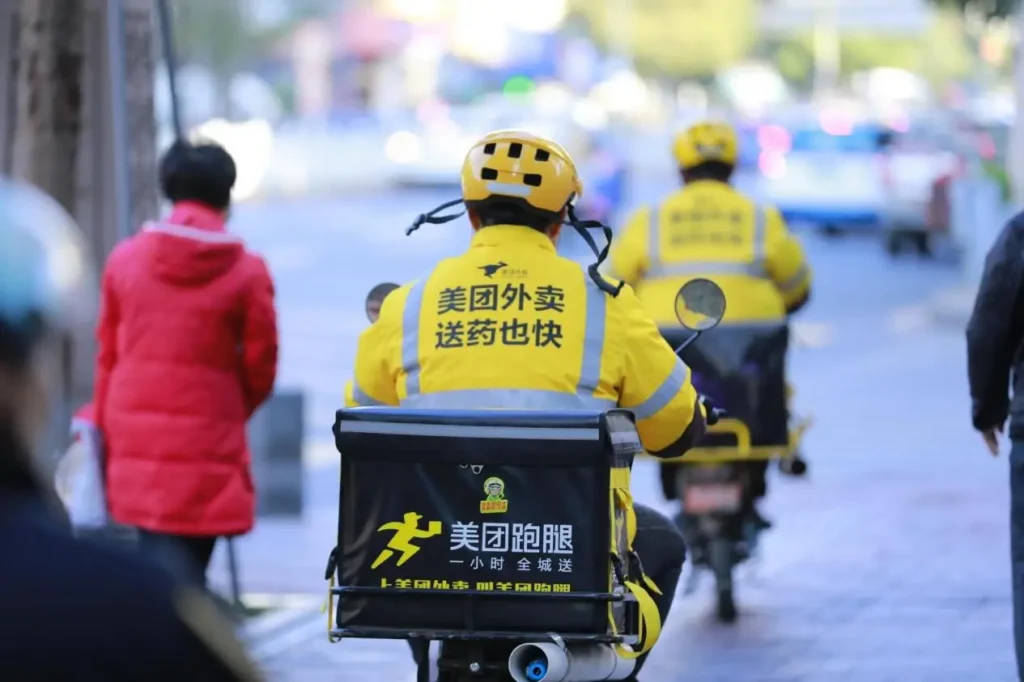
Most deliveries arrive in 20 to 30 minutes. The apps track everything in real time — you can watch the restaurant making your food, follow the driver on a map, and get a notification when they’re one minute away. It’s incredibly efficient — and unfortunately incredibly dangerous for your diet.
It’s Not Just Food
Food delivery is impressive, but it’s just the beginning. You can deliver almost anything in China — medicine from the pharmacy, a phone charger, fresh flowers. Say you forget your toothbrush at some point. Just open the app, find a convenience store, and order a toothbrush and toothpaste. It’ll arrive in 22 minutes for about two dollars.
There’s even “errand delivery” — you can pay someone to pick up a package, stand in line, or buy a ticket. Millions of delivery workers on electric scooters weave through traffic, making the whole system work. Of course, this all depends on how mobile payments work in China. You’ll need to set that up first.
Why You’ll Cry When You Get Home
Here’s the problem: China’s delivery system ruins you. When you get back home and order food delivery, it’ll take an hour and ten minutes and the fries will be cold. You’ll be genuinely angry — then you’ll realize that’s normal where you live. China just set your expectations impossibly high. You’ll have the same post-travel withdrawal. It lasts for weeks. But hey — at least you’ll save money on food when you get home.
4. You Literally Never Run Out of Phone Battery
Shared Power Banks Are Everywhere
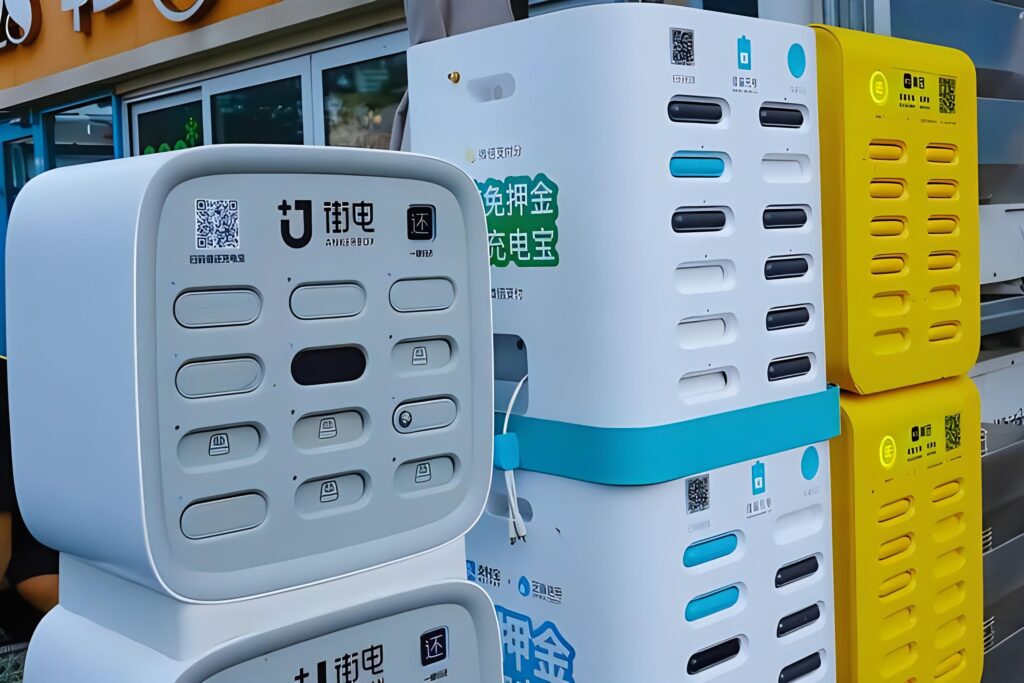
It’s 10 p.m., you’re lost, and your phone is at 2%. In most countries, you’d panic. In China, you just walk into any store. Shared power banks are everywhere — restaurants, convenience stores, malls, even bars. You scan a code, grab a battery pack, and you’re charging in 10 seconds.
They come with all the cables you need — Lightning, USB-C, micro-USB. When you’re done, you return it to any station in the city. The cost is pennies per hour. Over 600 million shared power bank users exist in China. iiMedia Research Moreover, you’ll test this system more than you’d like — especially if you’re bad at charging your phone — and you’ll always find a power bank within two minutes of needing one.
How They Work (It’s Simple)
Using a shared power bank is easy, even for foreigners. Find a station near the cashier or entrance, scan the QR code with Alipay or WeChat Pay, and a battery pops out. When you’re done, push it back into any empty slot — the charge stops automatically.
You get charged by the hour. The first 30 minutes are usually free, then around 1 to 2 yuan per hour (about 14 to 28 cents). You do need a Chinese payment method, so make sure you understand paying with your phone in China before you arrive.
A Quick Note on Staying Connected
A charged phone doesn’t help without data, but getting connected in China is easier than ever. A China eSIM takes five minutes to set up online — you can do it before your plane lands. Data is cheap, speeds are fast, and coverage is excellent even in remote areas. Just download the apps you need before you go — Google services don’t work in China.
5. Tipping Is Not a Thing Here
No, Seriously — Don’t Tip
In China, tipping is not a thing — not in restaurants, not in taxis, not for anyone. It feels wrong if you’re American, where you’re trained to tip for everything. But in China, tipping can actually be rude. It implies the person doesn’t earn enough or that you’re showing off.
You might try to tip a waiter in Beijing out of habit. He’ll look at you like you’re crazy and push the money back. Service workers in China earn a regular wage — they don’t depend on tips to pay rent. So save your money, don’t feel guilty, and just pay the bill and leave. It’s that simple.

When People Expect Extra (They Don’t)
Are there any exceptions? Barely. Tour guides might appreciate a small gift if they do an amazing job — not money, but a small souvenir from your country works better. Hotel staff and taxi drivers won’t expect tips — they’ll just be confused.
You might be in a taxi in Xi’an when the fare is 23.5 yuan. You’ll give the driver 25 and wave off the change. He’ll insist and literally chase you out of the cab to give you 1.5 yuan back. That’s how serious they are about not accepting extra money. Budget the way you would in Europe or Japan — service is included.
The Cultural Reason Behind It
It goes back to the concept of “face” — or mianzi. Doing your job properly is a source of pride. Accepting extra money for doing your job implies you wouldn’t do it well otherwise. It’s also about equality: everyone has their role, and everyone gets paid fairly for their work.
In Shanghai, some high-end restaurants now add service charges, but that’s already on the bill — you don’t add extra. For 99% of your trip, the rule is simple: no tipping. Ever. For anything. You’ll save money, and you won’t accidentally insult anyone.
6. “Small City” = 5 Million People
China’s Definition of “Small” Will Blow Your Mind
A Chinese friend will tell you about their hometown. “It’s a small city,” they’ll say. “Only five million.” Five million — that’s bigger than your country’s largest city, and they call it small. This is the first thing that messes with your head in China. The scale of everything is different.
China has more than 160 cities with a population over 1 million. UN World Urbanization Prospects The United States has about 10. By comparison, you’ll step off a train in a city you’ve never heard of and find 40-story buildings, a 12-line subway, and a mall bigger than your hometown airport. And someone will say, “Oh, this place is nothing.”

Why This Matters for Your Trip
This changes how you plan. You might think you can “see” a “small” Chinese city in one day — you can’t. A five-million-person city has multiple districts, each like a city of its own. Take Suzhou: guidebooks call it a “garden city” and make it sound like a quiet day trip from Shanghai. Suzhou has 12 million people and more subway lines than Chicago.
You can barely see Suzhou’s old town in a day, let alone the whole city. Plan accordingly — give yourself more time than you think you need. Pick fewer cities and spend longer in each. And don’t try to “do” China in two weeks. Nobody can. It’s too big.
The Cities You’ve Never Heard Of (But Should Visit)
Those “small” cities you’ve never heard of? Some are amazing. Hangzhou — relatively unknown in the West — has the stunning West Lake and incredible food, and it’s only 45 minutes from Shanghai by train. Xiamen is a coastal gem with colonial architecture and great seafood. Chengdu has giant pandas and the most relaxed atmosphere in China. Don’t limit yourself to Beijing and Shanghai — the real China is in the cities you haven’t heard of yet.
7. It’s Not Just Skyscrapers
The Natural Diversity Is Mind-Blowing
Before you go to China, you’ll picture endless skyscrapers and concrete. You couldn’t be more wrong. China is one of the most geographically diverse countries on Earth — from tropical rainforests to frozen deserts, from karst mountains to endless grasslands.
China has 57 UNESCO World Heritage Sites. UNESCO Many of them are natural sites. Stand on top of Huangshan watching the sun rise over a sea of clouds. Float down the Li River in Yangshuo, surrounded by limestone peaks. You can even hike in Zhangjiajie, where 3,000-foot sandstone pillars rise from the forest. That’s just three places — there are hundreds more.

From Desert to Tropical Jungle
China has every climate you can imagine. In the far north, Harbin drops to -30°C in winter, where they build entire cities out of ice. The eastern coast has four distinct seasons, with cherry blossoms in spring and colorful leaves in autumn. In the southwest, Yunnan province is the most biodiverse part of China — rainforests, Tibetan villages, and snow-capped mountains all in one trip.
In the far west, Xinjiang has desert landscapes that look like Mars and mountain lakes with impossibly blue water. On Hainan Island in the south, you’ll find tropical beaches and warm water year-round. You could spend a year just exploring China’s natural beauty.
UNESCO Sites Galore
If you love UNESCO sites, China is your playground. The cultural sites get all the attention — the Great Wall, Forbidden City, Terracotta Warriors — but the natural sites are the real hidden gems. Jiuzhaigou Valley has lakes in every shade of blue and green with water so clear you can see fish 30 feet down. Wulingyuan (Zhangjiajie) has over 3,000 quartz sandstone pillars, some over 1,000 meters tall. Get out into the countryside — that’s where the real magic is.
8. Street Food Is Safe (and Life-Changing)
Yes, It’s Safe — Here’s Why
You might avoid street food your first week, convinced it’ll give you traveler’s diarrhea. Then you’ll get hungry late at night in Xi’an. The only thing open will be a street stall selling roujiamo — Chinese hamburgers. Eventually, you’ll give in. It’ll be the best thing you eat on your entire trip. And you won’t get sick.
Here’s the truth: street food in China is usually safer than restaurant food. Why? Turnover is so high. Food doesn’t sit around — it’s made fresh and sold immediately. At a busy street stall, nothing is older than 10 minutes. Just follow one rule: eat at busy stalls. If locals are lined up, it’s good — and it’s safe.

The Dishes That Will Change Your Life
Here are the street foods that’ll make you obsessed. First, roujiamo — a shredded pork sandwich from Shaanxi with crispy bread and slow-cooked spiced pork, for about $1.50. You’ll eat at least one a day in Xi’an. Second, stinky tofu — it smells like garbage left in the sun, but tastes amazing: crispy outside, creamy inside, with chili sauce and cilantro.
Third, jianbing — a breakfast crepe made with mung bean flour, egg, scallions, crispy wonton, and sweet bean sauce. The best breakfast sandwich ever invented. Fourth, malatang — spicy hot pot on a stick, cheap and perfect after a night out. And fifth, anything grilled on a stick — lamb skewers, mushrooms, potatoes, corn — with cumin and chili powder. Simple, but perfect.
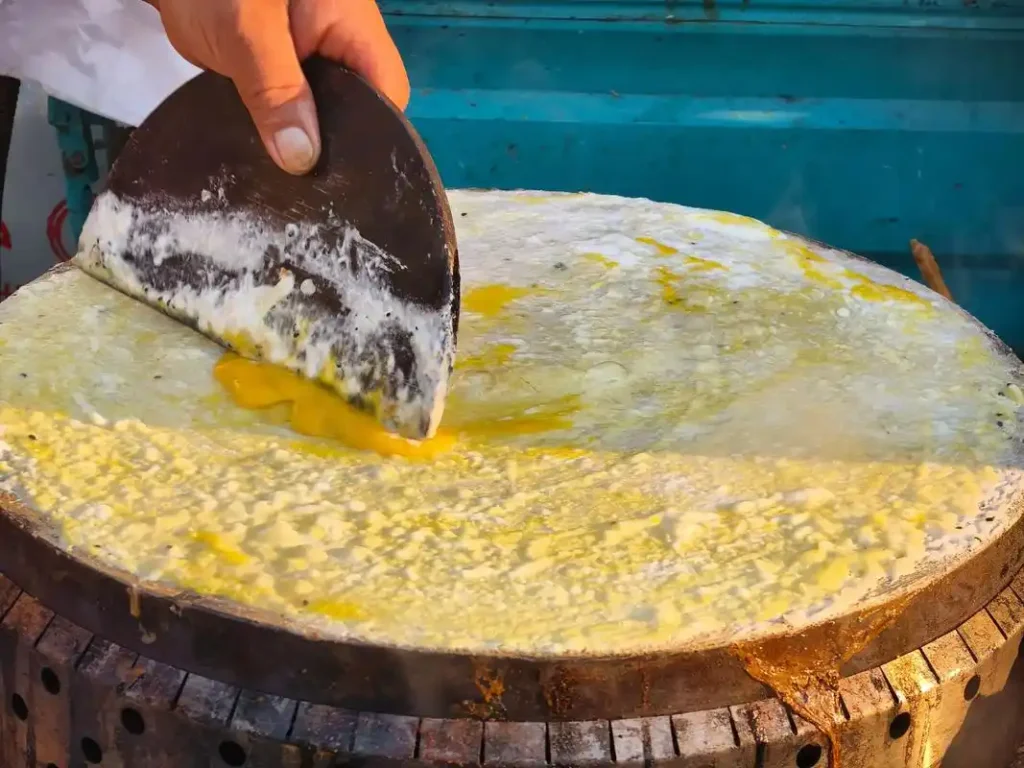
How to Order Like a Pro
Ordering street food without speaking Chinese is easier than you think. Most vendors have picture menus — just point at what you want and hold up fingers for how many. Done. In tourist areas, some even have English menus.
If there are no pictures, watch what the person in front of you gets, point at it, and say “yi ge” — that means “one.” They’ll understand. Payment is easy too: most vendors accept phone payments. Just scan their QR code. Set up mobile payments before you go, and carry small bills as backup — some older vendors prefer cash. And eat standing up — that’s how locals do it, and it means you can try more stalls.
9. Never Take a Taxi During Rush Hour
The Subway Is Always Faster
Here’s one simple rule: if it’s between 7 and 9 a.m. or 5 and 7 p.m., do not get in a taxi. Chinese cities have some of the worst traffic in the world. During rush hour, you can sit for an hour and move one kilometer.
Don’t make this mistake in Chongqing. If you have a train to catch and think a taxi would be faster — think again. You could sit in traffic for 45 minutes, watching the subway entrance pass by three times. You might even miss your train and have to buy a new ticket. Learn from others’ mistakes — take the subway. Chinese subway systems are the best in the world: cheap, clean, efficient, and trains come every two minutes during peak hours.
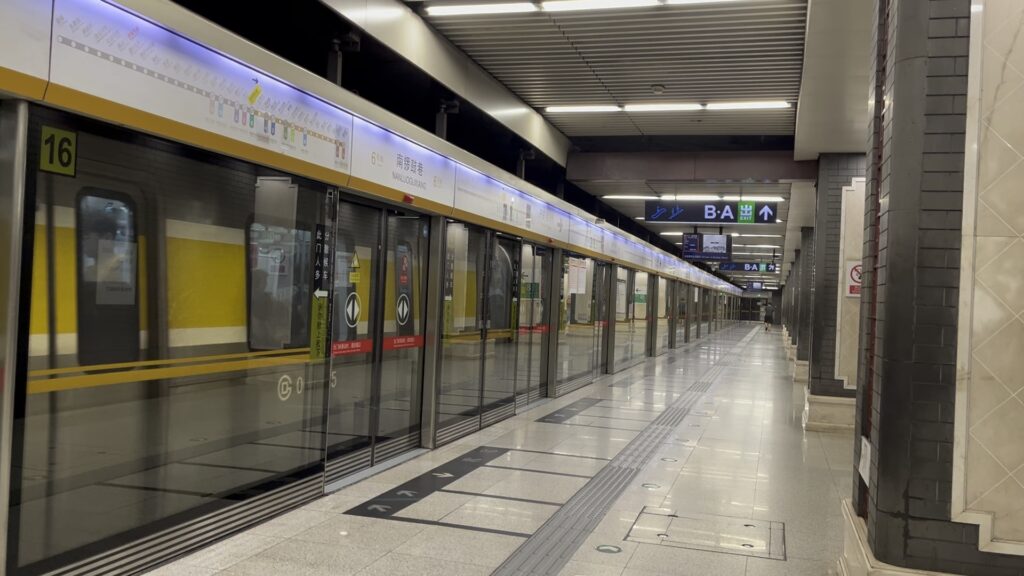
When Taxis Actually Make Sense
Taxis aren’t always bad. Late at night after the subway closes, take a taxi — no traffic, fast and cheap. You can also use ride-hailing apps like Didi, which work just like Uber and are usually cheaper than regular taxis.
If you’re going somewhere the subway doesn’t reach or traveling with a group, splitting a taxi might be cheaper than four subway tickets. And if you’re carrying heavy luggage, it’s worth the convenience. Just avoid rush hour, and always ask the driver to use the meter. Say “da biao” — most drivers will. Some near tourist sites might try to negotiate a fixed price — don’t fall for it. The meter is always cheaper.
A Better Way to Get Between Cities
For travel between cities, never fly if the distance is under 1,000 kilometers — take the train. China’s high-speed rail network spans over 45,000 kilometers, the largest in the world. World Bank It connects almost every major city.
China’s high-speed trains are fast, comfortable, and cheap. Beijing to Shanghai (1,300 km) takes 4.5 hours — faster than flying once you add airport security and travel time. A second-class ticket costs about $80. Just book popular routes in advance, especially during holidays.
10. Your Favorite Souvenir Won’t Be What You Think
Skip the Silk and Tea Sets
What do people bring back from China? Silk scarves, tea sets, porcelain vases, little pandas. You know what happens with those souvenirs? They sit on a shelf collecting dust. You might buy a silk scarf in Suzhou — expensive, “authentic.” You’ll wear it twice. Then it’ll sit in the back of your closet.
Instead, the best souvenirs aren’t the ones everyone tells you to buy. They’re the things you actually use — the things that remind you of specific moments. The best souvenir you’ll bring back from China? A $5 plastic water bottle with a panda on it. You’ll use it every day. Every time you pick it up, you’ll think of Chengdu. That’s worth more than any silk scarf.
What You’ll Actually Want to Bring Home
Here are better ideas. First: Chinese snacks — the weird ones you can’t get at home. Spicy gluten sticks, dried squid, green tea KitKats, white rabbit candy. They’re cheap, fun, and they get eaten, not stored. Second: phone accessories — cool cases, pop sockets with Chinese characters, charging cables for a dollar or two.
Third: everyday tea from the supermarket, not the overpriced tourist packages — that’s the real Chinese tea. Fourth: streetwear with Chinese character designs — Beijing and Shanghai have amazing street fashion, and you can find unique pieces for $10-20. Fifth: anything with pandas — keychains, socks, stickers. Pandas never get old.
Sixth: something you make yourself. The most meaningful souvenirs are the ones you create — paint a DIY Terracotta Warrior in Xi’an, carve a personal seal or paint a Lord Rabbit in Beijing, or make a traditional incense plaque in a Shanghai workshop. They cost almost nothing, take an hour, and you’ll keep them forever.
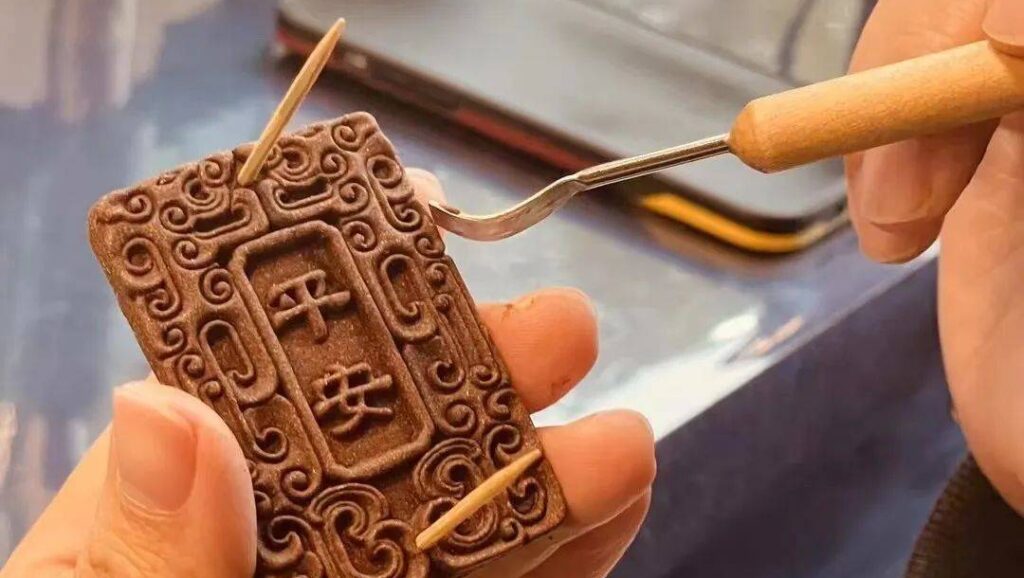
The Best Souvenir Is Free
The best souvenir from China isn’t something you buy — it’s something you collect. The subway tickets from every city, restaurant receipts with red stamps, train tickets, museum stubs, paper fortunes from temples. Keep all of them in a small notebook with notes on the back — where you were, who you were with, what happened that day.
And photos, obviously. Take thousands of them — not just the tourist spots, but the street food stalls, the subway stations, the weird signs, the people you meet. Those little pieces of paper and photos are worth more than anything you could buy. They’re your story.
Quick Recap: What to Remember Before You Go
That’s a lot of information. Let’s make it simple. Here are the 10 things in one easy list:
- Mildly spicy is not mild. Order “no spice” if you can’t handle heat. Sichuan and Hunan are especially dangerous.
- Public restrooms are nice now. The toilet revolution worked. Carry tissues just in case, but you probably won’t need them.
- Delivery apps will ruin you. 30-minute delivery for everything. Enjoy it while you can. Cry when you get home.
- Your phone will never die. Shared power banks are everywhere. And a China eSIM keeps you connected.
- No tipping. Seriously. Nobody expects it. Trying to tip might even be rude.
- “Small city” means 5 million people. Plan accordingly. You can’t see a Chinese “small city” in one day.
- Nature is mind-blowing. Don’t just visit cities. Go see Huangshan, Zhangjiajie, and Yangshuo.
- Street food is safe. Eat at busy stalls. Try everything. Roujiamo will change your life.
- Never take taxis during rush hour. Take the subway. It’s faster, cheaper, and air-conditioned. Between cities, take the bullet train.
- Skip the silk and tea sets. The best souvenirs are snacks, phone accessories, and all the little ticket stubs you collect.
Beyond the List: More Things to Know Before Traveling to China
China is not what you expect. It’s better, and worse, and more complicated, and more wonderful. You’ll go there with a head full of stereotypes and leave with your mind completely changed. That’s the best part of travel — when you go somewhere and realize everything you thought was wrong.
If you’re planning a trip, do it. Don’t wait. Don’t overthink it. Start by figuring out visa-free entry to China if you’re eligible, then figure out when to go to China based on what you want to see.
Want city life and history? Start with Beijing and Shanghai. Want food and pandas? Go to Chengdu. Want nature and mountains? Head to the Avatar Mountains or the Li River.
There’s no wrong way to do China — there’s just your way. And whatever way you choose, you’ll come back with stories, a higher standard for food delivery, and a strange addiction to spicy gluten sticks. It’s worth it. Now go pack your bag. And don’t forget the tissues for the spicy food.