If you are planning your first visit to China, you might be wondering how long to spend in its most cosmopolitan city. This 3 days in Shanghai itinerary will give you the perfect balance. China’s 240-hour visa-free transit policy opens up long stays for travelers from dozens of countries. More and more foreigners are putting together 10-day China trips — hopping between cities and trying to figure out how to split their time. Which cities should you pick? How many days does Shanghai deserve when you also want to see Beijing, Xi’an, or Chengdu? It is a common dilemma.
Finding the Right Pace
Shanghai is almost always the first stop — it is China’s biggest international air hub and the natural entry point for most visitors. And once you arrive, the question gets trickier: two days? Four? A whole week? This guide helps you decide how much time to allocate and how to arrange it. After years of showing travelers around, we think 3 days is the sweet spot. It gives you enough time to experience the Bund, the French Concession, old-town alleyways, and a day trip, without rushing. Shanghai is a city of staggering contrasts. Art deco bank buildings stare across the Huangpu River at glass skyscrapers that pierce the clouds. With more than 26 million residents, it is one of the largest and most dynamic urban areas on Earth Britannica. Trying to see everything in a weekend would leave you exhausted; staying for a week might feel overwhelming for first-timers.
Shanghai welcomed a record 9.36 million inbound tourists in 2025, surpassing its 2019 pre-pandemic peak Shanghai Municipal Administration of Culture and Tourism. The city is back on every traveler’s radar, and you need a smart plan to beat the crowds. This itinerary is designed for first-time visitors who want to see the classics, eat well, and feel local life without overpacking each day. We have included cultural highlights, practical tips, and two Day 3 options so you can tailor the trip to your style.
Day 1 — Old Town, The Bund & Nanjing Road
Your first day covers the Shanghai everyone recognizes from postcards. We start in the oldest part of the city, move to the most famous waterfront, and end with the neon-lit shopping street. It is a classic introduction that moves from ancient to colonial to modern, all in one day.
Morning: Yu Garden & City God Temple
Start your day early at Yu Garden and the Old Town (Nanshi). This is the oldest part of Shanghai — a maze of narrow lanes, traditional architecture, and the city’s most famous classical garden. Getting there early means fewer crowds. The garden opens around 8:30 a.m., and the surrounding bazaar wakes up even earlier.

Yu Garden (Yuyuan) is a classical Chinese garden dating back to the Ming Dynasty (1559). It is not huge — you can see the whole thing in about 90 minutes. But it is beautifully landscaped with rockeries, ponds, pavilions, and winding pathways. The first hour after opening is the most peaceful, but even when crowded, there are quiet corners to discover. Admission is around 40 RMB (about $5.50).
Right next to Yu Garden is the City God Temple area and Yuyuan Bazaar. It is a sprawling complex of traditional-style buildings filled with shops, snack stalls, and restaurants. Try classic Shanghai street food here: shengjian bao (pan-fried pork buns), xiaolongbao (soup dumplings), and tanghulu (candied hawthorns on a stick). We recommend grabbing snacks from street stalls rather than sitting down for a full meal — the food is usually better and much cheaper.

Most travelers spend 3 to 4 hours in the Old Town area. If you have extra time, wander into less touristy lanes west of Yu Garden. Residential lilong (alleyway) neighborhoods give you a glimpse of everyday life the main strips do not show.
Afternoon: The Bund & Waibaidu Bridge
From the Old Town, it is about a 20-minute walk or 10-minute taxi ride north to the Bund (Waitan). The afternoon light is ideal for photographing the colonial architecture. The sun hits the west-facing facades just right, and the skyline across the river glows as the afternoon goes on. The Bund stretches for about 1.5 kilometers along the west bank of the Huangpu River. It is home to 52 colonial-era buildings that once housed the banks, trading houses, and consulates that made Shanghai the “Wall Street of the Orient” in the 1920s and 1930s Britannica.
Walk from south to north, starting near the Custom House and ending at Waibaidu Bridge — that iconic steel truss bridge you have seen in countless movies. Highlights along the way include the Peace Hotel (formerly the Sassoon House) with its distinctive green copper pyramid roof. You will also see the Customs House with its Big Ben-style clock tower, and the Bank of China building with its art deco-meets-Chinese-pagoda design.

To truly understand the stories behind these buildings, consider booking a guided Bund walking tour. You will learn about trading empire rivalries, the architects who shaped the skyline, and the scandals that happened inside. Our Bund City Walk takes you past the most significant buildings with an expert local guide who brings history to life. It is a great way to start your 3 days in Shanghai with context, not just photos.
Plan to spend about 2 hours on the Bund itself. If you want to go inside one of the historic buildings, the Peace Hotel’s lobby is open to visitors and worth a quick look. The marble and stained-glass details are stunning.
Evening: Nanjing Road Pedestrian Street (Optional)
If you still have energy after a full day of walking, Nanjing Road Pedestrian Street is worth a quick visit. It is just a few blocks west of the Bund, and evening is the best time to go. It is Shanghai’s most famous shopping street. You will find neon signs, street performers, massive crowds, and all the consumer chaos you would expect from the “Fifth Avenue of China.” It is touristy, it is loud, and it is undeniably fun to walk through once. Most travelers spend 30 to 60 minutes here before calling it a day.
From the Bund end of Nanjing Road, you can also find plenty of dinner options — from cheap dumpling houses to upscale restaurants. If you are exhausted by evening, feel free to skip it entirely. No one will judge you for heading back to your hotel after a packed first day.
Day 2: French Concession, Shikumen & River Views
On your second day, we trade grand boulevards and crowds for leafy streets and European-style villas. We explore the neighborhood many locals and expats consider the most charming part of Shanghai. The former French Concession is where Shanghai feels most like a European city. You will find tree-lined avenues, sidewalk cafes, boutique shops, and a relaxed vibe that nicely counters the hustle of Day 1. We then dive into Shanghai’s unique shikumen architecture and finish with a river crossing for the classic Pudong skyline.
Morning: French Concession Wandering
Start your day in the heart of the former French Concession. This is where the real magic happens. Streets are lined with plane trees (imported from France in the early 20th century), art deco villas, garden houses, and small shops.
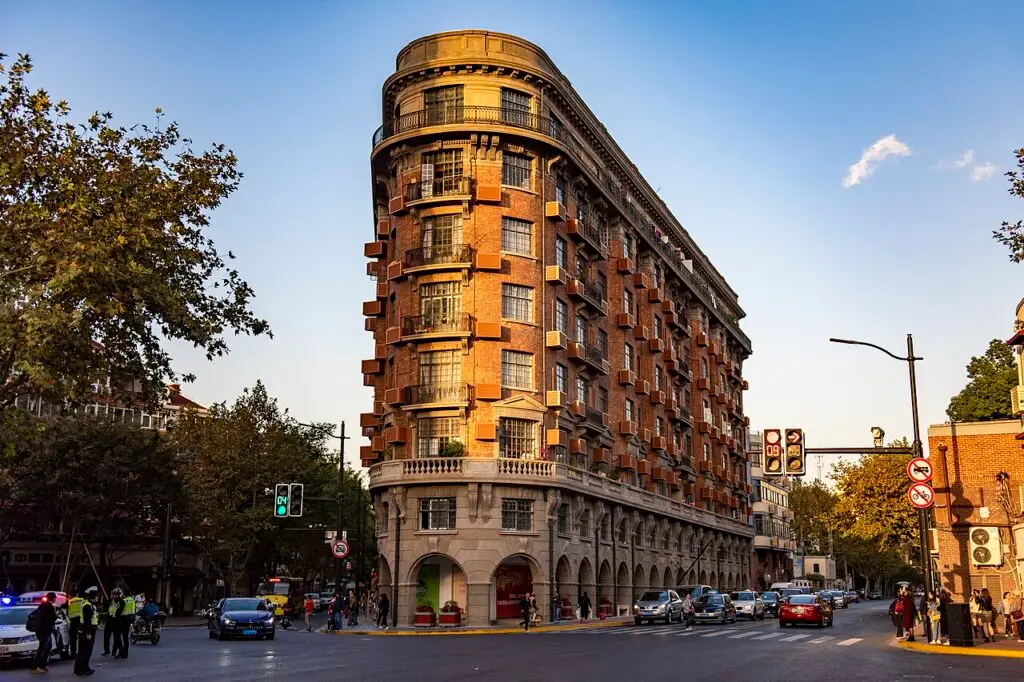
Two streets you should not miss: Wukang Road and Anfu Road. Wukang Road is famous for its historic villas — about 30 buildings with protected heritage status. The most iconic is Wukang Mansion (Normandie Apartments), a triangle-shaped art deco building that looks like it belongs in Paris. The whole street is only about 1 kilometer long, but it is packed with history and photo opportunities.
Anfu Road, a few blocks north, is the trendier cousin. It is known for boutique shops, independent bookstores, coffee roasters, and small galleries. This is where Shanghai’s creative class hangs out — the vibe is young, stylish, and laid-back. Pop into a cafe for breakfast, browse a few shops, and soak in the atmosphere.

The best way to experience the French Concession is simply to wander. Pick a direction and walk — you will stumble on beautiful lanes, hidden gardens, and charming corners not in any guidebook. Give yourself at least 3 to 4 hours, and wear comfortable shoes.
Afternoon: Shikumen & North Bund
Most tourists know Xintiandi, Shanghai’s most famous shikumen district. Traditional stone-gated houses there have been renovated into upscale shops, restaurants, and bars. “Shikumen” literally means “stone gate,” referring to the stone doorframes marking each alleyway compound. These buildings blend Chinese courtyard layouts with Western architectural details, and they are unique to Shanghai. Xintiandi is polished and touristy, full of international fashion brands and fancy cocktail bars. It is worth a quick look, but the real shikumen experience is elsewhere.
For a deeper, more authentic dive into shikumen life, we recommend our Shanghai Shikumen & North Bund Day Tour. The centerpiece is Jin Chao Ba Long (8 Shikumen Lanes), a beautifully restored shikumen complex near the North Bund. Traditional stone-gated houses have been carefully preserved and brought back to life here. Unlike polished tourist districts, this is a real neighborhood where you can feel the texture of old Shanghai architecture up close.
What the Tour Includes
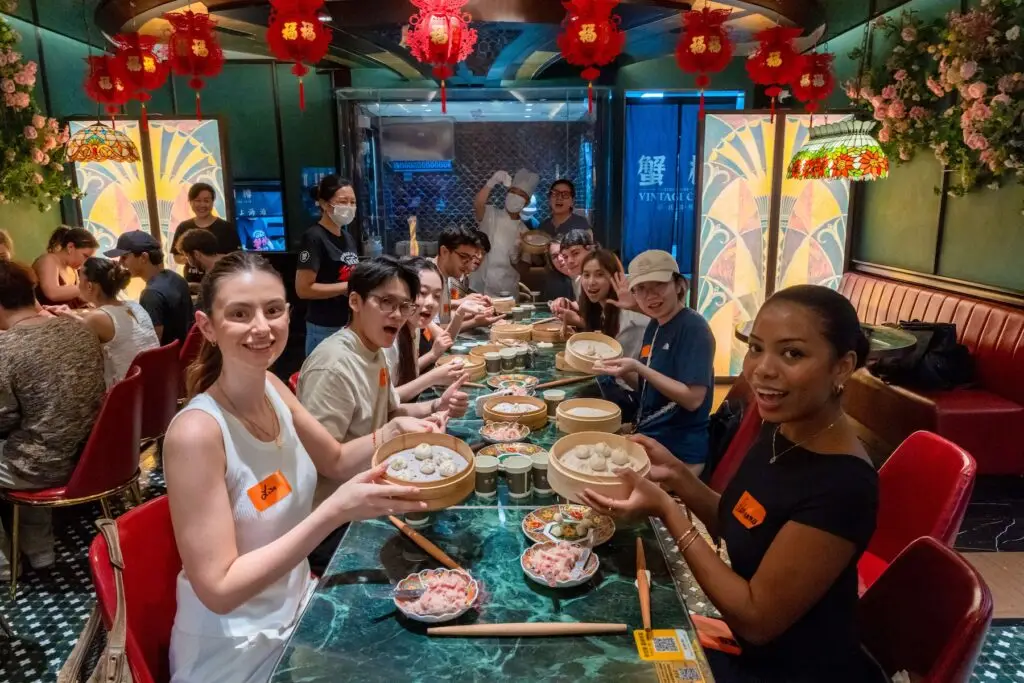
Inside the shikumen buildings themselves, you will get a hands-on xiaolongbao (soup dumpling) making session. You will learn to fold and pleat the delicate wrappers from experienced instructors. You can also try a gentle tai chi session practiced within the quiet courtyard of a historic shikumen house. Both experiences take place right inside the shikumen buildings, giving you a genuine sense of what daily life in these unique homes feels like.
The tour also strolls along Zhapu Road, a historic food street full of old Shanghai eateries. These heritage buildings have been feeding locals for generations. And you will walk the North Bund riverside promenade. It is one of the best vantage points in the city for photographing the Lujiazui skyline across the Huangpu River. It is far less crowded than the main Bund, and the angle is perfect for capturing those iconic skyline shots.
The tour runs from late morning through the afternoon. It is one of our most popular experiences because it balances history, food, and local life all in one day.
Evening: River Crossing & Pudong Night View (Optional)
If you still have energy after a full day, the North Bund area makes the perfect jumping-off point for a ferry crossing to Pudong. The cheapest and most fun way to cross the Huangpu River is on the regular passenger ferry. It costs only 2 RMB (about 30 cents) and takes about 5 minutes, with fantastic views from the deck. Skip the Bund Sightseeing Tunnel — it is overpriced and underwhelming.
On the Pudong side, head to Lujiazui to see the “three skyscrapers”: Shanghai Tower, Shanghai World Financial Center, and Jin Mao Tower. You can visit an observation deck for a bird’s-eye view. The Shanghai Tower has the highest observation deck (118 floors), and the Shanghai World Financial Center has the famous “bottle opener” design. Expect to pay 180-220 RMB ($25-$30). Alternatively, walk along the Lujiazui riverside promenade — you get a great view of the Bund lit up at night, and it is free.
Buildings light up around dusk and stay on until about 10 or 11 p.m., depending on the season. Grab a street-side drink or just walk and enjoy the view — it is one of the world’s great urban spectacles. But if you are worn out from the day, no pressure — you will have other chances to see the skyline.
Day 3 Options — Water Town, Disneyland or a Cultural Show?
By Day 3, you have seen Shanghai’s core — the Old Town, the Bund, the French Concession, and shikumen neighborhoods. Now choose your own adventure. We have two very different options depending on your travel style. Option A is our top pick for first-time China visitors; Option B is perfect if traveling with kids or you just love Disney parks.

Option A: Zhujiajiao Water Town Day Trip
If you want to experience a quieter, older side of China, a water town day trip is the way to go. You will see what this region looked like before the skyscrapers. Of all the water towns near Shanghai, Zhujiajiao is the closest and most accessible — about an hour’s drive from downtown, depending on traffic.
What to See and Do
Zhujiajiao is an ancient water town with a history of more than 1,700 years. It is often called the “Venice of Shanghai,” and while that nickname is a bit of a cliché, it is easy to see why. Canals crisscross the town, stone arches bridge the waterways, and whitewashed houses with dark tile roofs line the banks. You can take a boat ride through the canals, visit traditional courtyard gardens, and walk along the old stone streets. You can also try local snacks like zongzi (sticky rice wrapped in bamboo leaves) and stinky tofu. Yes, it smells, but many travelers love it — give it a try if you are feeling adventurous.
The town is less crowded than better-known water towns like Zhouzhuang, but it still gets busy on weekends and holidays. Visiting on a weekday is ideal if your schedule allows. Plan to spend 4 to 6 hours exploring, including lunch and a boat ride. The old town entrance is free, but individual attractions charge admission. It is usually 10-30 RMB ($1.40-$4.20) each, or a combined ticket for about 60 RMB ($8.40).
How to Get There
You can get to Zhujiajiao on your own via the Metro. Take Line 17 to Zhujiajiao Station, then a short bus or taxi ride to the old town. But the journey takes about 1.5 to 2 hours each way from central Shanghai. For a more comfortable and informative experience, we recommend you join our Zhujiajiao water town day trip. It includes round-trip transportation from downtown Shanghai, a guided walking tour of the town, and a canal boat ride. It is hassle-free and gives you the context that makes the visit much more meaningful.
Another great thing about Zhujiajiao for Day 3: you will be back in Shanghai by late afternoon. That gives you time for last-minute shopping, a final dinner, or just relaxing before you leave. It is a gentler way to end your 3 days in Shanghai than a full day at a crowded theme park.
Quick tip: If you skipped the Pudong skyline on Day 2 to save energy, this is your chance. Coming back from Zhujiajiao is a great time to fit it in. You can stop at Lujiazui on your way back into the city to see the “three skyscrapers”: Shanghai Tower, Shanghai World Financial Center, and Jin Mao Tower. Or you can visit an observation deck for that classic bird’s-eye view. It is totally optional, of course — no shame in calling it an early night after a full day trip.
Option B: Shanghai Disneyland
If you are traveling with children, or if you are just a Disney fan, Shanghai Disneyland might be your top pick for Day 3. Opened in 2016, it is the first Disney theme park in mainland China and the largest Disney castle in the world (the Enchanted Storybook Castle). The park draws around 14 million visitors per year, making it the fifth-most-visited theme park in the world People’s Daily. Yes, it is crowded, and yes, you will wait in lines. But it is also a really well-done park with unique attractions you will not find at any other Disney park.
Must-See Rides and Tips
Highlights that are exclusive to Shanghai Disney include Tron Lightcycle Power Run, a thrilling roller coaster that is hands-down the best ride in the park. Another must-see is Pirates of the Caribbean: Battle for the Sunken Treasure, a technologically amazing boat ride that is way better than the Pirates rides at other Disney parks. The park also features the Gardens of Imagination with the unique Wandering Moon Restaurant. The park also has all the classic Disney lands — Adventure Isle, Fantasyland, Tomorrowland, Toy Story Land — plus the unique Treasure Cove.
Be prepared for crowds. On peak days (weekends, Chinese holidays, school breaks), popular ride waits can exceed 2 hours. On quieter weekdays, you might get 30-60 minute waits for the big rides. To make the most of your day, arrive at least 30 minutes before opening. Use the official Shanghai Disney Resort app to check wait times and book Premier Access (paid fast passes). And have a rough plan of your must-do rides.
Is it worth it? That depends. If you have never been to a Disney park before, absolutely — it is a world-class theme park experience. The same goes if you are traveling with kids. But if you have been to other Disney parks and prefer Chinese culture and history, Zhujiajiao will probably feel more unique. We usually recommend Option A for first-time China visitors, but we totally get the Disney appeal.
Option C: Immersive Cultural Dinner Show
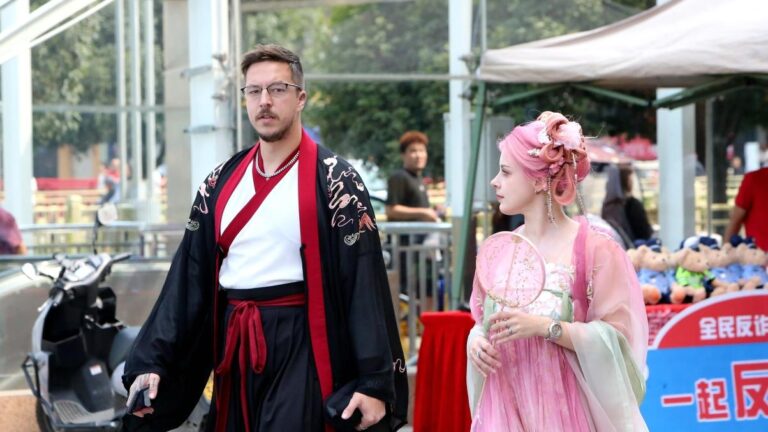
If you want something unique and cultural for your last evening in Shanghai, consider an Immersive Cultural Dinner Show. These themed banquets combine traditional Chinese cultural performances with authentic regional cuisine — all while you dress up in period costumes with professional makeup. It is like stepping into a banquet from ancient China.
The show features performances spanning multiple dynasties, with Sichuan-style cuisine as the highlight. You can choose different seating tiers and even add costume rental and makeup as optional extras. It is a fun, relaxed way to end your Shanghai trip — especially if you want to experience Chinese culture in a more hands-on way than a typical museum visit.
Option D: Immersive Dinner Show with 360° Rotating Stage
Prefer a Jiangzhe cuisine menu with a spectacular rotating stage? The Shanghai Immersive Dinner Show combines live performances from multiple dynasties with a 360° rotating stage, all set in Shanghai’s Xuhui riverside area. Costume changes and makeup are available as optional add-ons.
Where to Stay in Shanghai
Where you stay in Shanghai can make a big difference in how you experience the city. Here are our three most recommended areas for first-time visitors, based on your priorities and budget.
The Bund Area
The Bund area is the most convenient location for sightseeing — you will be within walking distance of the Bund, Nanjing Road, and Yu Garden. The hotels here tend to be on the expensive side, especially the luxury properties right on the Bund itself. But if you can splurge, waking up with a view of the Pudong skyline is unforgettable. Mid-range options are a few blocks inland but still walkable. Budget travelers can find cheaper hotels near People’s Square, which is just a 10-minute walk from the Bund.
The French Concession
The French Concession is our favorite neighborhood for atmosphere. Tree-lined streets, great cafes, boutique shops, and a more local feel than the Bund area. It is not the most central location for the major tourist sites — the Bund is about 20 minutes away by taxi or subway. But it is the area where you will probably want to spend your evenings anyway. There are hotels at every price point here, from luxury boutique properties to budget hostels. If this is your first time and you want the “Shanghai vibe,” stay in the French Concession.
People’s Square
People’s Square is the most practical choice for getting around. It is right in the center of the city and a major subway interchange. Lines 1, and 8 all stop there, and it is within walking distance of both the Bund and the eastern edge of the French Concession. Hotels here tend to be cheaper than Bund-side properties, and the area has plenty of restaurants and shops. It is not the most charming neighborhood — it is busy, commercial, and feels very urban. But for pure convenience, it is hard to beat.
One practical tip: try to book a hotel within 5 minutes’ walk of a subway station. Shanghai’s subway system is the second-largest in the world by route length. And it is by far the fastest way to get around the city Britannica. Being close to a station will save you a lot of time and hassle.
How to Get Around Shanghai
The subway (Metro) is your best bet for getting around quickly and cheaply. With 20+ lines covering most of the city and frequent trains, it is incredibly convenient. It also has English signs and announcements, and fares start at just 3 RMB (about 40 cents). It is the fastest and most reliable way to travel. Most trips within the city center cost 4-6 RMB. You can buy single-journey tickets from vending machines at every station.
Ride-hailing app Didi is very popular and often cheaper than taxis. It has an English version where you can enter your destination in English. Payment is handled through the app too — no cash or language barriers. Most taxi drivers do not speak English, so Didi is usually the more convenient option. Note that rush hour traffic can be brutal — from 7:30-9:30 a.m. and 5:00-7:00 p.m. Always take the subway if you need to be somewhere on time.
The Huangpu River ferry (2 RMB per ride) is a fun, scenic way to cross between Puxi and Pudong. For short trips in neighborhoods like the French Concession, shared bikes work great — just be careful of traffic on main roads.
Practical Tips for Your Shanghai Trip
A little preparation goes a long way in Shanghai. Here are the most important things to know before you go.
Money and Visa
- Payment: China is mostly cashless — Alipay and WeChat Pay are everywhere. Foreign visitors can link international credit cards to Alipay for purchases up to a certain limit. Carry some cash for small vendors and backup. Read our complete guide: /how-to-pay-in-china-foreigners/
- Visa: Check the latest visa requirements for your nationality before you go. Citizens of many countries enjoy 144-hour or 240-hour visa-free transit through Shanghai, perfect for a 3-day visit. Read our complete guide: /china-visa-guide-2026/
Language and Internet
- Language: Mandarin is the official language. You will find some English speakers in tourist areas, but do not count on it. For translation, we recommend using Doubao (豆包), a Chinese AI tool. It translates Chinese more accurately than most Western apps because it was built by ByteDance and understands colloquial language and local expressions. Google Translate works too if you have a VPN, but Doubao tends to be more reliable for day-to-day conversations in China. Save your hotel address in Chinese characters to show taxi drivers.
- Internet and VPN: Google, Facebook, Instagram and many other Western apps are blocked in mainland China. Get a VPN that works in China and set it up before you arrive.
Best Time to Visit
- Best time to visit: Spring (March to May) and autumn (September to November) are ideal, with mild weather. Summer is hot and humid; winter is cold and damp. October is especially pleasant. Try to avoid China’s major public holidays, especially May Day (early May) and National Day (early October). During these holiday weeks, tourist sites are packed, transport is crowded, and prices spike. It is best to plan around them if you can.
Extending Your Shanghai Trip
Three days gives you a great introduction to Shanghai. But if you have more time, there is plenty more to see — both within the city and in nearby destinations. Here is what we recommend.
Part 1: More Shanghai Neighborhoods & Sights
If you have an extra day or two in the city, here are more places worth exploring.
- Jing’an Temple — An active Buddhist temple right in the middle of Shanghai’s busiest commercial district. The contrast between its golden roof and surrounding glass towers is striking. Next door is the Jing Kerry Centre mall if you want to combine temple time with shopping.
- Jade Buddha Temple — Famous for its two jade Buddha statues, one seated and one reclining. It is a working monastery and one of the most important Buddhist sites in Shanghai. It has a quieter, more spiritual atmosphere than Jing’an Temple.
- Tianzifang — A trendy arts district built inside shikumen alleyways in the French Concession. Narrow lanes filled with boutiques, art studios, cafes, and small galleries. Touristy but fun to wander — great for souvenirs or people-watching.
- AP Plaza (Yatai Xindi) — The famous (or infamous) “fake market” under the Shanghai Science and Technology Museum. It is where foreigners go to bargain for knockoff goods — watches, bags, clothes, you name it. Quality varies wildly, and bargaining is expected (start at about a third of the asking price). A uniquely Shanghai experience.
- M50 Creative Park — Shanghai’s contemporary art district in a former textile factory along Suzhou Creek. Galleries, studios, and cafes — perfect if you are into art and design.
- Zhangjiang AI & Tech Walk — Skip the traditional sightseeing for a half-day dive into Shanghai’s tech future. Ride a self-driving Robotaxi, test 500+ AI gadgets at the MetAI Hub, watch a drone deliver your coffee, and stroll the crystal-clear AI Water Ring. Book our Shanghai AI & Tech Walk for the full experience.
Part 2: Suzhou Day Trip
Known as the “Venice of the East,” Suzhou is only about 25 minutes from Shanghai by high-speed train. It is famous for its classical Chinese gardens. The Humble Administrator’s Garden and the Lingering Garden are both UNESCO World Heritage sites. Suzhou also has a picturesque old town with canals and white-walled houses. A day trip to Suzhou gives you a taste of traditional China that feels worlds away from Shanghai’s skyscrapers.
We also offer Suzhou itineraries and can help you arrange a deeper Suzhou day trip experience. Check our Suzhou destination page for more information on what to see and how to plan your visit.
Part 3: Hangzhou Day Trip
About 45 minutes from Shanghai by high-speed train, Hangzhou is famous for West Lake, one of China’s most beautiful natural settings. The lake is surrounded by pagodas, gardens, and tea hills, and has inspired poets and painters for centuries. Rent a bike to cycle around, visit a tea plantation in the hills, or take a boat ride to one of the lake’s islands. Hangzhou cuisine is excellent, with local specialties worth seeking out. Try dishes like Dongpo pork and Longjing shrimp, cooked with the area’s famous Dragon Well tea leaves.
For more on what to do, where to eat, and how to plan your trip, visit our Hangzhou destination page.
For a unique cultural experience most tourists skip, consider a TCM acupuncture and cupping experience in Shanghai. Traditional Chinese Medicine is an important part of Chinese culture. Trying a treatment in Shanghai — where some of the country’s best TCM doctors practice — can be a fascinating and relaxing addition to your trip.

Plan Your Shanghai Itinerary With Us
Three days in Shanghai is enough to fall in love with the city. You will feel the energy of the Bund at night and get lost in the French Concession’s leafy lanes. You will try soup dumplings that make your eyes roll back in your head, and see a side of China that surprises you. The city is bigger and more diverse than most first-time visitors expect, and 3 days gives you just enough of a taste to leave you wanting more.
Want more Shanghai tips, all of our Shanghai tours, and hotel recommendations all in one place? Head over to our Shanghai destination page. It is your hub for everything Shanghai — neighborhood guides, food recommendations, and practical advice. You will also find all four of our Shanghai local tours, including the Bund City Walk and the Shikumen & North Bund Day Tour. Whether you are spending 3 days or a week, it has you covered.
However you plan your 3 days in Shanghai, go with an open mind and comfortable shoes. This city will surprise you — with its food, its energy, its contradictions, and its endless ability to reinvent itself. Welcome to Shanghai — you are going to love it.