Why Rowing in China Is Worth Trying
Most visitors to China see the country from the outside in. They walk the Great Wall, cruise the Li River, and eat their way through Chengdu. However, there is another way to experience a Chinese city — from the water, with a blade in your hand.
Rowing in China is a small but growing scene. In fact, a handful of cities now have active rowing communities where you can get on the water and see the skyline from an angle that no tourist boat will ever offer. Enthusiasts mostly drive this grassroots rowing movement — people who fell in love with the sport and built clubs around it. This is not a commercial industry with polished booking platforms. That is exactly what makes it interesting: you are joining a local community, not checking off a tourist activity.
However, finding these clubs is not always easy. Most of them do not have English websites. Yet if you know where to look, the experience is unforgettable. Furthermore, if you need help, we can connect you directly.
A Brief History of Rowing in China
Rowing arrived in China earlier than you might expect. In 1849, just six years after Shanghai opened as a treaty port, British merchants founded the Shanghai Rowing Club on the banks of Suzhou Creek. The first recorded rowing race on the creek took place that same year, drawing large crowds of curious locals.
Then, in 1905, the club built a grand Victorian-style boathouse at 76 South Suzhou Road. That building still stands today. After decades of use as a public swimming facility, the city restored it in 2021, and it now operates as a heritage cafe and bar. You can still see the original mosaic-lined swimming pool preserved under glass on the lawn.
For more than a century, elite sports schools and professional teams dominated rowing in China. That started to change around 2015, when private clubs began opening in cities with suitable waterways. Today, rowing is no longer just an Olympic sport reserved for athletes. Instead, it is becoming a lifestyle activity for anyone who wants to get on the water.
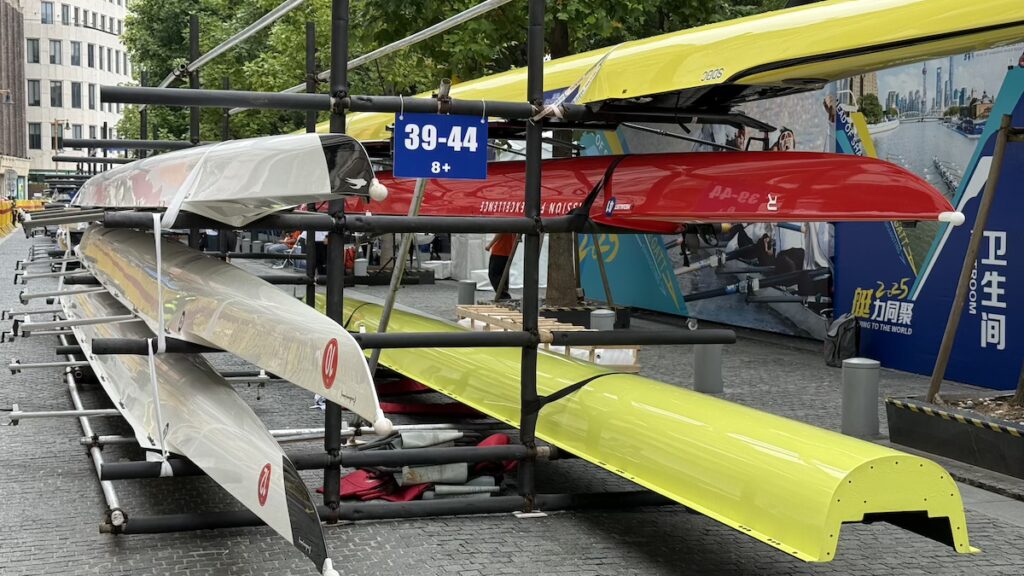
Top Cities for Rowing in China
Not every Chinese city has a rowing scene. You need calm water, a club with boats, and a community that welcomes newcomers. Based on our research, these nine cities have active rowing communities where you can get on the water.
Shanghai — The Birthplace
Shanghai remains the center of rowing in China. In fact, the city hosted the 2025 World Rowing Championships at Qingpu, with 1,139 athletes from 53 countries competing on Dianshan Lake (Shanghai Sports Bureau).
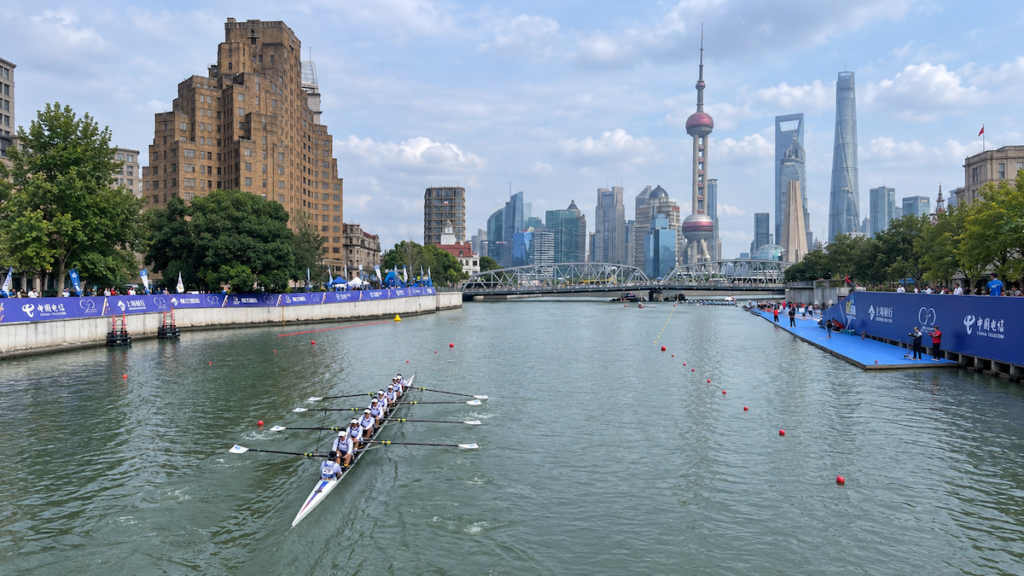
Currently, multiple rowing clubs operate across the city, concentrated in Songjiang, Pudong, and along Suzhou Creek. Whether you want a casual session or regular training, options exist at different levels. Additionally, the annual Shanghai Rowing Open on Suzhou Creek serves as the city’s signature event — a chase race and sprint race that pass through the heart of the city with the Bund skyline as a backdrop.
Suzhou — Rowing Through the Ancient Moat
Imagine gliding along the 20-kilometer ancient moat that wraps around the old city of Suzhou, passing under stone bridges and past classical gardens that are over a thousand years old. That is what rowing on the Suzhou moat feels like.
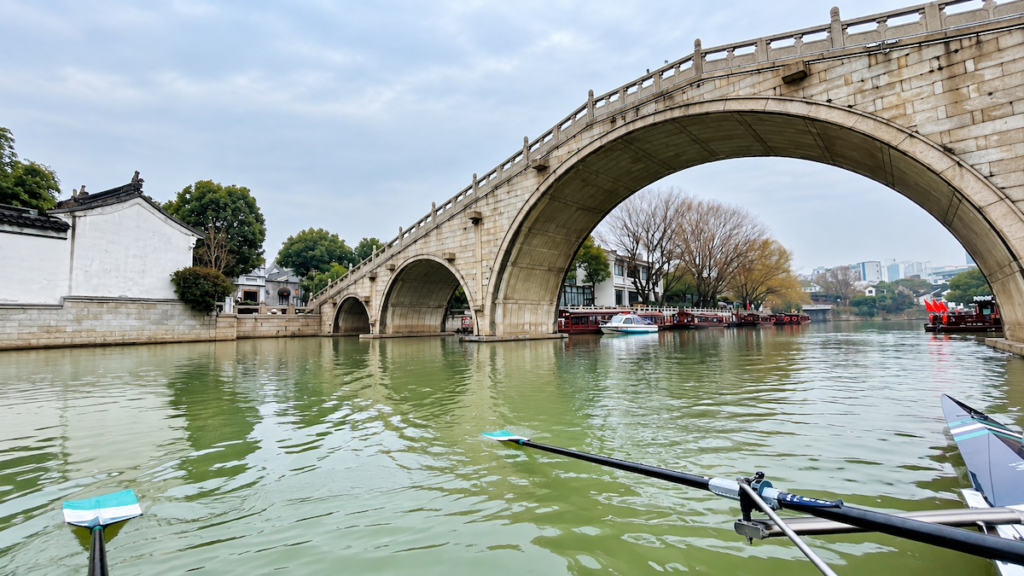
Rowing on the moat is one of the most atmospheric ways to experience the city. You pass by the same waterways that have surrounded Suzhou since the Tang Dynasty, but from a perspective that almost no visitor ever sees. In addition, it is a quiet, meditative experience — the opposite of the crowded tourist streets just a few meters away.
Nanjing — Asia’s Most Beautiful Rowing Course
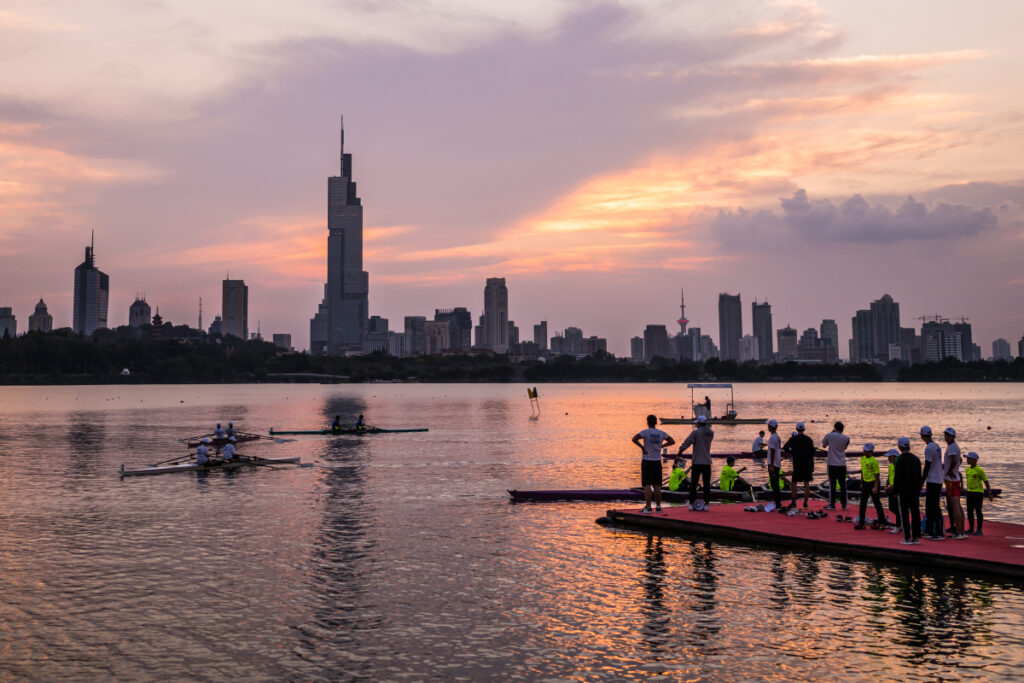
Former IOC President Jacques Rogge described Xuanwu Lake in Nanjing as “Asia’s most beautiful rowing course.” The lake sits inside a royal garden landscape, with the ancient city wall on one side and Zijin Mountain on the other.
Several rowing clubs operate on Xuanwu Lake. Moreover, rowing here puts you in one of the most historically layered settings in China — imperial gardens, Ming Dynasty walls, and a skyline that balances old and new. This is a city where the water and the history are impossible to separate.
Chengdu — Rowing with Pandas
Chengdu’s rowing scene centers on Jincheng Lake, a 669,000 square meter urban lake in the high-tech zone. Zhao Xiaoli, a former world champion in canoe sprint, founded the city’s main rowing club, Langsu Sports (浪速运动), in 2003. Since then, it has grown to over 10,000 registered members.
The club offers rowing, kayaking, canoeing, and dragon boat experiences on the lake. Meanwhile, Chengdu also hosted the rowing events for the 2021 FISU World University Games, which brought international attention to the city’s water sports infrastructure.
Wuhan — The City of a Hundred Lakes
Water defines Wuhan. The city’s East Lake (Donghu) is one of the largest urban lakes in China, and several rowing clubs operate there. Therefore, you can easily book a session and get out on the water for a rowing experience on one of the most expansive urban lake settings in the country.
Shenzhen — A River Through the City
Shenzhen’s Dasha River runs through the heart of Nanshan District and has become one of the city’s most unlikely rowing venues. The river is calm enough for training, and the contrast between rowers and the ultra-modern Shenzhen skyline behind them is striking. Surprisingly, it is a side of the city that almost no tourist ever sees.
Wuxi — Rowing on Taihu Lake
Wuxi sits on the shore of Taihu Lake, one of the largest freshwater lakes in eastern China. The lake offers open water for rowing, and local clubs have established training bases along the shoreline. In addition, the scenery here — misty hills, traditional stone bridges, and fishing villages — makes for a uniquely Chinese rowing experience.
Yangzhou — Ancient Canals and Modern Rowing
Yangzhou is famous for its historic Grand Canal heritage. Today, the city also has rowing clubs that let you experience the waterways from a rower’s seat. Moreover, combining a rowing session with a visit to Slender West Lake and the ancient canal district gives you a layered understanding of a city built around water.
What It Costs and What to Expect
A typical rowing session in China costs around $100 USD per person. This fee usually includes the boat, oars, a life jacket, and basic instruction from a coach. Sessions typically last one to two hours on the water, plus a brief safety orientation beforehand.
Furthermore, most clubs provide all the equipment you need. However, you should bring sporty clothing that can get wet, a hat, sunscreen, and closed-toe shoes with good grip. Also, remember — no sandals on the dock.
Since enthusiasts rather than commercial operators build the rowing community in China, the experience tends to feel more personal than a packaged tourist activity. Consequently, you often row alongside the club’s regular members, learning from people who genuinely love the sport.
The Reality: Why It Is Hard to Find a Rowing Club
Now for the honest part. If you search for “rowing club” in English on the internet, you will find almost nothing about China. Most Chinese rowing clubs communicate through WeChat, not websites. Here is what makes it difficult:
- No English websites. The vast majority of rowing clubs in China only have a Chinese-language presence, usually limited to a WeChat official account or a Dianping listing.
- WeChat-only booking. Sessions are typically booked through WeChat group chats or mini-programs. Without WeChat Pay set up, you cannot register or pay.
- Language barrier. Most club coaches and members speak Mandarin only. English-speaking staff at rowing clubs is rare.
- Enthusiast-driven model. Rowing enthusiasts run these clubs, not hospitality companies. They welcome newcomers, but you usually need a local contact or introduction to find them in the first place.
- Location confusion. Clubs are often based at specific docks or marinas that are not easy to find without local knowledge. GPS coordinates may not match the actual entrance.
These barriers are not impossible to overcome. However, they require local knowledge and connections that most visitors simply do not have.
How We Can Help You Row in China
Rowing in China is an enthusiast’s world. That is its charm — and also its barrier for foreign visitors.
At IntoChinaTrip, we have direct contacts with rowing clubs in several Chinese cities. If your destination is not on the list above, just reach out to us — we likely know someone there. Depending on what you are looking for, we can help in different ways:
- Short-term experience. If you are visiting a city for a few days and want to try rowing, we arrange a session for you — including transport, a bilingual guide, and confirmation with the club — so you just show up and row.
- Long-term rowing. If you are based in China or staying for an extended period and want to join a club regularly, we connect you with the right club in your city and help you get set up as a member.
- Rowing with locals. If you want to train and row alongside Chinese enthusiasts rather than doing a one-off tourist session, we introduce you to local rowing communities and help you join a crew.
We can also build rowing into a multi-day itinerary. Imagine spending a morning on the water in Nanjing’s Xuanwu Lake, then exploring the city’s Ming Dynasty walls in the afternoon. Alternatively, you could combine a rowing session in Chengdu with a panda visit and a hot pot dinner. These combinations make for a trip that no standard tour operator offers.
Before you go, make sure your mobile payment is set up. Almost all payments in China flow through WeChat Pay or Alipay. If you have not done this yet, read our guide on how to pay in China as a foreigner.
Plan Your Rowing Trip
If you are planning a trip to any of these cities and want to try rowing, reach out to us. Tell us which city you are visiting, your travel dates, and whether you want a one-time experience or something more regular. We will handle the logistics.
Additionally, if you are already in Shanghai and want a different kind of water-level experience, our Bund City Walk takes you along the exact stretch of Suzhou Creek where the first rowing races happened over 170 years ago.