Great Wall Travel Guide 2026: How to Choose the Right Section
This Great Wall travel guide covers everything you need to know. The Great Wall is not one single place. To begin with, It stretches across mountains, valleys, deserts, and old borderlands. According to a five-year national archaeological survey completed in 2012, the Great Wall spans a total of 21,196 kilometers (13,170 miles) across 15 provinces, making it the longest structure ever built by humans National Cultural Heritage Administration of China. In fact, near Beijing alone, you can choose from several very different sections. For example, some are busy and easy. while others are quiet and steep. Moreover, some are better for photos. on the other hand, some are better for hiking. and in particular, some are best after dark.
In fact, for many first-time visitors, the hardest question is not whether to visit the Great Wall. Rather, it is where to go. Badaling is the name most people hear first. However, Mutianyu is often the best all-around choice. In addition, Jinshanling is beautiful for slow travel and photography. Meanwhile, Simatai is special for night views, especially in summer.
Therefore, this great wall travel guide helps you compare the main sections near Beijing. You will learn what each section feels like, when to visit, how to get there, and which route best fits your travel style.

Why Visit the Great Wall of China
The Great Wall is one of the most famous landmarks in the world. Designated a UNESCO World Heritage Site in 1987, it receives over 15 million visitors annually across all ticketed sections, with the Badaling section alone drawing roughly 10 million each year UNESCO World Heritage Centre. However, it is more than a photo stop. When you stand on the Wall, you can see how it follows the mountain ridges, turns with the land, and disappears into the distance.
In addition, the Wall near Beijing is popular because it can fit into one day. The Ming Dynasty section alone, which includes the sections near Beijing, stretches 8,851.8 kilometers (5,500 miles) and is the best-preserved portion of the Wall Encyclopaedia Britannica. You can leave the city in the morning, walk along ancient watchtowers, and return by evening. Nevertheless, the experience changes a lot depending on the section you choose.
For instance, if you want a simple check-in, one section may be enough. On the other hand, if you care about scenery, light, hiking, or quiet moments, your choice matters much more. In fact, a crowded section can feel rushed. By contrast, a well-timed visit with the right guide can feel like a real journey through history and landscape.
Ultimately, the best Great Wall trip is not always the most famous one. It is the one that fits your body, your schedule, and the kind of memory you want to take home.
Which Great Wall Section Should You Choose?
Generally, most travelers compare four Great Wall sections near Beijing: Badaling, Mutianyu, Jinshanling, and Simatai. In other words, each one works for a different kind of trip.
| Section | Best For | Crowds | Difficulty | Our View |
|---|---|---|---|---|
| Badaling | Famous check-in visits | Very high | Easy | Famous, but too crowded for our style |
| Mutianyu | First-timers, guided hiking, flexible routes | Medium | Easy to moderate | Best current choice for most travelers |
| Jinshanling | Photography, slower travel, sunrise or sunset plans | Low to medium | Moderate | Strong future option for overnight photo trips |
| Simatai | Night views, summer evenings, Gubei Water Town | Medium | Moderate | Best for atmosphere and evening trips |
For example, if you only want the most famous name, you may look at Badaling first. However, if you want a better balance of beauty, comfort, and activity, Mutianyu is usually the smarter choice according to this Great Wall travel guide. Alternatively, if you want slower photography time, keep Jinshanling on your list. Finally, if you travel in summer and want cooler evening air, Simatai can be a good idea.
Badaling Great Wall Travel Guide: The Most Famous Section
Badaling is the most famous Great Wall travel guide destination in China. In fact, it is also the name many international travelers hear first. Furthermore, it has easy transport from Beijing, wide paths, strong facilities, and a long history of receiving visitors.
Of course, for a quick check-in visit, Badaling can work. You can reach it by train or bus, walk a restored section, take photos, and return to Beijing without too much planning.
Unfortunately, fame has a cost. Badaling is often very crowded, especially on weekends, school holidays, and Chinese public holidays. During peak holidays such as National Day Golden Week, daily visitor numbers can exceed 65,000, prompting authorities to impose a daily cap Daily Express. As a result, the experience can feel busy and commercial. At peak times, you may spend more energy moving with the crowd than enjoying the view.
Furthermore, we do not think Badaling is the most beautiful choice near Beijing. The scenery is still impressive, but the sense of space, mountain layers, and quiet watchtower views are stronger at other sections.
So, if your goal is simply to say you have visited the most famous Great Wall section, Badaling is fine. However, if you want a slower, more beautiful, and more personal Great Wall day, we usually suggest looking beyond Badaling.
Mutianyu: Best for First-Timers Who Still Want a Real Hike
In many cases, Mutianyu is often the best Great Wall section for first-time visitors. In 2025, Mutianyu welcomed over 1 million international visitors, a 60% year-on-year increase, and was ranked the 6th best tourist attraction worldwide on TripAdvisor’s 25th anniversary list TripAdvisor. After all, it is easier to reach than the wilder sections, more scenic than many travelers expect, and less overwhelming than Badaling.
Admittedly, many people think Mutianyu means an easy cable car ride, a few photos, and a quick return to Beijing. and indeed, it can be that if you want a relaxed day. Mutianyu has cable cars, a chairlift, and a toboggan route. The main restored section is comfortable for most travelers.
What to Expect on a Mutianyu Hike
However, our Mutianyu day trip is not built as a soft photo stop. It is built around a guided hiking experience, following this Great Wall travel guide approach. Your guide can walk with you along the Wall, help you choose the right route, and stay with you throughout the visit.
In addition, the newly opened Watchtowers 21 to 23 make Mutianyu much more interesting. In fact, this area feels quieter and more rugged than the central section. The steps get steeper. The mountain views open up. The crowds thin out. You start to feel the Wall as a real hiking route, not just a landmark.
On our Mutianyu Great Wall Day Trip, your guide can lead you toward this quieter area when conditions allow. If you prefer an easier visit, you can still use the cable car and enjoy the classic views without a hard hike.
As a result, this flexibility is why we like Mutianyu. It works for active travelers, first-timers, mixed fitness groups, and families. You can make it easy. You can make it active. You can make it more wild than most people expect.

Jinshanling: Best for Photography and Slower Great Wall Travel
Jinshanling is often described as a hiking section. While that is true, hiking is only part of the reason to go. In fact, the real charm of Jinshanling is its light, ridgelines, and quiet mountain setting.
This section has a beautiful mix of restored walls and older towers. Some parts feel stable and open. Other parts feel rougher and more historic. The Wall rolls across the mountains in long lines, which makes Jinshanling one of the best Great Wall sections for photography.
For example, many travelers visit Jinshanling as a long day trip from Beijing. Although that works, it can feel rushed. The best light often comes early in the morning or late in the afternoon. If you arrive in the middle of the day, you may miss the mood that makes Jinshanling special.
Consequently, that is why we think Jinshanling works best as a slower trip. Staying near the mountain can give you better timing, softer light, and less stress. A sunrise or sunset plan can turn Jinshanling from a simple hike into a real photography experience.
Moreover, we are looking at future Jinshanling trips that focus on overnight stays near the Wall, better photo timing, and slower travel. If you care about light, quiet mountain views, and a deeper Great Wall experience, Jinshanling is one to remember.
Simatai: Best for Night Views, Especially in Summer
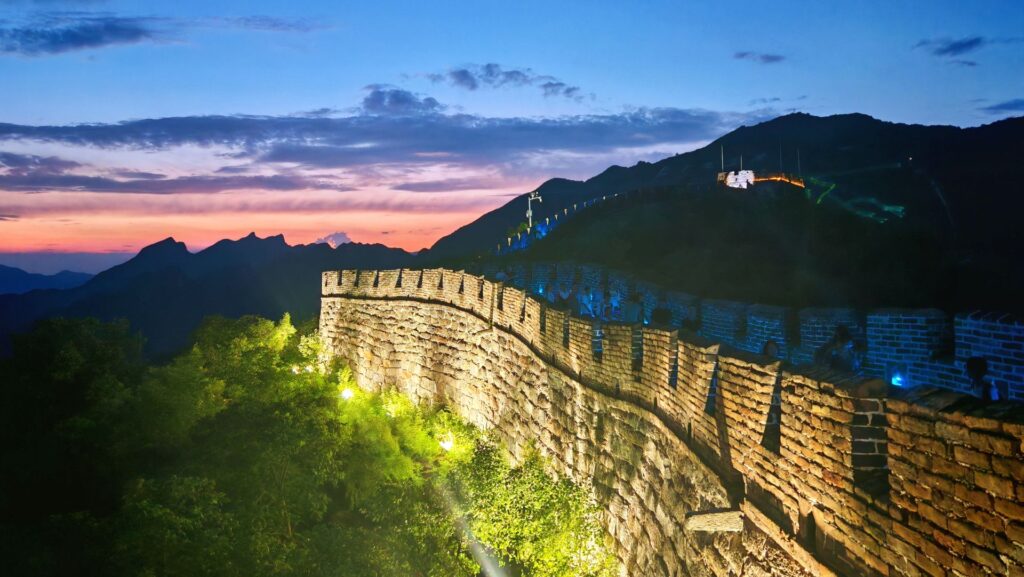
By contrast, Simatai feels different from Badaling, Mutianyu, and Jinshanling. In other words, it is steeper, more dramatic, and more atmospheric. Furthermore, it is also one of the few Great Wall sections where night visits are possible in open areas.
As a result, this makes Simatai especially interesting in summer. After all, Beijing days can be hot, and walking the Wall under strong midday sun is not always pleasant. An evening visit gives you cooler air, softer light, and a very different mood.
In addition, many travelers combine Simatai with Gubei Water Town. You can spend time in the town, see the Wall above the lights, and enjoy a slower evening rhythm. It feels less like a standard day tour and more like a night escape from Beijing.
Admittedly, Simatai is not the easiest section. Some parts are steep, and the route can feel more dramatic than relaxed. But if you want atmosphere, evening views, and something different from the usual daytime Great Wall visit, Simatai is worth considering.
Therefore, for travelers who visit China in summer, Simatai can be a smart alternative to a hot daytime Wall trip.
Best Time to Visit the Great Wall
Generally speaking, the best seasons for the Great Wall are spring and autumn. The weather is comfortable, the air is clearer, and the mountains look better. For a complete seasonal breakdown across all of China, read our best time to visit China guide for detailed month-by-month recommendations.

@photo by Gerd Eichmann from Wikipedia
- Spring: Good for mild weather, fresh air, and flowers. April and May are popular.
- Summer: Green and lively, but hot. Start early, go later in the day, or consider a Simatai night visit.
- Autumn: Often the best season. The air is cooler, the sky is clearer, and the leaves turn red and gold.
- Winter: Cold but beautiful. Snow can make the Wall look quiet and powerful, but steps may be slippery.
Importantly, try to avoid major Chinese public holidays if you can. With over 35 million foreign visitors entering China in 2025 — a 30% year-on-year increase — popular attractions like the Great Wall are busier than ever China Daily. Labor Day in early May and National Day in early October can bring very large crowds. In general, weekdays are usually better than weekends.
In particular, for photography, early morning and late afternoon are best. Since midday light can be harsh, therefore sunset trips and overnight photography plans can make a big difference.
How to Get to the Great Wall from Beijing
Naturally, how you get to the Great Wall depends on the section you choose.
Badaling is the easiest by public transport. You can take a train or bus from Beijing. This is one reason it attracts so many large groups and independent budget travelers.
Mutianyu is usually reached by private car, guided tour, or a mix of public bus and local taxi. If you want to hike beyond the central area, a guide and private transfer make the day much smoother.
Jinshanling is farther away. Although public transport is possible, it is not simple. For a slow photography trip or overnight plan, private transport is much better.
Simatai is often combined with Gubei Water Town. and consequently it takes more planning, especially if you want an evening or night visit.
Above all, if you have only one day in Beijing, do not underestimate travel time. In fact, traffic can change your schedule. Therefore, a good guide helps you choose the right start time, avoid the worst crowds, and match the route to your energy level.
Great Wall Travel Guide: Scenic Routes and Hiking Ideas
Easy and Flexible: Mutianyu
Mutianyu is the most flexible choice. For instance, you can keep the day easy with a cable car and a short walk. Alternatively, you can turn it into a real guided hike by walking farther along the Wall.
In general, the central section is restored and easier to manage. However, the higher watchtower areas are steeper and quieter. When conditions allow, the Watchtowers 21 to 23 area adds a more rugged feeling without making the trip too remote.
Slow and Photogenic: Jinshanling
Jinshanling is not only about hiking distance. Rather, it is about timing. Sunrise and sunset can change the whole scene. The Wall looks layered, quiet, and almost endless from the right viewpoint.
Therefore, if you care about photography, do not rush this section. In fact, a slower plan gives you better light and a better chance to feel the mountain setting.
Evening Atmosphere: Simatai
Overall, Simatai is a strong choice for travelers who want mood more than distance. The route is dramatic, and the evening setting near Gubei Water Town makes the trip feel different from a normal daytime visit.
Moreover, in summer, this can also be a practical choice because the air is cooler after sunset.
Great Wall Travel Guide: Essential Tips for 2026
- Wear good shoes. Even restored sections have steep steps. Sneakers are fine for Mutianyu. Hiking shoes are better for Jinshanling.
- Bring water. Shops are common near entrances, but not always along the Wall.
- Use sun protection. Many parts of the Wall are exposed, especially in summer.
- Choose your section by energy level. Do not choose a harder section only because the photos look beautiful.
- Check Chinese holiday dates. Public holidays can change the whole experience.
- Go early or go late. This helps with crowds, heat, and photo light.
- Use a guide if you want more than photos. A guide helps with timing, route choice, history, safety, and local context.
In short, the Great Wall is not a place to rush. Give yourself time to walk, stop, look back, and understand how the Wall follows the mountains.
Combine Your Great Wall Visit with Other Beijing Attractions
If you have two or three days in Beijing, plan the Great Wall as one full day. Our Beijing private tours page covers complete itineraries that combine the Wall with other top attractions. In other words, do not squeeze it between the Forbidden City and the Temple of Heaven. Since travel time is too long, the Wall deserves more energy.
A simple Beijing plan could look like this:
- Day 1: Forbidden City, Jingshan Park, and a hutong walk
- Day 2: Great Wall day trip or sunset tour
- Day 3: Summer Palace, Temple of Heaven, and local food
Overall, if this is your first Great Wall visit, Mutianyu is usually the best fit. If you want photography and slower travel, save time for Jinshanling. If you travel in summer and want an evening plan, consider Simatai.
Frequently Asked Questions About Visiting the Great Wall
How long do you need at the Great Wall?
Most visitors spend 3 to 4 hours on the Great Wall, including hiking and photo stops. In general, a half-day trip works well for Mutianyu with cable car access. If you plan to hike further sections such as Jinshanling or explore Watchtowers 21 to 23 at Mutianyu, however, allow at least 5 to 6 hours. Therefore, a full day trip from Beijing is the most common arrangement.
Which Great Wall section is best for first-time visitors?
Mutianyu is generally the best Great Wall section for first-time visitors. It offers a good balance of scenery, accessibility, and moderate crowds. You can take a cable car up and a toboggan down for a fun experience, or alternatively, choose to hike further for a more authentic adventure. Badaling is easier to reach but often too crowded, whereas Jinshanling and Simatai require more effort to visit.
Can you visit the Great Wall in one day from Beijing?
Yes, you can visit the Great Wall as a day trip from Beijing. The drive to Mutianyu takes about 1.5 to 2 hours each way. With an early start, you can comfortably spend 4 to 5 hours on the Wall and return to Beijing by evening. Sections farther away, such as Jinshanling, take longer and consequently may be better suited for an overnight trip.
Is the Great Wall wheelchair accessible?
Badaling has the most wheelchair-friendly facilities, with ramp access at the entrance and some paved sections. However, most of the Great Wall involves steep steps and uneven surfaces that are not suitable for wheelchairs. Mutianyu cable car and chairlift can help reduce the climbing required, but nevertheless, the Wall itself is not fully accessible. Therefore, contact us for advice on accessible options.
What is the best time of year to visit the Great Wall?
The best times to visit the Great Wall are spring (April to May) and autumn (September to October), when the weather is mild and visibility is clear. Autumn is especially popular for photography due to the colorful foliage. Summer is hot but offers longer daylight hours and the option of night visits at Simatai. On the other hand, winter is cold but can produce stunning snow-covered views with far fewer tourists.
Plan Your Great Wall Day with IntoChinaTrip
For instance, if you want Mutianyu without the standard tourist feel, our Mutianyu Great Wall Day Trip is built around a guided hiking experience, following this Great Wall travel guide approach. Your guide can walk with you along the Wall, help you avoid the busiest areas, and lead you toward the recently opened Watchtowers 21 to 23 when conditions allow.
Alternatively, if you prefer softer light and a quieter pace, our Mutianyu Great Wall Sunset Tour is a better fit. You get classic Great Wall views with better photo light near the end of the day.
Finally, if Jinshanling photography or a Simatai night visit sounds more like your style, contact us and tell us your travel date, fitness level, and photo goals. We can help you think through the best section for your trip.
You can also explore our China tour packages for multi-day itineraries that include the Great Wall. Additionally, you can learn more about the Great Wall as a UNESCO World Heritage Site through the official UNESCO listing.