What Is the Yi Torch Festival?
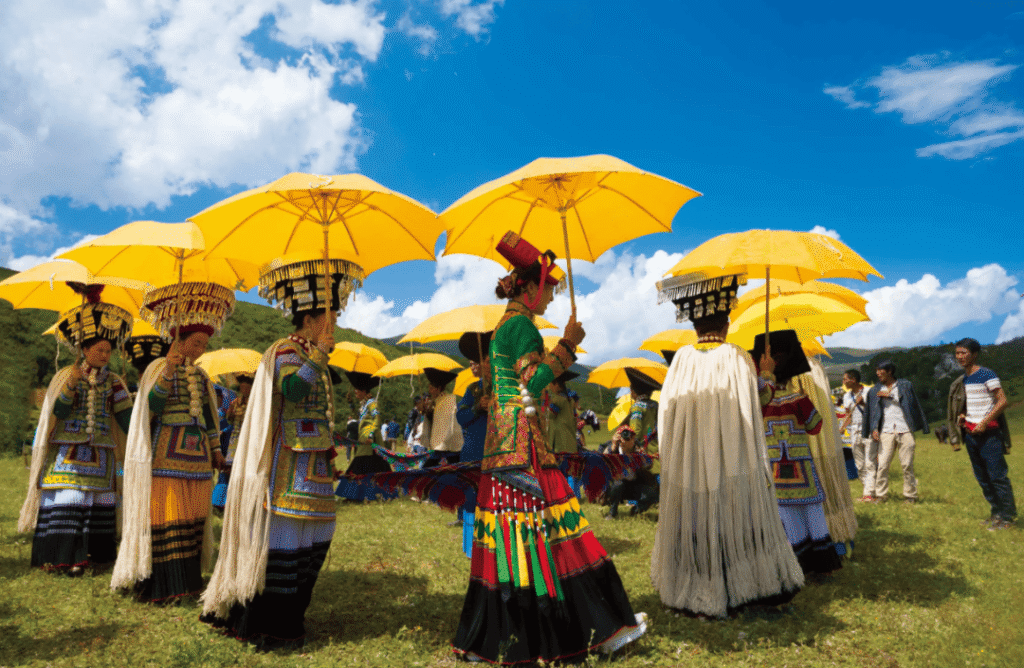
Imagine thousands of torches lighting up mountain villages after dark. People sing, dance, and march through streets glowing with fire. This is the Yi Torch Festival, often called the “Eastern Carnival” of China.
The Yi people are one of China’s largest ethnic minorities, with nearly 10 million people living mostly in the mountainous southwest. Their most important festival happens every summer on the 24th day of the sixth lunar month. It lasts three days and three nights in traditional communities.
At its heart, the festival celebrates fire as a life-giving force. Yi people believe fire drives away evil spirits, protects crops, and brings good fortune. The festival was added to China’s National Intangible Cultural Heritage List in 2006, recognizing its deep cultural value. China National Intangible Cultural Heritage Protection Center
You will find the most vibrant celebrations in Yunnan and Sichuan provinces. Each region adds its own flavor. Some focus on sacred rituals. Others throw massive street parties with concerts and food stalls. Either way, you leave with sore feet, a full stomach, and memories of fire dancing in the dark.
When & Where: 2026 Dates & Locations
2026 Festival Dates
The Yi Torch Festival follows the lunar calendar, so the Gregorian date shifts each year. The traditional core day falls on the 24th day of the sixth lunar month.
In 2026, the main festival day lands on Thursday, August 6. Most regions celebrate from August 5 through August 8, with the biggest events happening on the 6th and 7th. Some areas extend the party for a full week.
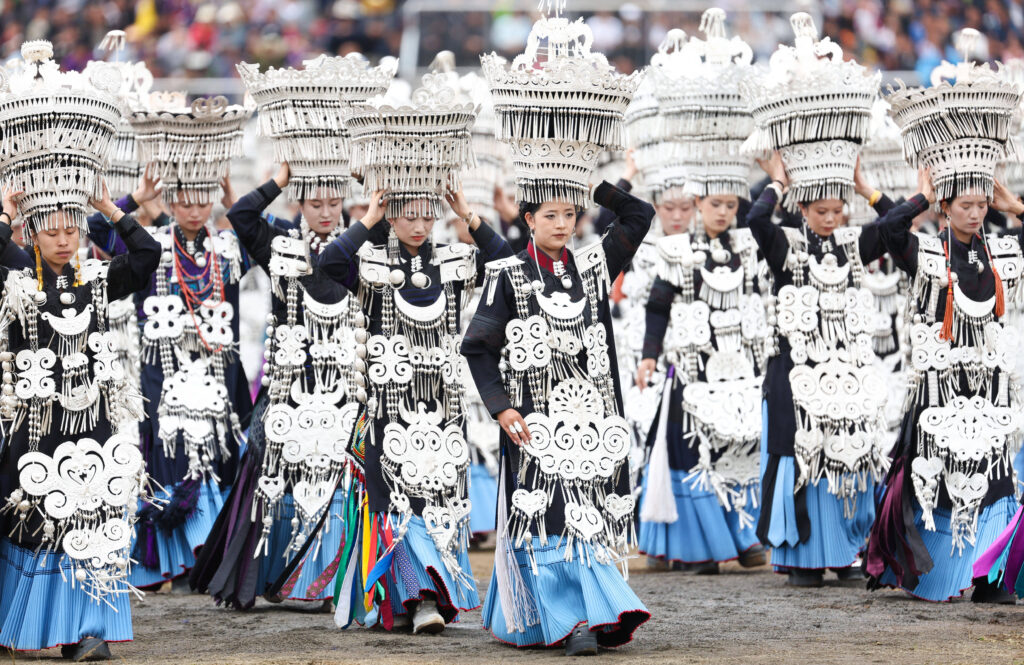
That said, dates can vary by county. For example, Puge County in Liangshan kicks off celebrations as early as July 19, while Butuo County starts on July 21. Xichang, the capital of Liangshan, holds its grand torch carnival night on August 8. If you want to catch the most action, plan to arrive between August 5 and August 9.
This timing falls in the summer, which is warm but rainy season in the southwest mountains. For more on seasonal travel, check our best time to visit China guide.
Major Celebrating Regions
The Yi Torch Festival lights up a broad area across southwest China. Here is where the biggest parties happen:
- Liangshan Yi Autonomous Prefecture, Sichuan — Home to the largest Yi population. The most authentic and massive celebrations. In 2026, Liangshan hosts 98 special cultural tourism activities across all 17 counties and cities. Liangshan Culture and Tourism
- Chuxiong Yi Autonomous Prefecture, Yunnan — Known as the “Fire City” for its elaborate festival. Chuxiong’s 2025 festival drew 1.8383 million visitors, showing how popular it has become. Yunnan Daily / Yun News
- Shilin Yi Autonomous County, Yunnan — Famous for its “Daily Three-String Music, Weekly Torch Festival” program. As of May 2026, it has hosted more than 260 events reaching over 20 million people. Xinhua News
- Honghe Hani & Yi Autonomous Prefecture, Yunnan — Smaller but deeply traditional celebrations in mountain villages.
- Liupanshui, Guizhou — The Wumeng Grassland hosts torch festival events with cooler summer weather.
Each region puts its own spin on the festival. Some focus on sacred rituals. Others emphasize tourism and performance. Choose based on what experience you want most.
What to Expect: 5 Unforgettable Experiences
The Lighting Ceremony: Welcoming Fire
The festival begins with a sacred lighting ceremony. In traditional villages, a Bimo (Yi shaman-priest) performs rituals to invite the fire god. The Bimo chants ancient prayers and often uses flint and steel to create the first spark.
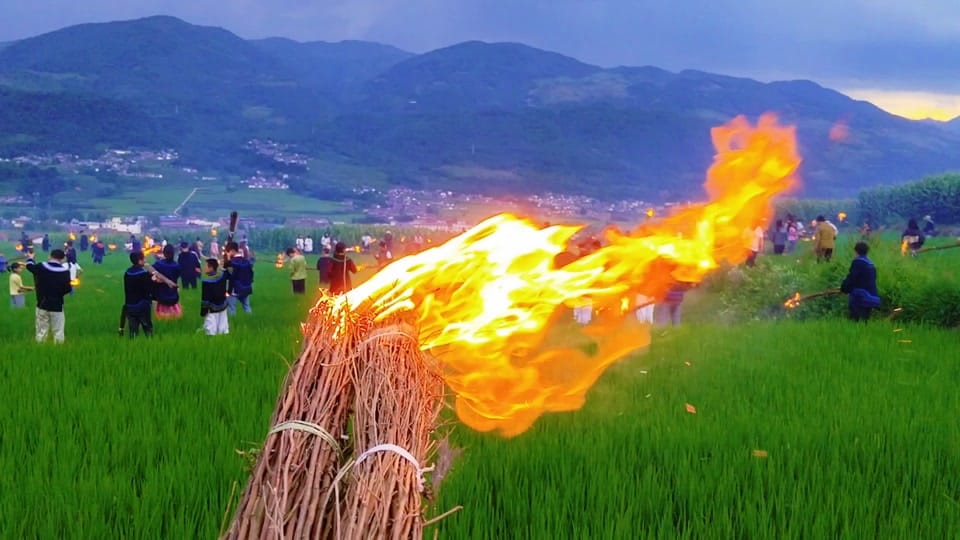
This first fire is considered holy. It gets carried from the village altar to a central bonfire, then to torches held by each household. The moment the first flame catches the main torch sends chills through the crowd. Drums roll. People cheer softly. You can feel the weight of tradition in the air.
In larger city celebrations, the lighting ceremony becomes a staged performance with costumes, music, and narration. You still get the drama, but the atmosphere leans more festival than sacred. Both versions are worth seeing for different reasons.
The Grand Torch Parade
Once darkness falls, the parade begins. Thousands of people march through streets holding flaming torches. The line of fire snakes through town like a glowing dragon. It is one of the most visually stunning things you will ever see.
Xichang hosts one of the largest parades — its main avenue stays packed for 4 full kilometers. Back in 2024, nearly 200,000 people joined the carnival night there alone. Over in Chuxiong, the main square fills with people of all ages carrying everything from small handheld torches to giant wooden ones several meters tall.
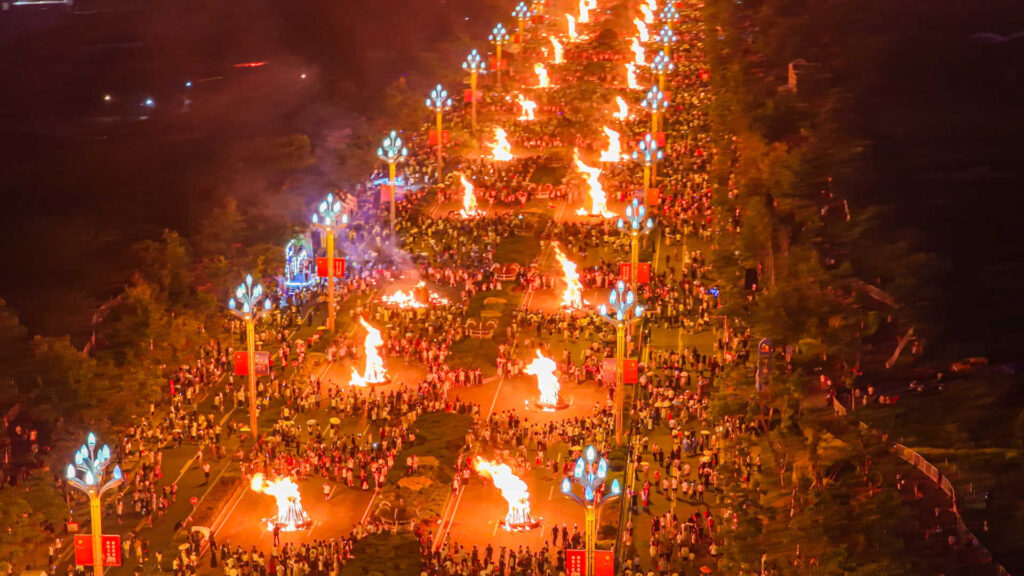
You do not just watch — you join. Buy a torch from a street vendor (usually 10–30 yuan) and light it from someone else’s flame. March along, wave your torch, and feel like part of something bigger. The heat from thousands of fires warms the cool mountain night.
That said, it gets extremely crowded. If you value personal space, find a spot early along the parade route. The narrow streets of old towns get especially packed.
Traditional Sports & Competitions
Daytime hours bring a different kind of energy. Villages and towns host traditional Yi sports and competitions. These are not just performances — they are serious contests with pride and prize money on the line.
Wrestling sits at the top of the list. Yi wrestling matches draw crowds of spectators who cheer and shout with every takedown. The legend of Atili, the wrestling hero, ties directly to this tradition.
You will also see bullfighting, where two bulls lock horns until one backs down. It is loud, dusty, and raw. Horse racing, archery, and tug-of-war fill out the schedule. Beauty pageants for young Yi women in traditional embroidered clothing add a graceful touch.
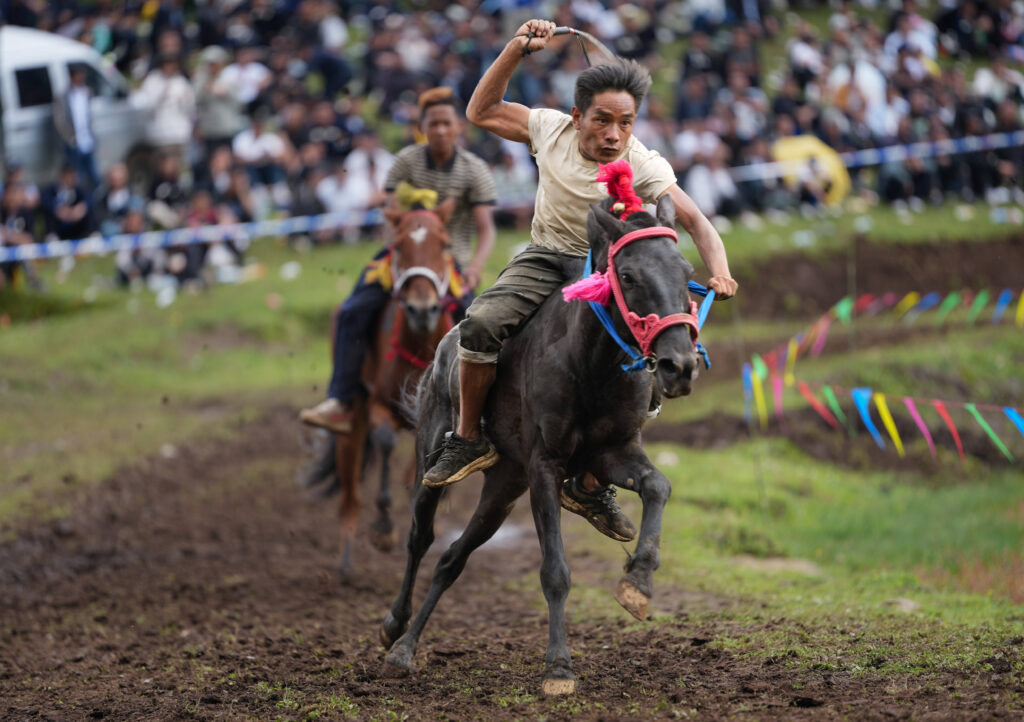
In some areas, villages compete against each other in these games. The rivalries run deep, and the energy is electric. Grab a seat on the grass with the locals and pick a side.
Singing, Dancing & Bonfire Parties
The bonfire party is where the festival truly lives up to its “Eastern Carnival” name. As the torches burn down, everyone gathers around one or more large bonfires. Then the dancing starts.
Yi people perform the 左脚舞 (left-foot dance), a circle dance where everyone links hands or shoulders and steps in rhythm. The beat comes from the 大三弦 (big three-string lute), a traditional instrument that produces a deep, driving sound.
You do not need to know the steps. Someone will grab your hand and pull you in. The steps are simple — a few left steps, a few right steps, repeat. Within five minutes you will be sweating, laughing, and dancing with people you just met.
The party often goes all night. Singers perform folk songs. Young people flirt around the edges of the fire circle. Vendors sell snacks and beer. The smell of pine smoke and grilled meat fills the air.
Yi Cuisine & Night Markets
No Chinese festival is complete without food, and the Torch Festival delivers. Night markets spring up around celebration areas, serving Yi specialties and street food favorites.
You must try 坨坨肉 (tuo tuo rou), big chunks of boiled pork served with dipping sauces. It is simple, hearty, and traditionally served at Yi feasts. 烤乳猪 (roast suckling pig) appears at bigger celebrations, crispy and fragrant.
For something on the go, grab 荞麦粑粑 (buckwheat cakes) or 羊肉粉 (mutton rice noodles). Wash it down with 荞酒 (buckwheat liquor) or a cold beer. Street stalls also sell grilled skewers, stinky tofu, and fruit — the usual festival lineup.
The Liangshan region is especially famous for its barbecue culture. The 2026 festival includes a “Daliangshan Barbecue Carnival” running from August 6 to 12 across all 17 counties. If you love street food, you will be in heaven.
Best Places to Celebrate (3 Top Picks)
Chuxiong, Yunnan: The “Fire City”
Chuxiong calls itself the “Fire City” of Yunnan, and for good reason. Its Torch Festival is one of the largest and most organized in the country. Chuxiong goes all out with a main square ceremony, torch parades, and cultural performances.
The festival in Chuxiong runs for three days (August 6–8 in 2026). Its highlight is the grand opening ceremony with Bimo rituals, traditional costumes, and the lighting of a giant central torch. Then the whole city turns into one big street party.
Chuxiong draws big crowds — its 2025 festival welcomed 1.8383 million visitors over the holiday period. Yunnan Daily Book hotels well in advance if you plan to go.
Beyond the festival, Chuxiong sits in central Yunnan, making it a good base for exploring other parts of the province. The ancient town of Lufeng and the Yunlong Lake scenic area are nearby.
Liangshan (Xichang), Sichuan: The Most Authentic
For the real deal, head to Liangshan Yi Autonomous Prefecture in Sichuan. This is the largest Yi region in China, and the traditions run deepest here. The festival here feels less like a tourist show and more like a community coming together.
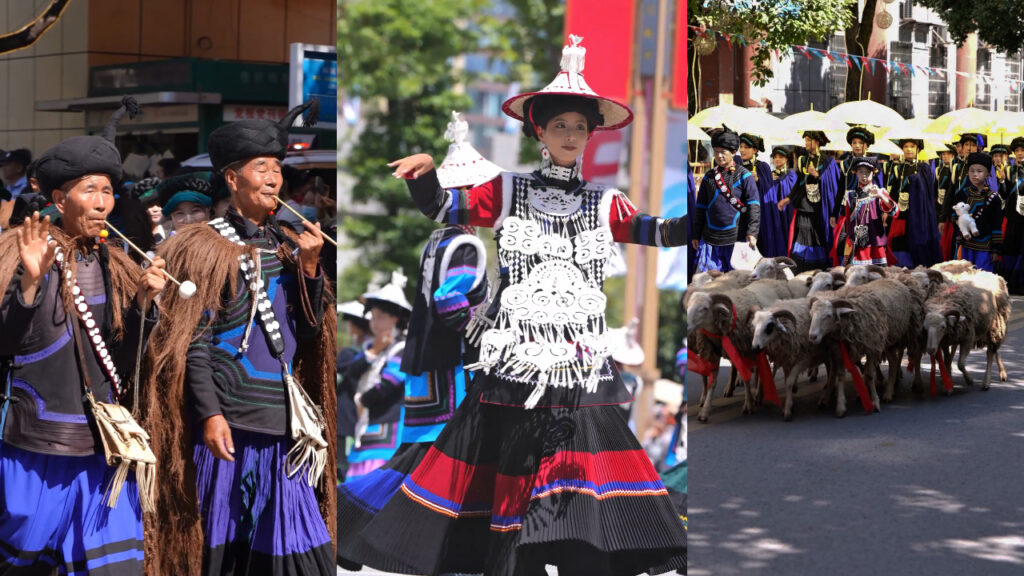
The state capital, Xichang, hosts the biggest urban celebration. Its grand carnival night on August 8 fills the main avenue with torch-carrying revelers. In 2024, nearly 200,000 people joined the street procession. Liangshan Culture and Tourism
For something more traditional, travel to Puge County or Butuo County. These rural areas hold some of the most authentic rituals. Puge is known as the “homeland of the torch” and hosts the “first fire” lighting ceremony. Butuo’s festivals feature traditional wrestling, bullfighting, and beauty contests in full Yi attire.
In 2026, Liangshan spreads 98 special events across all 17 counties. You can pick and choose based on what interests you — music, food, sports, or sacred ritual.
Shilin, Yunnan: Ashima Culture & Weekly Nights
Shilin (Stone Forest) is better known for its karst landscape than its festivals, but it has quietly built a strong torch festival tradition. The local Sani Yi people have their own unique culture centered around the Ashima legend.
What makes Shilin special is its “Daily Three-String Music, Weekly Torch Festival” program. As of May 2026, it has hosted more than 260 events benefiting over 20 million participants. Xinhua News
Even if you miss the main August festival, you can still experience a mini torch festival on weekend nights at the Stone Forest scenic area. They light bonfires, teach traditional dances, and serve Yi food. It is a scaled-down version but still fun, and far less crowded than the main event.
Pair your Shilin visit with a trip to the incredible Stone Forest itself — a UNESCO World Heritage site. The combination of natural wonder and cultural experience makes this a strong choice for travelers with limited time.
Origins & Cultural Meaning
The Legend of Atili: Hero of the People
Nearly every Yi person grows up hearing the story of Atili (also spelled Attilaba or Atilaba). He was a legendary wrestling hero whose strength was unmatched. The story goes like this:
Atili was so strong that no one on earth could beat him in wrestling. When the gods heard about this, they sent a celestial wrestler to challenge him. Atili won the match easily. The gods grew angry and sent swarms of locusts and pests to destroy the crops as punishment.
Refusing to give up, Atili led the Yi people into the fields with burning torches. They lit the dry grass and branches, creating walls of fire that drove the insects away. The crops were saved, and the people celebrated their victory over the heavens.
Ever since, Yi people have lit torches on the 24th day of the sixth lunar month to remember Atili’s courage and to protect their harvests. The story varies slightly by region — some say Atili sacrificed himself to start the fire — but the core message stays the same: fire saves, and the people prevail.
Three Ritual Stages: Welcome, Play, Send Off
The traditional Yi Torch Festival follows three distinct stages over three days and nights. Each has its own purpose and mood.
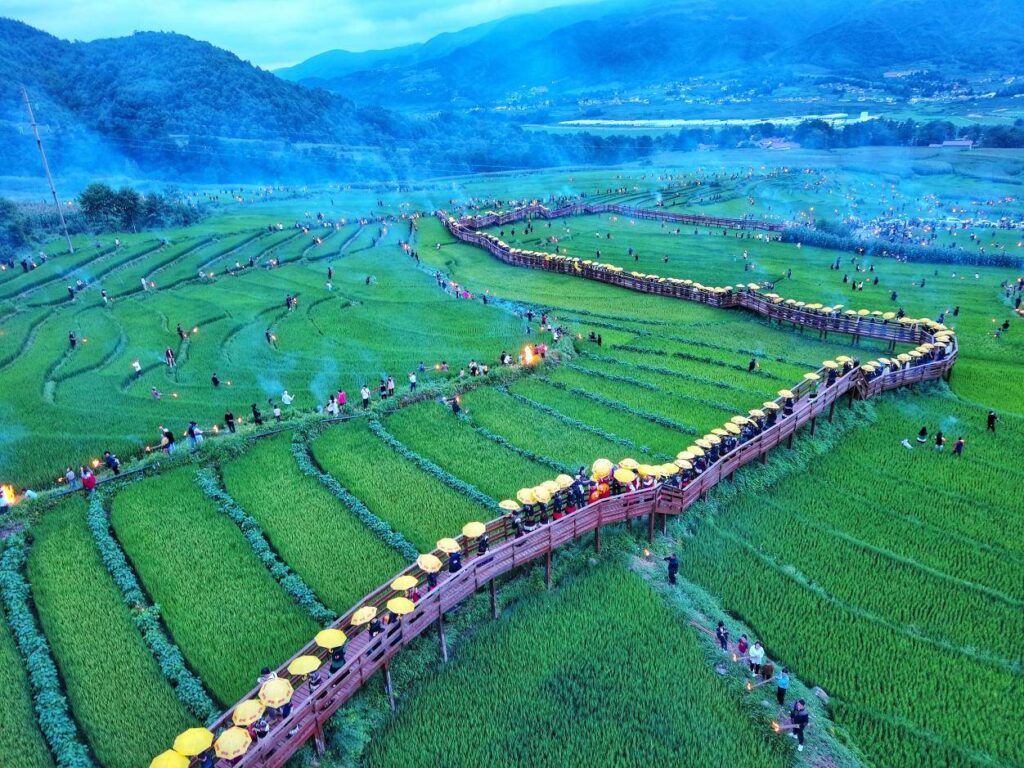
Stage 1: Welcome the Fire (祭火 — jì huǒ) happens on the first day. Villagers gather at a sacred spot. The Bimo conducts rituals to invite the fire spirit. The first flame is lit through a traditional method like drilling wood or striking flint. This fire is considered pure and holy. It gets carried solemnly to the village center.
Stage 2: Play with Fire (玩火 — wán huǒ) is the middle day and the heart of the celebration. This is when all the fun happens — parades, dancing, sports, singing, and feasting. People light torches and walk through fields to “cleanse” the crops and ensure a good harvest. Children run around with small torches, chasing each other through the streets.
Stage 3: Send Off the Fire (送火 — sòng huǒ) closes the festival on the third day. The remaining fire is gathered and extinguished in a ritual that sends the fire spirit back to its world. People make offerings and say prayers of thanks. The festival ends quietly, with families returning to their homes carrying a small piece of the flame for their own hearth.
What Fire Means to Yi Culture
Fire is more than a tool for the Yi people — it is central to their identity and spiritual life. Yi cosmology divides the world into layers, and fire connects the human world with the heavens and the ancestors.
In Yi homes, the hearth fire never goes out. It represents the continuity of the family line. When a new household forms, they carry a flame from the parents’ home to start their own fire. This sacred fire is tended with care and respect.
The Torch Festival takes this reverence and brings it into the public space. It is a time when the whole community reaffirms its connection to fire, to the land, and to each other. The torches are not just decorative — they are active participants in blessing the village and its people.
Understanding this context makes the festival hit differently. You are not just watching a show. You are witnessing a living tradition that connects present-day Yi people to ancestors who lit these same torches thousands of years ago.
Tips for Foreign Travelers
How to Join Respectfully
While the Yi Torch Festival welcomes tourists, it is first and foremost a cultural and religious event. Here is how to participate with respect:
- Watch before you join. Observe how locals behave during the lighting ceremony. Some moments are solemn. Save your cheering for the parade and dance parties.
- Ask permission before photographing people in traditional attire, especially during rituals. A smile and a gesture go a long way.
- Do not touch sacred objects. The Bimo’s ceremonial items, the first torch, and altar areas are off-limits to outsiders.
- Follow local guides. If you join a village ceremony, follow the lead of your host. Do what others do, go where they go.
- Learn a few Yi phrases. Even “hello” or “thank you” in the local dialect earns you warmth and respect.
The good news is that Yi people are famously welcoming. Most are happy to see foreigners at their festival. Just remember that you are a guest in their cultural home.
What to Bring & Wear
When it comes to an outdoor, fire-centered night festival, packing right makes a big difference. Here is your checklist:
Clothing: Summer in the southwest mountains means warm days and cool nights. Bring layers — a t-shirt for daytime, a light jacket for after dark. The air is usually humid, so moisture-wicking fabric helps. Wear closed-toe shoes — you will walk a lot, and the ground gets dusty or muddy.
For the fire: Avoid loose sleeves or flowing fabrics that could catch sparks. Tie back long hair. Consider bringing a hat or bandana to keep smoke out of your hair. Some people wear sunglasses at night to cut the glare from so many flames — it looks silly but works.
Essentials: Bring a portable charger (your phone will die from photos), a small bottle of water, and some cash for snacks and torches. Keep valuables in a secure pocket — pickpockets target crowded festivals everywhere in the world.
Booking & Accommodation Tips
Since the Torch Festival is peak tourism season in these regions, do not leave booking to the last minute.
Book hotels 2–3 months ahead for the main festival dates. Prices can double or triple during the festival week. Mid-range hotels that normally cost 200–300 yuan per night can jump to 600–800 yuan.
Consider staying nearby. If Xichang or Chuxiong proper is sold out or too expensive, look at smaller towns a short drive away. You will need a car or taxi to get back at night, but the savings can be significant.
Travel days matter. Most people arrive the day before the main festival and leave the day after. If your schedule is flexible, arrive two days early or stay an extra day. You will find better prices and fewer crowds.
For visa and entry planning, review our China visa guide to make sure you have everything in order before you go.
Safety Tips Around Fire
When you are surrounded by thousands of open flames in crowded spaces, safety matters more than anything. Follow these rules to stay safe:
Keep your torch at arm’s length. Hold it away from yourself and others. Watch the wind direction — sparks drift downwind. Do not wave your torch around wildly.
Stay sober enough to be aware. Drinking is part of the fun, but impaired judgment + fire + crowds is a bad combination. Pace yourself.
Watch your footing. The ground gets littered with burnt torch debris. Wear sturdy shoes and watch where you step. Pushing through crowds is never a good idea — be patient and move slowly.
Have an exit plan. In very crowded areas, locate the nearest open space or side street. If you feel overwhelmed or unsafe, step away. The party will still be there after you catch your breath.
Keep a first-aid kit handy. Small burns happen. Aloe vera gel or burn ointment can be a lifesaver. For serious burns, find a police officer or festival volunteer — most events have medical stations set up.
Combining the Torch Festival With Your China Trip
The Southwest Loop: Chengdu → Yunnan Route
Thankfully, the Yi Torch Festival sits perfectly in China’s southwest, a region packed with incredible travel destinations. Most international travelers fly into Chengdu and work their way south into Yunnan.
Here is a suggested two-week route that builds up to the festival:
Start in Chengdu with 2–3 days. Eat hot pot, see the pandas, and soak in the relaxed tea-house culture. Book our Chengdu panda and hot pot tour to hit the highlights in one satisfying day.
From Chengdu, take the high-speed train south to Kunming, the capital of Yunnan. The fastest trains cover the distance in about 6 hours, though you can also fly in under 2 hours. For more on rail travel, see our China high-speed train guide.
From Kunming, head to Shilin for the Stone Forest and a taste of Yi culture. Then continue to Chuxiong for the main Torch Festival. The train ride from Chengdu to Chuxiong takes as little as 6.5 hours on the fastest high-speed services. Yunnan Daily
After the festival, continue your Yunnan adventure in Dali, Lijiang, or Shangri-La — all reachable by train or bus from Chuxiong or Kunming.
Adding Chongqing to Your Itinerary
If you have extra time, Chongqing makes a great add-on before or after the southwest loop. This mountain city is famous for its spicy food, dramatic skyline, and historic streets.
Chongqing sits just east of Chengdu, connected by a 1.5-hour high-speed train. Fly into Chongqing first, then move to Chengdu, or do it the other way around.
While in Chongqing, do not miss the famous night views. Our Chongqing night view walking tour takes you to the best viewpoints after dark. For a cultural deep dive, take a day trip to the Dazu Rock Carvings tour from Chongqing, an awe-inspiring UNESCO site with thousands of Buddhist carvings.
Chongqing’s hotpot is spicier than Chengdu’s (yes, really), and the city’s hilly streets and cable cars give it a vibe unlike anywhere else in China. It pairs beautifully with the more laid-back energy of Chengdu and the mountain scenery of Yunnan.
Practical Transportation Tips
Because festival season draws huge crowds, getting around southwest China requires extra advance planning. Here is what you need to know:
Trains sell out fast. High-speed train tickets for festival dates go quickly. Book as soon as the schedule opens (usually 15 days in advance). Use the official 12306 app or buy through a travel agent.
Flights may be cheaper than you think. Compare flight prices between Chengdu and Kunming or Xichang. Sometimes last-minute flights cost less than high-speed trains, especially during peak season.
Local transport can be chaotic. On festival days, buses and taxis are hard to find. Many towns have shuttle buses between major sites, but they fill up. Consider hiring a car with a driver for the festival days — it costs more but saves enormous stress.
Rural areas need a car. If you want to visit village celebrations in Puge or Butuo counties, you will need your own transport. Public buses run infrequently and get packed during the festival.
Allow extra travel time. Everything takes longer during a festival — security lines, traffic, boarding trains. Build buffer time into your schedule. The last thing you want is to miss the lighting ceremony because of a traffic jam.
With a bit of planning and an open mind, the Yi Torch Festival can be the highlight of your China trip. It is loud, bright, crowded, and utterly unforgettable. Few experiences let you dive so deeply into a living ethnic tradition while having so much fun doing it.