TL;DR
- Cash almost won’t work. In Shanghai, even street vendors scan QR codes. Leave your ATM panic at home.
- Both Alipay and WeChat Pay accept foreign cards. Visa, Mastercard, JCB work. Amex has limited support.
- Fees are simple. Under ¥200 = free. Over ¥200 = 3% on the full amount. WeChat Pay gives new users 60 days of fee-free payments (as of May 2026).
- Keep a backup of cash. Some places still need it: remote temples, small-city markets, some taxis.

China Has Gone Cashless
If you are wondering how to pay in China, foreigners have more options than ever in 2026. Picture this: you spot an amazing street food stall in Shanghai. The queue is long, which means the food is good. You reach the front, ready to pay. However, the vendor smiles and points to a QR code on a plastic bag.
No cash. No card machine. Instead, just a small piece of paper with a scan code.
Therefore, this is normal life in China. According to the China Internet Network Information Center (CNNIC, 55th Statistical Report, December 2024), over 1.03 billion Chinese consumers use mobile payments — that’s 92.8% of all internet users. Furthermore, Alipay and WeChat Pay together control over 90% of the mobile payment market, as reported by the People’s Bank of China. In fact, the country skipped credit cards almost entirely. Rather, it went from cash to mobile payments in under a decade. Consequently, even blind vendors use QR codes today.
For foreigners, this creates a real problem. After all, if you arrive with only cash and a regular foreign credit card, you will struggle. Some hotels accept your card. Also, some high-end restaurants too. But the small stuff—the coffee, the metro, the snacks—that is all mobile payment. The good news? Learning how to pay in China as a foreigner takes about five minutes. Moreover, with your foreign card, it actually works.
Before you set up payments, make sure you have internet access in China. Check our China eSIM guide for the best connectivity options. Additionally, if you need to plan your visa first, our China visa guide covers visa-free transit, tourist visas, and the latest 2026 policies.
Alipay for Tourists: Setup in 5 Minutes
Alipay is the biggest payment platform in China. With over 53% market share of China’s mobile payments (People’s Bank of China, 2025), it processes trillions of yuan each quarter. Essentially, think of it as China’s PayPal meets Amazon Pay, but for everything. For foreigners paying in China, the tourist version works with your foreign card from day one.
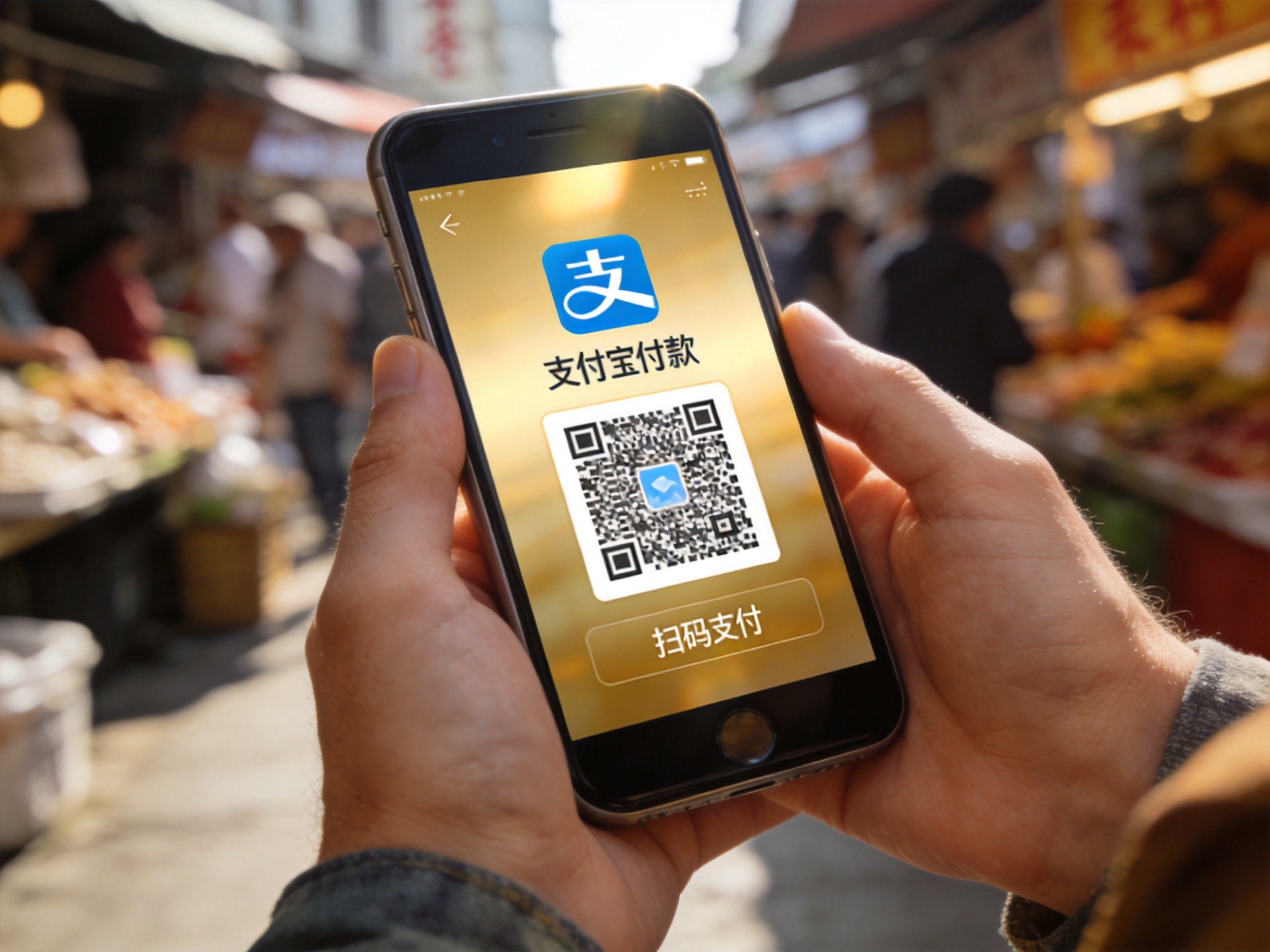
How to Set Up Alipay
- Download the app. First, get it from your app store before you arrive.
- Register with your foreign phone number. Yes, your home number works. No China SIM needed.
- Verify with your passport. Next, this is required to link foreign cards. The app will ask you to scan your passport’s photo page. (Need a visa first? See our China visa guide.)
- Link your card. Then, add your Visa, Mastercard, JCB, Discover, or Diners Club card.
- Start paying. Finally, scan the vendor’s code or show yours.
For official setup instructions, refer to the Alipay Global official website.
Supported Foreign Cards
Alipay accepts these card networks:
- Visa
- Mastercard
- JCB
- Discover
- Diners Club
- American Express (direct issue cards only, since February 2025. Bank co-branded Amex does not work)
It does not support virtual cards, prepaid cards, or gift cards. Therefore, if you have a Wise or Revolut card, use the physical card—virtual numbers will not link.
Fees
- Under ¥200: No fee
- ¥200 and above: 3% of the total amount
The 3% applies to the full bill, not just the amount over ¥200. For example, a ¥300 purchase costs ¥309.
One important detail: most payments at shops, restaurants, and transport are merchant QR codes (printed signs at counters). Additionally, some travelers report these are always fee-free regardless of amount. However, personal transfers trigger the 3% fee. Your experience may vary—check the fee shown before confirming payment.
Money-saving tip: Split a ¥300 purchase into two ¥150 payments. Both are under the limit. You save ¥9.
Limits After Verification (Passport)
- Single transaction: up to ¥35,000 (~$4,800)
- Monthly total: ¥100,000 (~$13,700)
- Yearly total: ¥350,000–500,000 (~$48,000–68,500)
These are 2026 limits for fully verified accounts (passport + facial recognition). However, your actual limits may be lower until verification is complete. Therefore, check the app for your current limits—policies update frequently.
TourCard: A Backup Option
If your bank keeps blocking your card, Alipay offers TourCard. Specifically, this is a prepaid virtual card inside the app. Load money from your foreign card (5% fee), then pay anywhere. Valid for 180 days, max ¥10,000 per period.
Travel Wallet (New April 2026): Alipay launched “Travel Wallet” (旅行钱包) for short-term visitors. No bank card needed at all. Open a Travel Wallet account, fund it via international wire transfer, and pay with zero transaction fees anywhere in China. Currently available in 40 countries. Check the Alipay app for availability in your region.
WeChat Pay for Tourists: Same Power, Different App
WeChat Pay works almost identically to Alipay. In other words, same fee structure, same card support, same QR scanning. But there are a few differences worth knowing for foreigners paying in China.

Supported Foreign Cards
- Visa
- Mastercard
- JCB
- Discover
- Diners Club
- American Express (limited support)
The card list is similar to Alipay. Likewise, if your card works on Alipay, it will likely work on WeChat Pay too. For official information, visit the WeChat Pay official page.
Fees and Limits
- Fees: Free under ¥200, 3% above. New user bonus: First 60 days after linking your card, transactions under ¥1,000/day are fee-free (as of May 2026).
- Before verification: ¥6,000 single / ¥60,000 yearly
- After passport verification: $5,000 single / $50,000 yearly
The yearly limit jumps from ¥60,000 (RMB) to $50,000 (USD) after verification. That is roughly 3.6× higher. Therefore, verification is worth doing if you plan to spend more than ¥5,000/month.
The Hidden Switch (Very Important)
WeChat has a hidden setting that catches many tourists off guard. Specifically, it is called “境外支付” (International Payment). It is OFF by default.
Steps to enable it:
- Open WeChat
- Go to Me → Pay → Payment Management
- Find International Payment
- Toggle it ON
Without this switch, your linked card will not work. Naturally, many tourists do not realize this and panic at checkout. (Worried about other surprises? Our China safety guide covers what to watch for.)
Extra Features
WeChat Pay also supports Apple Pay since January 2025. However, fees over ¥200 still apply. Importantly, it does not work with Amex-based Apple Pay.
WeChat Pay also connects to 14 international e-wallets, including Hong Kong’s Octopus (八达通) and Thailand’s K Plus. Furthermore, if you have these apps, you can scan WeChat codes directly without a Chinese bank account.
Cash and Credit Cards: The Backup Plan
Despite the cashless revolution, some places still need paper money. In fact, this is the one gap in China’s payment system for foreigners.
When to Use Cash
- Small temples and remote scenic areas
- Country markets in smaller cities
- Some rural taxis or car services
- Tipping (usually in cash)
- Buying from street vendors who display personal QR codes
Before you panic, know this: most urban tourists will not need much cash. In fact, ¥500–1,000 for your entire trip covers most situations where cards and phones fail.
When Credit Cards Work
Your foreign credit card works at:
- High-end hotels (international chains especially)
- Large shopping malls
- Some chain restaurants in big cities
- Online bookings for trains and flights (check our high-speed train booking guide for more details)
However, small shops, local restaurants, and public transport almost never accept foreign credit cards directly. As a result, you need mobile payment for daily spending.
ATM Withdrawals
China UnionPay ATMs accept foreign cards at most banks. Limits are usually ¥5,000–10,000 per withdrawal. Expect a fee of around ¥15–20 per transaction. Ultimately, this should be your emergency backup, not your primary way to pay in China.
Which Foreign Cards Actually Work
Not all cards are equal. In other words, here is what actually works in China for foreigners.
| Card Type | Works on Alipay | Works on WeChat Pay | Notes |
|---|---|---|---|
| Visa | Yes | Yes | Best overall support |
| Mastercard | Yes | Yes | Best overall support |
| JCB | Yes | Yes | Good coverage |
| Discover | Yes | Yes | Works on both platforms |
| Diners Club | Yes | Yes | Works on both platforms |
| Amex (direct issue) | Yes | Limited | Since Feb 2025 only. Co-branded cards excluded. |
| Wise Physical Card | Yes | Yes | High success rate. Must be physical card. |
| Revolut Physical Card | Yes | Yes | High success rate. Must be physical card. |
| Virtual Cards | No | No | Any virtual number will fail |
| Prepaid/Gift Cards | No | No | Not accepted |
Why Wise and Revolut Work Better
Wise and Revolut are international fintech companies. Their Visa and Mastercard products tend to have fewer transaction blocks than traditional bank cards. For example, many Chinese payment systems flag foreign transactions automatically. Consequently, fintech cards handle this better.
Again: use the physical card. Furthermore, digital Revolut numbers or Wise virtual cards will not link.
7 Payment Tips That Save You Headaches
- Split purchases over ¥200. For example, two ¥150 payments = no fees. One ¥300 payment = ¥9 fee.
- Check the refund timeline. Importantly, refunds take 1–5 business days. Fees return proportionally.
- Never log out of Alipay. Re-login requires an SMS code sent to your registered phone number. If you have not enabled roaming or have switched to a local Chinese SIM, you cannot receive that code. Stay logged in. (Need a local SIM? Check our China eSIM and SIM card guide.)
- Install both apps. Some vendors only show one QR code type. In addition, having both covers all bases.
- Personal QR vs Merchant QR. Small vendors sometimes show personal codes that do not accept foreign cards. After scanning, a blue-bordered screen with “商家” (merchant) label means your foreign card works. A green-bordered screen with a personal name means foreign cards will fail. Ask the vendor to scan your payment code instead, or pay cash.
- Enable the WeChat international payment switch. Importantly, it is hidden by default. Do this on day one.
- Set everything up before arrival. Finally, download both apps, register, verify, and link your card while you still have stable internet at home or at the airport lounge.
Planning your trip beyond payments? Explore our best time to visit China guide to plan the perfect season, or check destination guides for Xi’an, Yangshuo, and Zhangjiajie.
FAQ: Paying in China as a Foreigner
Can I just use cash in China?
You can, but it will be difficult. Cash works at some hotels, airports, and tourist shops. However, most small businesses, transport, and restaurants expect mobile payment. Accordingly, carry ¥500–1,000 as backup, but do not rely on it as your primary method.
Does Apple Pay work in China?
Yes, through WeChat Pay (since January 2025). However, fees over ¥200 still apply. Importantly, it does not work with Amex-based Apple Pay. Also, Alipay does not support Apple Pay.
What if my card gets rejected?
Try these steps: first, check that your card is activated for international use (call your bank). Next, try a different card. Alternatively, use the TourCard backup in Alipay. Or withdraw cash from an ATM. Ultimately, if all else fails, Wise or Revolut physical cards have the highest success rate.
How do I tip in China?
Tipping is not traditional in China. However, it is appreciated at high-end international hotels and tour services. Specifically, give tips in cash directly to the person. Also, do not add a tip line on a card payment—staff may not process it.
Can I use Alipay or WeChat Pay without a Chinese bank account?
Yes. Both Alipay and WeChat Pay allow foreigners to link international Visa, Mastercard, and other foreign cards directly — no Chinese bank account needed. Simply verify your identity with your passport, and you can start paying immediately.
What happens if I exceed my payment limit?
Your transaction will be declined. If this happens, try splitting the payment into smaller amounts, or switch to your other payment app. As a last resort, withdraw cash from a UnionPay ATM.
Is it safe to link my foreign card to Alipay or WeChat Pay?
Yes. Both platforms use bank-level encryption and fraud protection. According to the People’s Bank of China, China’s mobile payment infrastructure is among the most secure in the world. Nevertheless, always use official apps downloaded from verified app stores.
Payment policies and limits change frequently. Therefore, information in this guide is current as of May 2026. Always check the Alipay and WeChat apps for the latest rules.
For more China travel tips and curated tours, visit IntoChinaTrip. Also check our China visa guide, safety guide for tourists, and China eSIM guide.