This guide is for travelers arriving in Suzhou from Shanghai or another city. You have two to three days, and you want nothing to do with normal tour version of the place.
Most visitors experience Suzhou at the wrong time and in the wrong way. They file off tour buses into the UNESCO gardens at 10 a.m., shoulder to shoulder with a few thousand strangers. They buy mass-produced souvenirs on Pingjiang Road, then climb back on the bus and call it a day. The real Suzhou barely registers. It is a canal city founded in 514 BC. It holds nine classical gardens inscribed as UNESCO World Heritage in 1997 and 2000, and the Grand Canal, listed in 2014, threads through it. Then there is the other face of the city: the tea hills and lakeshore of Taihu, 40 minutes southwest. Almost no foreign traveler reaches it at all.
This Suzhou itinerary fixes that. Over three days you will see both worlds properly. Day 1 is an easy arrival: museums and canal lanes in the old city. On Day 2 you enter the gardens at 7:30 a.m., before the tour groups arrive, then spend the afternoon, sunset, and night on Taihu Lake. Day 3 is a slow lakeside morning that feels like countryside, not city. Getting here is easy. High-speed trains from Shanghai cover the 86 kilometers in 23 minutes, with 450-plus departures a day. The hard part is deciding what to do once you arrive. For the full picture, our Suzhou destination page has background and more options.
Day 1 — Arrival: Museum, Canals & Hidden Lanes
Drop your bags at your old-town hotel around midday. Then head straight for the Suzhou Museum, a five-minute walk from the gardens you will visit tomorrow.
The building itself is the best exhibit. I.M. Pei, who grew up in a Suzhou courtyard family, designed it. He reimagined the city’s white walls and grey tile in glass and steel. Geometric roofs pull soft northern light onto pale stone, and water courtyards echo the classical gardens next door. The ceramics, paintings, and excavated artifacts are worth seeing. Most visitors, though, leave talking about the architecture. Admission is free, but you must reserve a timed slot online, often several days ahead, and the museum closes on Mondays. Staff turn away walk-ups. Budget 60 to 90 minutes.
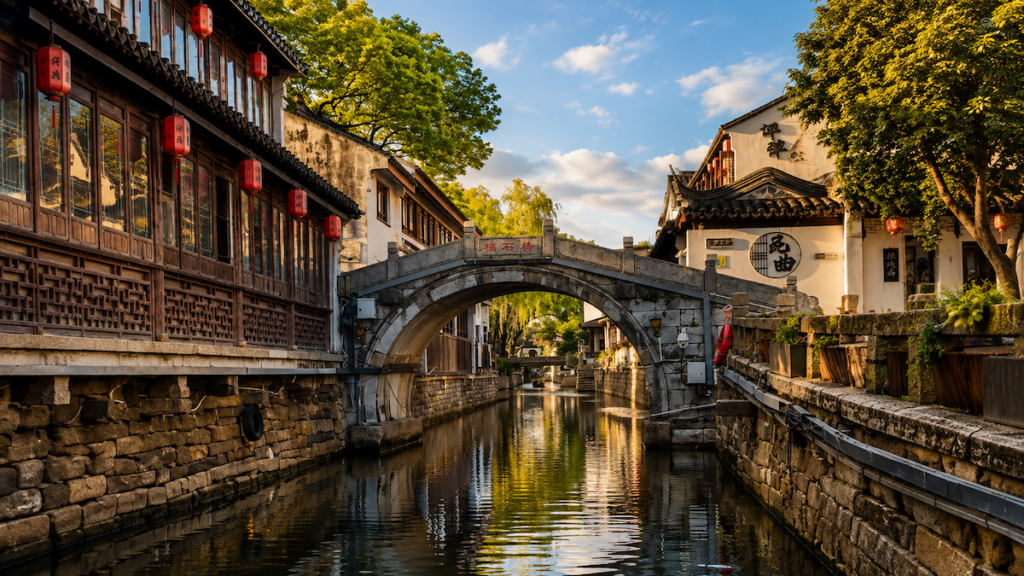
Late afternoon, walk ten minutes to Pingjiang Road. The promenade is busy day and night. It is still worth strolling for the water views: wooden awning boats poled slowly past whitewashed houses, and boatwomen singing snatches of Suzhou ballads.
The real find is off the main street. The lanes branching off Pingjiang — Daliuzhi, Xiaoliuzhi, and the tangle between them — are a living water-neighborhood. Grandmothers rinse vegetables by the canal. Courtyard doors stand propped open. Tiny stone bridges see no tour groups. Some alleys dead-end at the water; others loop to the next canal. Stroll slowly — the district is car-free and rewards getting deliberately lost. That is the Suzhou most visitors walk past. Our Pingjiang Road Deep Alley Walk spends the evening in exactly these lanes.
Day 2 — Gardens at Opening, Taihu Lake at Sunset
The single rule for today: be at the garden gate at 7:30 a.m. The first 90 minutes are the only quiet ones. Tour buses start rolling in around 9:30. By 10:30 the famous viewing spots are walls of raised phones. Buy your timed-entry ticket in advance via the official WeChat mini-program or a travel app. Booking requires your real name, and weekend slots sell out.
Morning: The Gardens at Opening
Start at the Humble Administrator’s Garden. It is the largest of the nine UNESCO-listed classical gardens, laid out in the early 1500s by a retired Ming official. Water covers a third of it: ponds, islands, covered walkways, and pavilions. Every doorway frames a different scene. Look for the Hall of Distant Fragrance opening onto the lotus pond. Then spot the “borrowed view” of Beisi Pagoda, framed over the wall. The trick makes a tower a kilometer away feel like part of the garden. At 7:30 the stone paths are still wet with dew, and the covered corridors are nearly yours. Walk out around 9:30 and the ticket queue already stretches down the street.

A ten-minute walk east stands the Lion Grove Garden, a Yuan-dynasty garden famous for one thing. Its grotto of Taihu limestone is a jagged, honeycombed rock labyrinth. Its peaks take their names from the lions they resemble. You can climb through the tunnels and emerge on top. Notice the stone itself — pitted, pale, water-worn. The stone came from Taihu Lake, which you will see that afternoon. Early entry means the grotto is yours; by late morning it is a slow-moving queue. Our Suzhou Garden Morning Tour takes a small group through both gardens in the first-entry window. A guide explains what you are looking at.
Afternoon: Taihu Lake — Hike or Cycle
After lunch near the gardens, head out of the old town. Taihu Lake is about 40 minutes away. It is China’s third-largest freshwater lake, and the source of the rocks you just climbed.
Option A: Dongshan Peninsula Hike. The Dongshan peninsula juts into Taihu from the south shore. A typical hike follows our Taihu Dongshan Hike & Lakeside Sunset trip. You start with a bowl of Suzhou noodles at a foot-of-the-hill shop. Then the trail climbs Mulifeng through bamboo forest and Biluochun tea terraces. Biluochun is one of China’s most prized green teas, and these hills are its original home. At the top, ridge views open over the full 40-kilometer expanse of the lake.
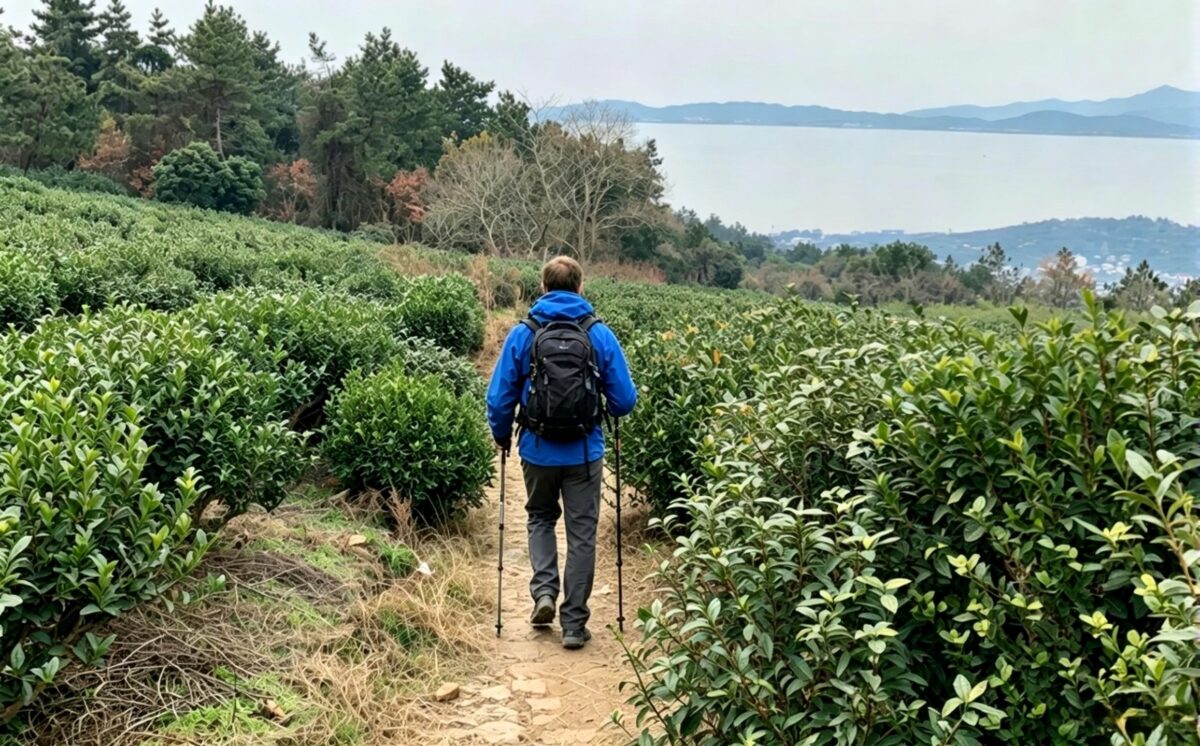
The route then drops into Luxiang Ancient Village. This Southern Song village has stone lanes, Ming memorial archways, and carved clan halls, and it has changed little in 800 years. You finish with coffee at a village café facing the water, just in time for sunset. It is an easy 8 kilometers with about 300 meters of elevation gain, on stone steps and dirt paths — no strenuous climbing. We arrange transport, an English-speaking guide, lunch, and the café stop. You never have to hunt for unmarked trail junctions yourself.
Option B: Taihu Lakeside Cycling. Prefer two wheels? The shore around Dongshan and neighboring Xishan has dedicated car-free cycling paths. They wind through loquat and bayberry orchards, past fishing harbors and small peninsulas. The lake is so wide you cannot see the far shore — it feels like riding a coastline. The Suzhou Taihu Lake Cycling Tour arranges bikes, route planning, and a support vehicle.

Either way, end the day with coffee by the lake. Watch fishing boats head for harbor as the water turns gold.
Evening: Dinner and Overnight by the Lake
Stay the night lakeside — a boutique guesthouse or resort hotel with a lake-view window. Almost no tourists make this arrangement, and waking up over Taihu tomorrow morning is the payoff.
For dinner, try the local specialty: the Three Whites of Taihu (太湖三白). That is whitefish, white shrimp, and silverfish, all pulled from the lake and cooked simply — steamed or in light soup. One honest warning: restaurants serve Chinese freshwater fish whole, with many fine bones. If you do not usually eat fish on the bone, order the shrimp or silverfish dishes instead.
One logistics note: public buses to the peninsula exist but run infrequently and do not connect villages with trailheads. Budget for a private car and driver, or join a small-group tour with transport included.
Day 3 — Slow Lakeside Morning, Then Your Choice Before You Go
Morning: Slow by the Lake
Sleep in. Have breakfast by the lake, coffee in hand, no alarm. Watch mist lift off the water. If you are staying over on Xishan Island — the lake’s largest island, connected by bridge — take a slow morning wander through Mingyuewan Ancient Village (明月湾古村). It is a thousand-year-old fishing village with stone lanes and a 1,200-year-old camphor tree. An old stone pier lets the lake step straight into the village. When you are ready, check out and pick the option that fits the rest of your day.

Afternoon: Pick One Before You Go
Tiger Hill has been Suzhou’s signature sight for 2,500 years. Legend says King Helu of Wu — who founded the city in 514 BC — lies buried here. Three thousand swords supposedly rest with him beneath the dark Sword Pond. The Yunyan Temple Pagoda is a seven-story brick tower begun in the 10th century. It has leaned for centuries. Engineers stabilized it in the mid-20th century, and it still stands at a photogenic slant. Climb to the top terrace for the view over temple roofs. Allow about two hours.
Lingering Garden is one of China’s four great classical gardens. If you want one more garden after Day 2 morning, make it this one. Every turn in its covered corridors, rockeries, and window frames reveals a composed picture. It shows a more intimate side of garden design than the Humble Administrator’s.
Hanfu dressing and photos in a garden or canal alley is one of the most photogenic things you can do in Suzhou. The water lanes, whitewashed walls, and stone bridges are the exact backdrops for this tradition. Rental studios around the old city handle makeup, hair, and gown. Our hanfu experience guide covers what to expect and how it works.

Shantang Street is a 3.6-kilometer canal street. The Tang poet Bai Juyi had it dug in 825 AD to connect Changmen gate with Tiger Hill. Stone streets line each bank, with fish vendors, tea houses full of elderly regulars, and courtyard homes opening straight onto the water. The eastern end is the lantern-hung tourist stretch; the western half, closer to Tiger Hill, is quieter and residential. A one-way boat between the two ends is the classic move.
Then take the high-speed train back to Shanghai in 23 minutes, or onward to Hangzhou or your next stop.
Where to Stay
Night 1 — Old town (Pingjiang Road / Guanqian Street). You walk to the museum and the evening canals, and the next morning’s 7:30 garden entry is a short stroll away. Courtyard-house boutique inns vary in quality. Rooms tend to be small, and street-facing ones can be noisy. Read recent reviews before booking.
Night 2 — Taihu Lake. This is the arrangement most visitors miss entirely. Wake up to the lake, coffee with a view, no city traffic. Boutique guesthouses and resort hotels along the Dongshan shore let you open the window to water. Staying back in the old town would cost you the best part of the trip.
More Places to Explore
With an extra half-day:
- Pan Gate is the only surviving ancient city gate in China combining a land gate and a water gate in one structure. It is also a designated section of the Grand Canal World Heritage site. Barges still pass under the water arch. Walk the restored city wall, visit Ruiguang Pagoda nearby, and arrive late afternoon when the light goes golden on the brickwork.
- City moat rowing — Suzhou’s ring moat has become a real recreational waterway, lined with greenways and home to active rowing clubs. It is one of the few Chinese cities where you can row in a historic canal setting inside the old town. If a racing shell feels too serious, you can also rent a kayak or a stand-up paddleboard for a casual paddle. See our guide to rowing in China for clubs and sessions.
Getting Around Suzhou & Getting There
From Shanghai. High-speed trains run from Shanghai Hongqiao to Suzhou Station in as little as 23 minutes, covering 86 kilometers. There are 450-plus departures a day, from before 6 a.m. to after 10 p.m. On weekdays you can often buy at the station; on weekends and holidays, book ahead. Choose Suzhou Station at the north edge of the old town — Suzhou North Station adds about 30 minutes by metro.
Within the old town. The Humble Administrator’s Garden, Lion Grove, the museum, and Pingjiang Road cluster within a 20-minute walk of one another. Shared bikes (Hellobike, Meituan) are everywhere for longer hops. Metro Line 1 runs east-west through the old town. Rides cost 2 to 7 RMB. Tap in with a contactless bank card or an Alipay transit code. On weekends and holidays, taxis around the garden entrances are hard to hail, and the alleys go one-way. Walk or bike the last kilometer, or have your driver drop you a few blocks out.
To Taihu Lake. This is the one leg where public transport fights you: buses to Dongshan are slow and infrequent and do not connect villages with trailheads. Budget for a private car and driver, or join a small-group tour with transport included.
Onward. When you leave, high-speed trains connect back to Shanghai, on to Hangzhou, or to most other major cities in the Yangtze Delta.
Practical Tips for First-Time Visitors
Visa & Entry
China’s 144-hour visa-free transit policy for the Shanghai-Jiangsu-Zhejiang region covers Suzhou. If you transit through Shanghai between two international flights, you can enter visa-free for up to six days. That is enough for Shanghai plus Suzhou, including a Taihu day. Regular tourists should check the current visa rules before booking.
Money & Payments
Daily life runs on mobile payments: Alipay and WeChat Pay both now accept linked foreign bank cards. Set up Alipay before you land — you will scan QR codes for everything from metro rides to small noodle bowls. Cash works everywhere, but small stalls often cannot give change for large notes, so carry small bills (10, 20, 50 RMB). For full setup steps, see our guide to paying in China for foreigners.
What to Pack
- Cycling and hiking kit — if you plan to cycle, bring a windproof jacket and pants comfortable for riding. For the hike, grippy shoes beat fashion shoes. The Dongshan ridge is dirt trail and stone steps, not boardwalk.
- A compact umbrella — the Yangtze Delta is wet year-round, though light rain actually improves the gardens.
- Your passport and a power bank — garden and museum entry is real-name, so staff may ask to see your passport. Tickets, maps, translation, and payment all live on your phone.
Plan Your Trip
Done this way, three days in Suzhou give you the city most visitors miss. You get the gardens in near-silence, the canal alleys where residents still live, and a lake-and-tea-hill night most foreign travelers never hear about. The Day 1 and Day 2 experiences all run as small-group tours, and we can tailor them to your dates and pace:
- Suzhou Garden Morning Tour — the Humble Administrator’s Garden and Lion Grove at first entry, before the buses arrive.
- Pingjiang Road Deep Alley Walk — the living lanes behind the souvenir street, with a local guide.
- Taihu Dongshan Hike & Lakeside Sunset — Ming villages, Biluochun terraces, and a ridge sunset over the lake.
- Suzhou Taihu Lake Cycling Tour — car-free lakeside paths through orchards and fishing harbors.
Questions about timing, combining Suzhou with Shanghai, or building a longer eastern China route? Get in touch and we will put it together.