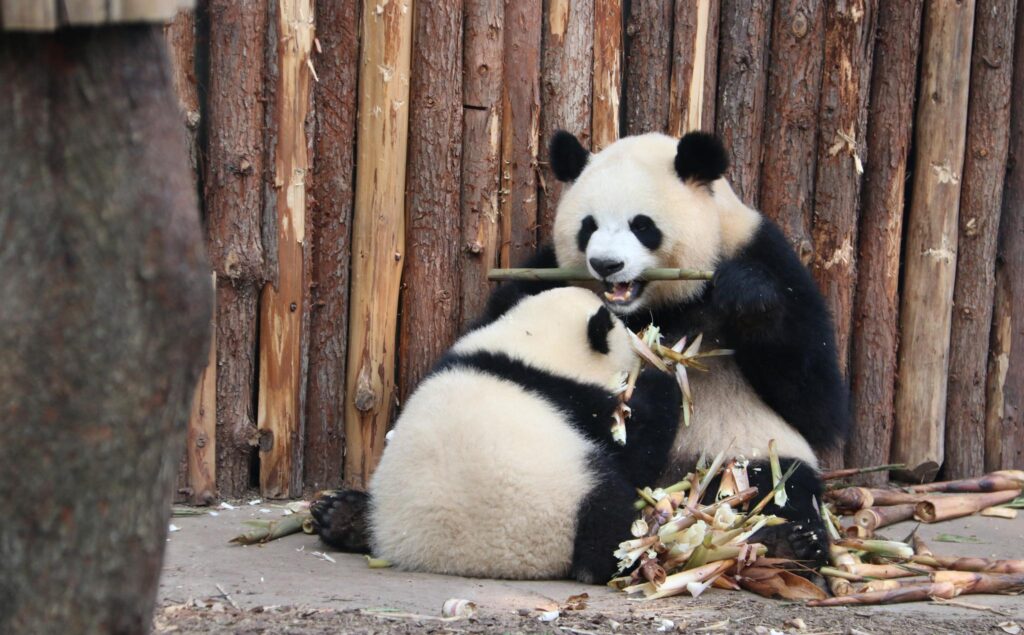
Why Visit Chengdu: A Chengdu Travel Guide for First-Timers
Picture this: it is 8am in Chengdu, and a giant panda is chewing on bamboo just a few meters away from you. Later that afternoon, you sit in a bamboo chair at a 100-year-old tea house, sipping jasmine tea while an old man gets his ears cleaned with a tiny tuning fork. That evening, you share a bubbling pot of spicy broth with strangers who become friends by dessert. This is the Chengdu travel guide you will want to bookmark before your trip — everything you need to plan the perfect visit, from pandas to hot pot, is right here.
Chengdu is not a city that rushes. With a population of over 21 million, it is one of the largest cities in western China, yet it moves at its own pace. Locals call it the “City of Leisure,” and once you spend a few days here, the nickname makes perfect sense.
Three things define the Chengdu experience. First, the pandas. The city is the only place on Earth where you can see giant pandas up close in a breeding center. Second, the food. Sichuan cuisine is legendary, and Chengdu sits at its heart. Third, the tea culture. Everywhere you walk, people gather over cups of tea, mahjong tiles, and long conversations.
If you are planning a trip to China, Chengdu deserves a spot on your itinerary. This our Chengdu destination page covers everything you need to know, from getting here to finding the best hot pot.
Best Time to Visit Chengdu
Timing is one of the most important factors in any Chengdu travel guide. Spring (March to May) and autumn (September to November) are the best seasons for visiting Chengdu. Temperatures stay mild, between 15°C and 25°C, and the skies are at their clearest. These months also line up with the pandas’ most active hours outdoors.
Summer brings heat and humidity. July temperatures often climb above 33°C, and the air feels heavy. That said, if you can handle the warmth, summer still works. Just plan outdoor activities for early morning.
Winter in Chengdu is damp and grey. The temperature rarely drops below freezing, but the lack of sunlight can feel gloomy. Fog is common. On the bright side, winter is low season, so you will find fewer crowds and cheaper hotels.
One important warning: avoid China’s national holidays at all costs. The Golden Week holidays (May 1-7, October 1-7, and Chinese New Year) bring enormous crowds to every major attraction. Ticket prices go up, and the experience goes downhill. For more details on seasonal planning, check our best time to visit China guide.
How to Get to Chengdu
Reaching the city is straightforward — Chengdu is one of the few Chinese cities with two international airports. Chengdu Shuangliu Airport (CTU) sits just 16 km from the city center and handles most domestic flights. Chengdu Tianfu Airport (TFU), which opened in 2021, is about 50 km southeast of downtown. It handles more international routes. Most travelers land at one of these two.
High-speed rail is another great option. From Chongqing, the train takes about 1 hour and 20 minutes. Leaving from Xi’an, the journey is roughly 3 hours. Meanwhile, from Shanghai, expect around 10 hours on the bullet train. For a full breakdown of routes and ticket booking, read our China high-speed train guide.
Good news for many international visitors: China offers a 240-hour visa-free transit policy for citizens of 54 countries. Under this policy, you can stay in Chengdu and 10 other cities across Sichuan Province for up to 10 days without a visa. This makes Chengdu an excellent stop on a multi-city China trip. For visa details and eligibility, see our China visa guide.
Top Things to Do in Chengdu
Any Chengdu travel guide will tell you this city packs a surprising amount into a compact urban area. The major attractions are spread across the city, but the metro system connects most of them. Here are the essential experiences.
1. See Giant Pandas at the Breeding Base
The Chengdu Research Base of Giant Panda Breeding is the number-one reason most travelers visit this city. The base is home to over 200 giant pandas, along with red pandas, black swans, and a variety of birds. It sits about 10 km north of downtown, and you can reach it by Metro Line 3.

Timing matters a lot here. The base opens at 7:30 am, and pandas are most active between 8 am and 11 am, when keepers feed them. However, after that, they usually sleep until late afternoon. If you arrive at noon, you will mostly see sleeping fur balls behind fences. Therefore, set your alarm early.
Importantly, you need to book tickets online in advance. The base covers 3.5 square kilometers, so wear comfortable shoes. A typical visit takes about 3 to 4 hours.
If you want a hassle-free morning, consider booking our Chengdu Panda & Hot Pot Day Tour. It includes hotel pickup, base admission, and a guide who knows where the pandas hang out. The tour also covers a Sichuan opera tea house visit and a stop at People’s Park later in the day.
The breeding program here has made real progress. According to UNESCO, giant panda numbers in captivity have grown steadily thanks to centers like this one. In fact, the species was removed from the endangered list in 2016, a direct result of decades of conservation work.
2. Watch Sichuan Opera Face-Changing
Sichuan opera is famous for one thing: bian lian, or face-changing. Performers swap painted masks in a flash, sometimes within a single blink. The art form dates back centuries, and it remains a huge draw for visitors.
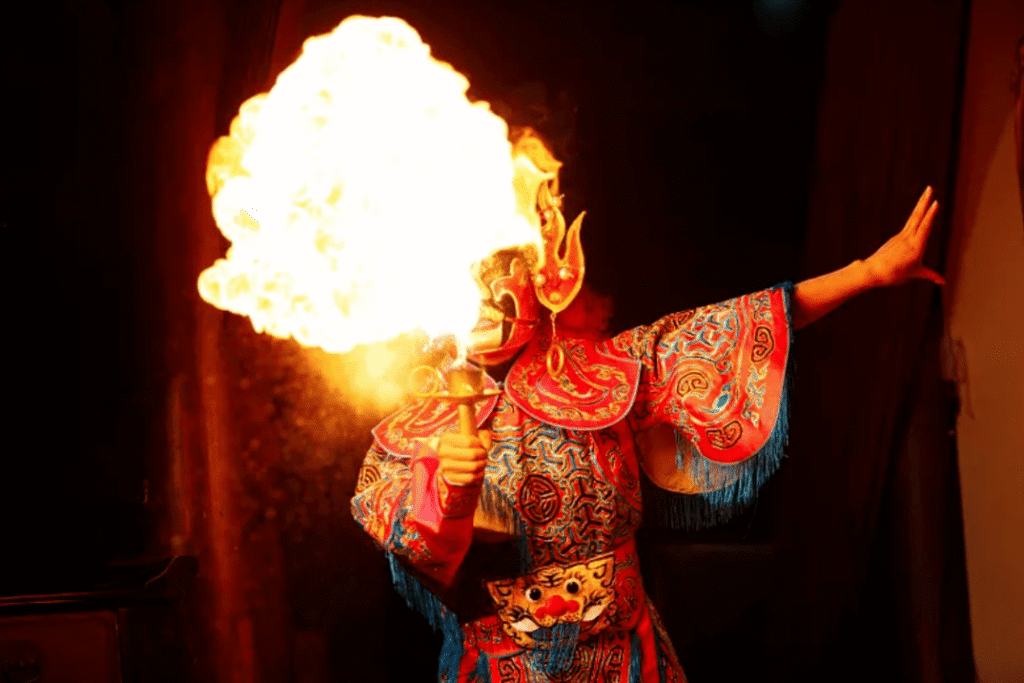
The best-known venue is Shu Feng Ya Yun (蜀风雅韵), located near the Cultural Park. A full show runs about 90 minutes. The theater itself has an old-school charm, with wooden benches and covered tea bowls.
If you are short on time, Jinli Ancient Street offers shorter 10-minute face-changing performances. These are less immersive but give you a quick taste of the art.
For a deeper experience, this guided day tour includes a backstage visit to a Sichuan opera tea house. You can see how the masks are made and learn about the history of the performance tradition.
3. Slow Down at People’s Park Tea House
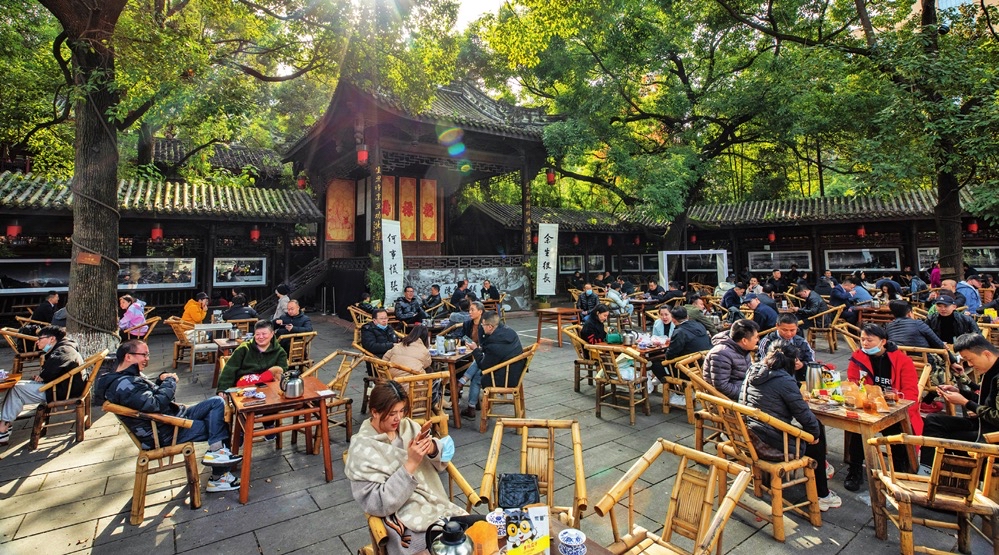
People’s Park (Renmin Park) sits right in the heart of Chengdu. Inside the park, Heming Tea House has been serving tea since 1923. It is an open-air space with bamboo chairs, low tables, and old trees overhead. Locals come here every morning, order a pot of jasmine or green tea, and stay for hours.
A cup of tea costs ¥15 to ¥18. For an extra ¥30 to ¥40, you can try the famous Chengdu ear-cleaning service. Yes, that is a real thing. A specialist uses small metal tools to clean your ears while you relax in a reclining chair. It sounds strange, but locals swear by it.
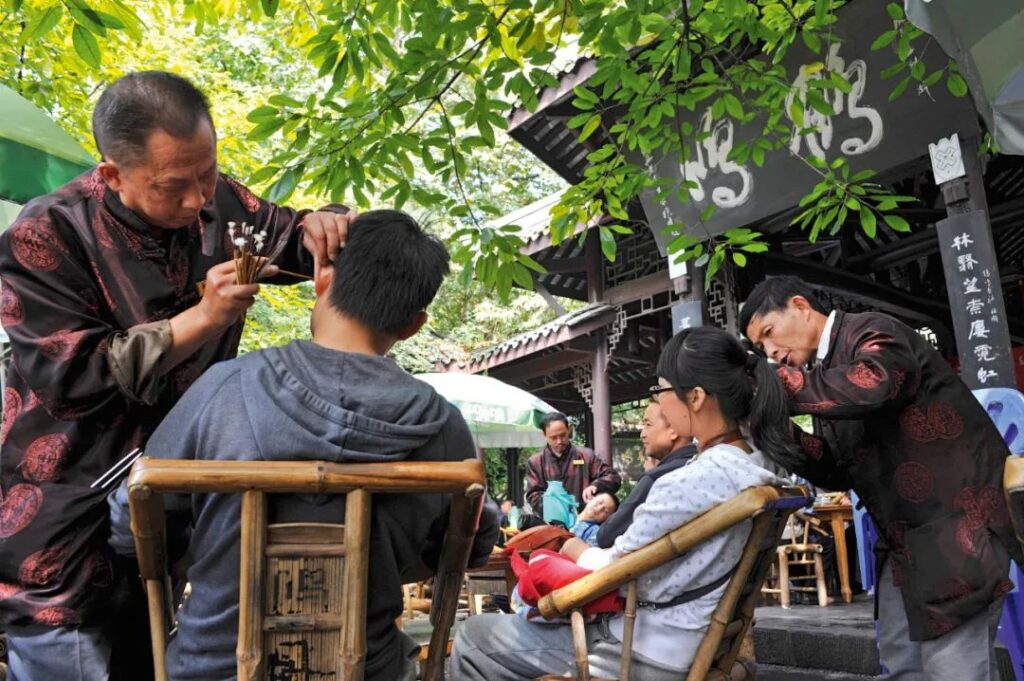
On any given afternoon, you will also see people playing mahjong, practicing calligraphy, or simply napping in the sun. Indeed, this is the Chengdu lifestyle at its finest — no rush, no agenda.
8. Play Mahjong Like a Local
Mahjong in Chengdu is not a tourist performance. It is a way of life. Walk through any residential neighborhood on a weekend morning, and you will hear the clatter of tiles from apartment windows, courtyard doorways, and shaded spots under trees. Chengdu has more mahjong tables per capita than almost any other city in China.
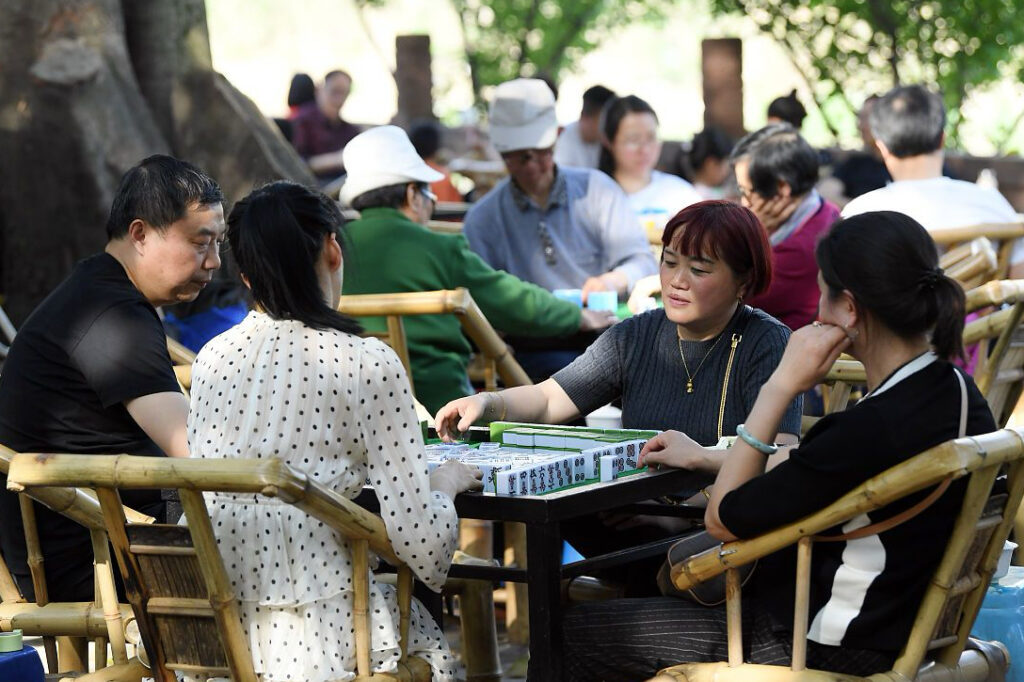
Locals play for fun, not high stakes. A typical game sits around a square table with four players, each building walls of tiles and drawing, discarding, and chatting over pots of tea. Games run for hours. The pace is slow, the conversation loud, and the tea never runs out.
So if you are curious, do not hesitate to ask your guide or a friendly local to teach you the basics. Fortunately, the rules are simpler than they look, and most Chengdu people are delighted to show a beginner the ropes. In fact, a few rounds of mahjong with locals over tea is one of the most authentic afternoons you will spend anywhere in China.
4. Walk Through Kuanzhai Alley
Kuanzhai Alley, or the Wide and Narrow Alleys, is a restored Qing Dynasty neighborhood. It consists of three parallel lanes, each with a different vibe. The wide alley focuses on food and snacks. Next door, the narrow alley features boutique shops and tea rooms. Finally, the third lane, called the Well Alley, has more modern cafés and art spaces.
Entry is free, which is a plus. The best time to visit is between 4 pm and 7 pm, when the lanterns light up and the crowds thin out a bit. Come on a weekday if you can. Weekend foot traffic gets heavy.
The alley is touristy, no question. But it is also well-preserved and atmospheric. If you go with the right expectations, you will enjoy the mix of old architecture and modern energy.
5. Explore Jinli Ancient Street & Wuhou Temple
Jinli Ancient Street runs alongside the Wuhou Temple, one of the most important Three Kingdoms heritage sites in China. The temple honors Zhuge Liang and Liu Bei, two key figures from the legendary era.
Jinli Street itself is free to enter, and the street comes alive after dark, when red lanterns line the walkways and street vendors sell Sichuan snacks. If you feel adventurous, try the dan dan noodles, sticky rice cakes, and spicy rabbit heads.
Most travelers recommend arriving after 7 pm for the best atmosphere. At that hour, the lighting is dramatic, the air smells of chili and sugar, and the crowds feel festive rather than overwhelming.
6. Eat Your Way Through Sichuan Hot Pot
Hot pot is not just food in Chengdu. It is a social event. A big pot sits in the middle of the table, divided into sections. The classic choice is the yuanyang guo, a split pot with spicy broth on one side and mild broth on the other. You order raw ingredients, dip them into the boiling broth, and eat everything communally.

Incredibly, Chengdu has roughly 30,000 hot pot restaurants, according to local industry data. Yet the best ones are rarely the famous chains you see on food blogs. Instead, look for small shops tucked inside residential compounds, where locals eat every night. The kind with plastic stools, handwritten menus, and a line out the door on a weekday evening. Those are the places worth finding.
Here are a few tips for first-timers. First, start with mild spice if your stomach is not used to chili. Additionally, order dipping sauces from the condiment bar to cool the heat. Finally, do not skip the lotus root, potato slices, and tofu, which soak up the broth beautifully.
If you want to try hot pot without the hassle of finding a restaurant, our Chengdu Panda & Hot Pot Day Tour includes a lunch stop at a local hot pot spot. The meal cost is not included in the tour price, but the guide takes you to a well-reviewed place.
7. Try Street Food Beyond Hot Pot
Sichuan food goes far beyond hot pot. The region is famous for mapo tofu, kung pao chicken, dan dan noodles, and zhong dumplings. In fact, Britannica notes that Sichuan cuisine is one of the four great culinary traditions of China, known for its bold use of garlic, chili, and the unique numbing Sichuan peppercorn.
For street food, head to Yulin Road or the snack stalls near Chunxi Road. When you see long queues, follow them — locals line up for a reason. A filling meal of dumplings, noodles, or skewers usually costs just ¥15 to ¥30. Additionally, keep in mind that many street vendors only accept mobile payment, so have your Alipay ready.
If you are curious about Sichuan snacks, here is a quick list of must-tries:
- Dan dan noodles: Thin noodles in a spicy, sesame-rich broth. Cheap and addictive.
- Zhong dumplings (钟水饺): Small pork dumplings drizzled with sweet chili sauce.
- Long copy hands (龙抄手): Wonton-style dumplings in clear or spicy broth.
- Guokui (锅盔): A crispy flatbread stuffed with spiced pork. Great for breakfast.
- Ice jelly (冰粉): A cold, sweet dessert jelly. Perfect after a spicy meal.
Day Trips from Chengdu
Chengdu makes a great base for exploring the surrounding region. Three day trips stand out.
Leshan Giant Buddha
The Giant Buddha of Leshan is a 71-meter-tall stone figure carved into a cliff face during the Tang Dynasty (713-803 AD). According to UNESCO, it is the largest pre-modern Buddha statue in the world and a World Heritage Site. The statue sits at the confluence of three rivers, and the view from the boat is spectacular.
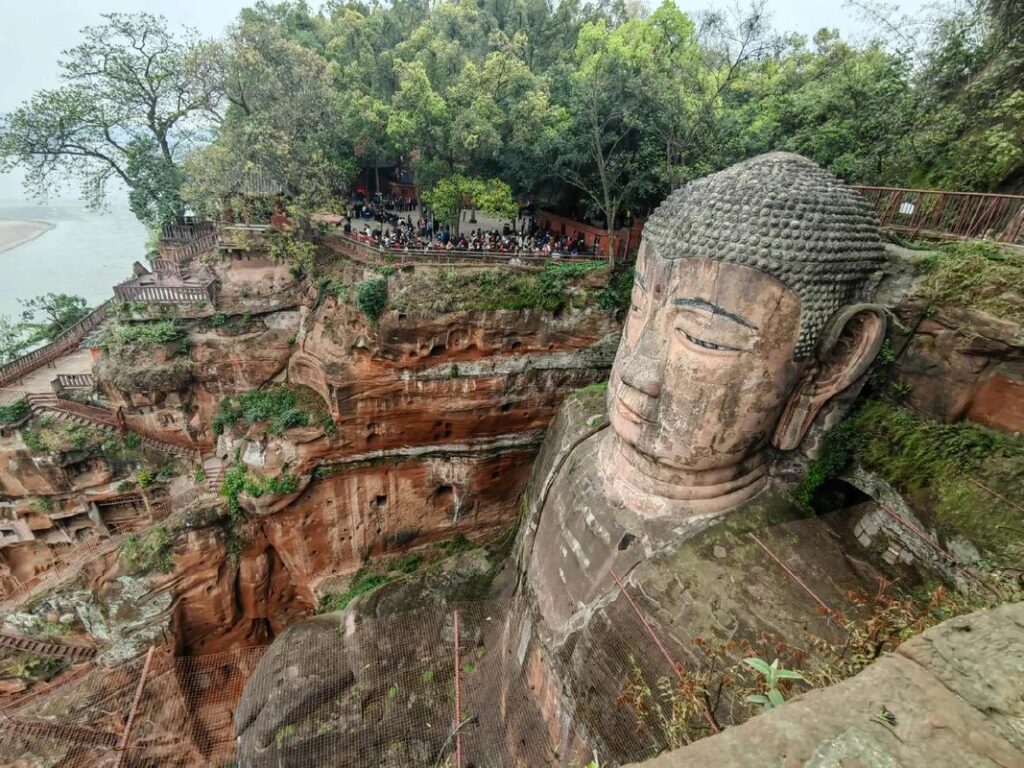
From Chengdu, a high-speed train reaches Leshan in about one hour. We recommend planning for a full day. Most travelers combine the morning hike with the afternoon boat ride for the best photos.
However, Leshan has more than just the Buddha. In fact, most visitors completely miss the Leshan Old Town citywalk — a charming route through narrow streets lined with Qing Dynasty architecture, local tea houses, and street food stalls that have been around for generations. It is the kind of walk where you stumble into a tiny restaurant, order a bowl of bobo chicken (钵钵鸡), and watch the river go by. Fortunately, our tours include this citywalk because it is where the real Leshan lives, far from the tour bus crowds.
If you want to combine Leshan with Mount Emei in one trip, our 2-Day Leshan Giant Buddha & Mount Emei Tour covers both UNESCO sites with a private guide and includes a hot spring evening at the foot of the mountain.
Mount Emei
Mount Emei is one of China’s four sacred Buddhist mountains. At 3,099 meters, it is the highest point in Sichuan. The summit, known as Golden Summit, offers sunrise views above the clouds. As a UNESCO World Heritage Site, the mountain also has temples scattered along the hiking trails.
Getting there is straightforward — the cable car takes you most of the way up. From there, a short walk leads to the Golden Summit. Along the trail, wild macaques are entertaining, but keep your belongings close. They are bold thieves.
Dujiangyan & Mount Qingcheng
Dujiangyan is an irrigation system built over 2,200 years ago that still functions today — truly an engineering marvel and a UNESCO World Heritage Site. Nearby, Mount Qingcheng is regarded as the birthplace of Taoism. The two sites sit just 30 minutes apart, so visiting them together makes perfect sense.

Conveniently, a high-speed train from Chengdu reaches Dujiangyan in about 30 minutes. After visiting the water project in the morning, you can take a short bus ride to Mount Qingcheng for an afternoon hike through bamboo forests and ancient temples.
For a stress-free day, our Dujiangyan & Mount Qingcheng Day Tour covers both UNESCO sites with a private vehicle and English-speaking guide, entering Dujiangyan from the top so you walk downhill the entire way. From $109 per person.
Getting Around Chengdu
A good Chengdu travel guide always starts with transport. Chengdu’s metro system covers most major attractions. A single ride starts at ¥2. The system currently operates over 10 lines, and new routes open regularly. Signage is in both Chinese and English.
Taxis and ride-hailing apps like DiDi work well throughout the city. A typical cross-town ride costs ¥20 to ¥40. Shared bicycles from Meituan and Hellobike are parked on nearly every corner.
For payment, most vendors accept mobile pay. You will need to set up Alipay or WeChat Pay before your trip. Our guide on how to pay in China walks you through the setup. Also, an eSIM or local SIM card is essential for staying connected. We cover all the options in our China eSIM guide.
Where to Stay
Location matters when planning your Chengdu travel guide itinerary. Here are three solid neighborhoods to consider.
- Chunxi Road / Taikoo Li area: The most central location. Steps from Metro Lines 2 and 3, surrounded by shopping malls, restaurants, and bars. Best for first-time visitors who want convenience.
- Near Kuanzhai Alley: A slightly quieter area with excellent food options. Walking distance to People’s Park and the Wide and Narrow Alleys. Good for travelers who prioritize atmosphere over nightlife.
- Wenshu Monastery / Luomashi area: Budget-friendly with solid hotel options. The neighborhood feels more local, with street food stalls and old temples. A 10-minute metro ride to the city center.
Most mid-range hotels in these areas cost ¥300 to ¥600 per night. Meanwhile, international chains are available near Chunxi Road. For hostels, expect ¥80 to ¥150 per bed.
Practical Tips
Payment Setup
Cash is rarely used in Chengdu. Nearly every vendor, from high-end restaurants to street food carts, relies on Alipay or WeChat Pay. Set up your mobile payment before you arrive. Our payment guide for foreigners has step-by-step instructions.
Language and Translation
English is not widely spoken outside major hotels and tourist offices, so download a translation app before your trip. Doubao AI (豆包) works well for real-time conversation translation. Google Translate is an alternative, though its offline mode is limited in China.
Managing the Spice
Sichuan food is hot. The numbing spice from Sichuan peppercorns hits differently from regular chili heat. If you are not used to it, start with mild options (微辣, wei la) and work your way up gradually. Keep tissue paper and water handy. When your mouth is on fire, a bowl of rice or a cold beer will do the trick.
Book the Panda Base Early
The panda breeding base limits daily visitors. During peak season, tickets sell out days in advance. Book online through the official WeChat mini-program or through a tour operator. Arriving before 8 am guarantees the best panda activity.
Stay Connected
Make sure you have mobile data for maps, translation, and payment. Many travelers use an eSIM for convenience. Check our China eSIM guide for the best options and activation steps.
Chengdu Travel Guide: Frequently Asked Questions
How many days do you need in Chengdu?
Most travelers spend 3 to 4 days in Chengdu to cover the city highlights and one or two day trips. If you plan to visit Leshan Giant Buddha and Mount Emei, add another 2 days. A full week gives you time to explore at the city’s natural pace without rushing between attractions.
What is the best month to visit Chengdu?
Spring (March to May) and autumn (September to November) are the best months. Temperatures stay between 15°C and 25°C, skies are clearer, and the panda base is at its most active. Avoid July and August — the heat and humidity make outdoor sightseeing uncomfortable.
Is Chengdu easy to get around without Chinese?
Not entirely. English is limited outside major hotels. Download a translation app like Doubao AI (豆包) before you arrive. The metro has English signage, and ride-hailing apps like DiDi work with an international phone number. Most hotels can call a taxi for you.
Can I see pandas if I only have one day?
Yes. The Chengdu Research Base of Giant Panda Breeding is inside the city. Book tickets online at least 3 days ahead during peak season and arrive before 8 am for the best panda activity. You can pair the morning visit with a hot pot lunch and a Sichuan opera show in the same day.
How much does a trip to Chengdu cost?
A budget traveler can get by on around ¥400–600 per day for hostels, street food, and metro. Mid-range travelers spend ¥800–1,200 per day for boutique hotels, restaurant meals, and occasional taxis. Private guided day trips start from around $159 per person.
Ready to experience Chengdu? Our three curated tours cover the best of the city and beyond: the Panda & Hot Pot Day Tour takes you to the breeding base, a local hot pot lunch, and a Sichuan opera tea house in one day; the Dujiangyan & Mount Qingcheng Day Tour covers two UNESCO sites in a single stress-free trip; and the 2-Day Leshan & Mount Emei Tour combines the Giant Buddha, a Leshan citywalk, and the sacred summit of Mount Emei with a hot spring evening. Pick the one that fits your schedule — or string them together for a full Chengdu experience.
Ultimately, Chengdu is a city that rewards slow travel. Spend a few days here, eat too much, drink too much tea, and let the pace rub off on you. By the time you leave, the pandas will have been waiting in the morning, the hot pot will have been bubbling at night, and somewhere in between, you will understand why locals never want to leave.