Open any stock photo site and search for “mountain.” Half the results come from China. Search “ancient wall” or “water town at dawn.” Same story. The country has been a quiet backbone of travel photography for years. Now, with 240-hour transit visas and easier payments, foreign tourists can finally move around and shoot freely.
Today, China holds 60 UNESCO World Heritage Sites, the largest total in Asia (UNESCO World Heritage Centre). Its land spans five climate zones. You can shoot desert dunes on Monday, bamboo forests on Wednesday, and a skyline of glass towers on Friday. A two-week trip can cover three or four very different zones.
This guide covers two kinds of photo trip. One is the classic photo journey, where you hold the camera and chase light. The other is the Hanfu or Qipao styled shoot, where you step into the frame yourself. Both are booming in China in 2027, and this guide is built around that year.
When to Come: The Seasonal Shooting Calendar
China is big. There is always somewhere in a perfect window.
- Spring (March to May) — rapeseed flowers blanket Yunnan and Jiangxi. Cherry blossoms open in Wuhan. Peach blossoms fill the Nyingchi Valley in Tibet. Water towns sit under thick morning mist. The Guangxi “San Yue San” singing festival falls in the third lunar month, usually April.
- Summer (June to August) — lavender fields glow purple across Yili in Xinjiang. The Yi Torch Festival lights up Liangshan in Sichuan in late July. Rice terraces in Yuanyang and Longji reach peak green. Rain is common in the south, which brings dramatic storm light.
- Autumn (September to November) — the peak season for most of China in 2027. Local weather data shows Huangshan sees cloud seas on more than 70 percent of clear mornings in October. The Great Wall at Jinshanling and the stone villages of southern Anhui turn amber under low sun. Red leaves peak across northern China in late October.
- Winter (December to February) — the Harbin Ice Festival, snow on the Great Wall, cormorant fishing on the Li River, and warm light in Xishuangbanna. Air is clean, prices are low, and crowds are thin.
As a rule, October is the top month if you can pick only one. The trade-off is the National Holiday week from October 1 to 7. Plan around that window and you get great weather with thin crowds.
Landscape Photography: Mountains, Walls, Waters and Terraces
China has the widest range of scene subjects in any single country. Four scenes top the wish list of visiting shooters.
Huangshan: Sunrise and Cloud Sea
Huangshan is the mountain that defined Chinese landscape painting. Its five wonders are odd pines, strange rocks, cloud sea, hot springs, and winter snow. Of these, the cloud sea is the one that wakes you at 4 a.m. without a word of complaint.

From Bright Summit and Cloud-Dispelling Pavilion, you watch an ocean of mist pour between granite peaks. The sun turns everything from blue to gold in about seven minutes. The scene makes you forget the cold.
Autumn gives the highest chance of cloud sea. Local weather data shows cloud seas appear on more than 70 percent of clear October mornings at Huangshan (Wikipedia — Huangshan). Winter gives you snow-dusted pines and almost no other visitors. Spring wraps the peaks in soft fog.
Two nights on the mountain is the minimum to catch a good sunrise. Our 2-day Huangshan tour is built around the sunrise and sunset loop with a confirmed mountain-top stay.
[IMAGE_PLACEHOLDER_1: Huangshan sunrise over cloud sea]
The Great Wall at Golden Hour
Badaling is where tour buses go. Mutianyu is where families go. Jinshanling is where shooters go. This section sits about two hours north of Beijing. It keeps the original Ming-era watchtowers and crumbling parapets. It also sits on a knife ridge. The ridge catches both sunrise and sunset light. The angle turns the stone warm and the sky dramatic.
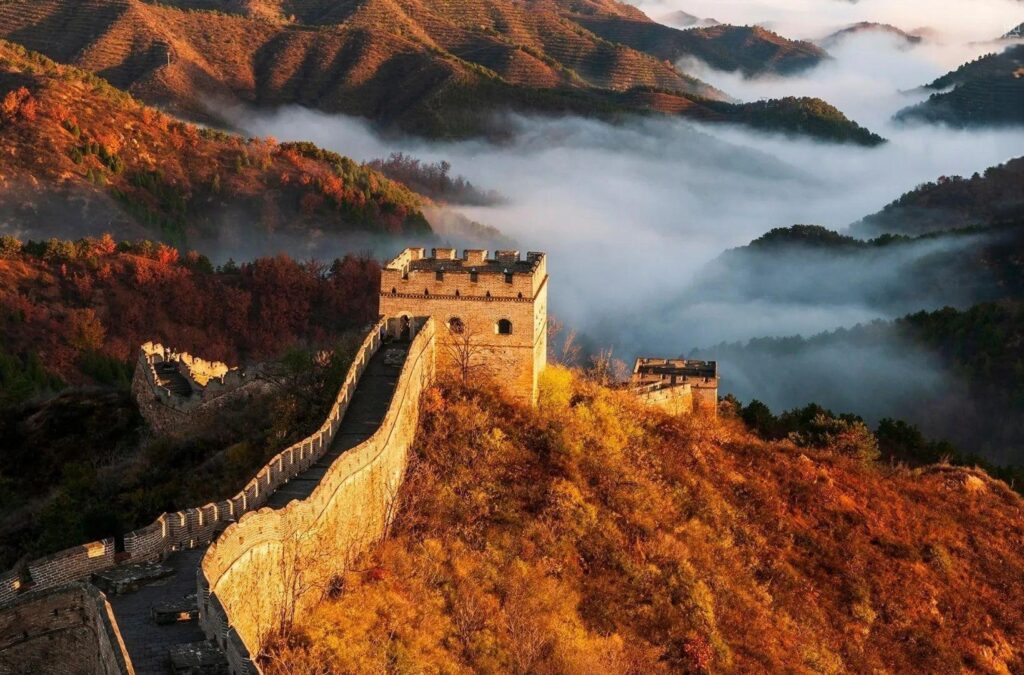
For the classic “wall disappearing into mist” shot, the best conditions are an autumn morning. Aim for dawn humidity around 80 percent. For the long-shadow shot with a single watchtower, sunset in October or early November is ideal. On a weekday in the shoulder season, you may have the wall almost to yourself.
A 24-70 mm handles most shots. A 70-200 mm lets you compress the watchtowers. A tripod is key for blue-hour frames after sunset.
Zhangjiajie: The Floating Mountains
The stone pillars in Zhangjiajie in Hunan are the real-life model for the floating mountains in Avatar. More than 3,000 pillars rise up to 200 meters, most wrapped in forest. On a misty morning, the lower half of each pillar vanishes, and the scene becomes a living ink painting.
April to June and September to November are the best windows for the cloud-peak look. Sunrise from Yuanjiajie is the top frame. Two days inside the national park is the minimum, and our Zhangjiajie hiking tour is built around this window.
Guilin and the Li River: Karst in Ink
The karst towers between Guilin and Yangshuo are the other half of China’s classic scene image. A bamboo raft drifts down the Li River with towers on both sides. The scene is the postcard that has sold a million trips. The best light is early morning or late afternoon, when the towers turn warm and the river goes glassy.

Yangshuo is the base. Rent a bike and ride through the rice fields for scenes no tour bus can reach. Xingping, about 40 minutes upriver, has the classic 20-yuan-note view point. Autumn and winter give the clearest air and the calmest water.
Rice Terraces at Mirror Season
From December to March, the Hani terraces of Yuanyang in Yunnan are flooded before planting. At sunrise, every terrace becomes a mirror reflecting the sky. The red earth of the paddy walls adds warmth. It is one of the most rewarding subjects for a shooter willing to travel off the main line.
The drive from Kunming takes about five hours. Long-zi tree and Duoyishu are the two classic sunrise view points. A 70-200 mm lets you pick out details. A wide-angle handles the grand panorama.
Styling Your Own Hanfu or Qipao Photo Session
There is another kind of photo trip now growing fast in China. It is not about you holding the camera. It is about you stepping into the frame. Dressing in traditional Chinese clothing for a styled portrait is now a top experience for inbound tourists. Whole studios, stylists and photo guides have grown up around it.
Hanfu and Qipao Portraits
In Xi’an, Luoyang and Beijing, foreign tourists now queue near the Forbidden City or the old city gates. They go there to have their Hanfu portraits done. In Xitang ancient town in Zhejiang, tourists rent Hanfu on the spot. They shoot against the white walls and canal bridges. A good stylist explains the cultural meaning of each piece. Sessions run 2 to 3 hours. The final frames are instantly shareable.
The same trend runs through the Qipao, the Shanghai cheongsam. A fitted Qipao portrait on the Bund, or in a French Concession lane, is among the most requested formats. Many studios in Shanghai offer English-speaking stylists and on-site retouching.
Cinematic and Adventure Shoots
Hanfu and Qipao are only two styles. The styled-shoot market in China now covers many cinematic and adventure scenes, all with pro photo crews on site.
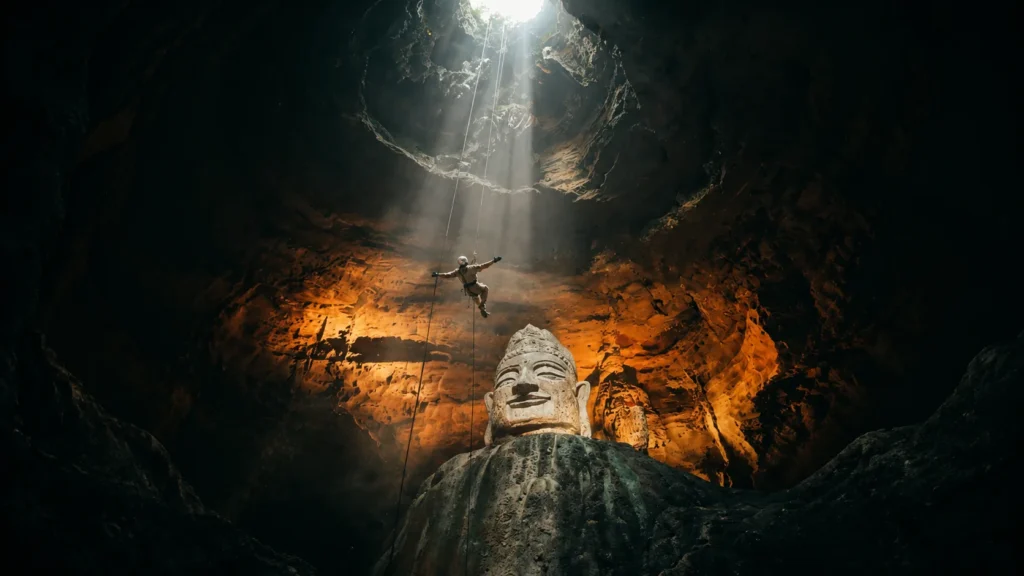
Our Tianyan Cave Rappelling tour is one example. You rappel down a 160-meter underground cavern while a pro crew shoots you from below. You get a set of adventure portraits you cannot get anywhere else. For a different mood, our Chongqing City Walk packages include neon cyberpunk shoots at Hongyadong, with the light-rail-through-building at Liziba as a backdrop.
Ethnic costume shoots are still a strong category. In Xijiang Miao Village, Langde and Zhaoxing Dong Village, visitors rent silver headgear and indigo jackets against the stilt-house terraces. Lijiang offers Naxi portraits in front of Black Dragon Pool, a Yunnan classic. Down in Xishuangbanna, Dai-style sarongs and flower crowns give a tropical feel. The shots are separate from landscape travel. They are now a main reason many first-time tourists come to China.
Cultural and Documentary Photography: Villages and Daily Life
If you are the one behind the camera and want to shoot raw cultural scenes, China still offers the richest street material in Asia. Three areas are standouts.
Miao and Dong Villages in Guizhou
Southeast Guizhou is the richest pocket of ethnic-minority culture you can reach without a permit. The Miao village of Xijiang Qianhu, the smaller Langde Miao village, and the Dong village of Zhaoxing all sit in this pocket. All are reachable by fast rail plus a short bus ride from Guiyang.
The Xijiang Miao noon costume parade is one of the top cultural scenes in China. At dusk, the Zhaoxing Dong drum-tower cluster looks like a storybook print. Nightly in the main drum tower, you can hear the Dong Grand Song, a form of choral singing recognized by UNESCO. Silver headdresses, indigo batik, and wooden stilt houses on the hillside give you endless street frames.
Always ask before shooting an elder or a child. A palm-down hand clasp gesture is a common way to ask permission.
Fenghuang, Pingyao and the Living Old Towns
Fenghuang in western Hunan has stilt houses reflected in the green Tuo River. Miao grandmothers sell pickles and wax-print cloth in the lanes. Russian and German visitors are now a regular sight along the riverside cafes. The best light is at dawn, before the souvenir stalls wake up.
Pingyao in Shanxi is a walled Ming-era merchant city. The streets, the courtyards, and the old banks have barely changed. Winter, with a light snow, is the frame that looks like an old postcard.
Our Shikumen and North Bund tour in Shanghai is the same idea in a different key. The lanes there still have real residents, not just photo sets. Laundry hangs on the line. Chess games run under plane trees. The red brick Shikumen arches give you a very Shanghai kind of street frame.
Urban Photography: Shanghai, Chongqing, Xi’an
China’s cities give you three distinct urban palettes.
Shanghai: Two Cities in One Frame
From the Bund, the Pudong skyline at dusk is a forest of tall towers. The towers are lit from within. Cross the river and you step into the Shikumen lanes of the North Bund and the French Concession. Laundry hangs between brick facades. Old men play chess under plane trees. The contrast is what makes Shanghai shots interesting.
Dusk from the Bund gives you one look. Blue hour in Lujiazui gives you another. Late afternoon in the Shikumen alleys gives you a third. Rain is your friend. Wet pavement at night doubles every neon reflection.

For the skyline, our Bund City Walk takes you along the best vantage points. The guide knows where the security lights let you set up a tripod.
Chongqing: The 3D City
Chongqing is the most vertical city in China. A light-rail train passes through the middle of a residential tower block at Liziba. At night, the Hongyadong stilt-house complex glows gold against the cliff. Where the Yangtze and Jialing rivers meet, a soft haze turns every sunset orange. The city is a gift for any shooter who likes urban geometry.
Night is the top hour. One hour out, the Wulong Karst gives you a 3-tier natural bridge and limestone canyons as a day-trip contrast.
Xi’an: Tang Dynasty Frames
The “Chang’an Twelve Hours” theme district near the Giant Wild Goose Pagoda has become the top portrait spot for inbound tourists. Guests dress in Tang-style robes, walk through set market streets, and shoot portraits that look like a scroll painting. VR experiences, AI costume swaps, and NPC quests add a playful layer. The Ancient City Wall, the Muslim Quarter, and the Terracotta Warriors round out a strong Xi’an set.
Festival and Folk Event Photography
China’s ethnic calendar gives you a festival to shoot almost every month. Four events top the list for visiting shooters.
- The Yi Torch Festival (late July, Sichuan Yizu Autonomous Prefecture) — fire dances, horse races, and night parades of torches through the mountains. Our Yi Torch Festival program is built around the peak night.
- Dragon Boat Festival (5th lunar month, usually June) — the Foshan Diejiao dragon-boat drift is the top race in the country. Boats corner at full speed with water spraying. Our Foshan Diejiao Dragon Boat tour puts you at the riverside bend.
- The Dai Water-Splashing Festival (mid-April, Xishuangbanna) — three days of open water fights in the streets, with peacock dances and lantern releases at night. Each frame is motion and color.
- Guangxi “San Yue San” (third day of the third lunar month) — Zhuang folk songs, bamboo-pole dances, and embroidered balls. Each edition draws nationwide coverage.
The Lantern Festival (15th of the first lunar month) and the Harbin Ice Festival (January to February) round out the winter calendar.

Photo Tips for Foreigners in China
A few planning moves pay off more than any gear upgrade.
- Avoid Chinese public holidays. The week of October 1-7 (National Day) is one of the three busiest periods. Chinese New Year and the May 1 Labor Day weekend are the other two. Domestic tourist volumes spike 3-5x, and the scenes you want to shoot fill with crowds. Shifting your trip by even one week can halve the people in your frame.
- Stay as close to the shoot spot as possible. Sunrise at Huangshan only works if you sleep on the mountain. Blue hour at Jinshanling only works if you are already on the wall before the light peaks. Build the trip around the view point, not the city center.
- Work with an agency that specializes in photography trips. They know the best vantage points and light windows. They arrange the photo guide on the ground. For styled shoots, they field the photo crew. Contact us and we will plan the trip around the shots you want.
Gear, Drones, and Permits
Bring what you would bring anywhere for similar terrain. A wide-angle handles landscapes and skylines. A 70-200 mm works for the Great Wall, canyon shots, and distant peaks. A fast prime is your friend for low-light streets. Tripods are fine in most scenic areas but banned inside some museums and temple halls. Check ahead of time.
Drones are the one thing to plan carefully. China requires all consumer drones over 250 grams to be registered with the CAAC. No-fly zones cover city centers, military areas, and most UNESCO heritage sites. Beijing is the strictest case. Since November 15, 2026, the entire city is a controlled airspace. Bringing any drone into Beijing is itself banned. Flying around the Bund, Huangshan or the Forbidden City will also attract attention. Before you pack a drone, confirm your model is on the approved list and check the latest rules for each city you plan to visit.
Shooting People
Street photography is generally welcomed in China. People are curious, not hostile. In ethnic minority areas such as Yunnan, Guizhou, Tibet, and Xinjiang, always ask before you take a close-up portrait. Offer to show the photo on your screen afterward. A smile and a thumbs-up in place of words works fine. Monks inside temples, and anyone during a ritual, should be shot only with clear permission.
Weather and Air Quality
Pick the right season for your target scene, and let the rest be a bit of luck. A golden-hour Great Wall in October is almost always a win, but a Huangshan cloud sea still depends on the weather that morning. Check the PM2.5 forecast the night before any long-shot day. On days when PM2.5 goes above 150, distant shots will lose contrast no matter how good the forecast. September and October historically have the cleanest air in eastern China. January and February can be haze-prone around Beijing and Shanghai.
A Note on Night-Sky and Milky Way Photography
For shooters who want the Milky Way or star trails, China has a growing list of certified dark-sky spots. The top picks for foreign visitors are Ningxia Shapotou (desert Milky Way), Qinghai Chaka Salt Lake (sky-mirror reflections), Sichuan Niubei Mountain (360-degree platform above the cloud line), and Tibet Ngari Dark Sky Park at 4,500 m. Ngari is among the darkest skies in Asia. Summer, especially late July to mid-August, is the prime window for the galactic center. A fast wide lens, a solid tripod, and a headlamp with a red filter are the core kit.
Common Mistakes to Avoid
- Not staying close to the shoot spot. Sunrise and blue-hour shots only work if you sleep near the view point. A city-center hotel turns a 4 a.m. start into a long drive. Pick the stay by the camera position, not the sightseeing loop.
- A non-photo agency schedules your shoot at midday. The light is flat, the tour groups peak, and the frames come home gray. A proper photo trip builds around the golden hours, not a generic sightseeing clock.
- Showing up for a festival without the local schedule. Torch parades, dragon-boat drifts, and folk rituals follow a local timetable that rarely matches the tourist brochure. On site, English may be hard to find. A local team reads the local calendar for you and stands by as your interpreter.
- Misjudging the shoot spot and the drive. Not knowing the area, you underestimate the travel time from the hotel to the view point. You end up arriving after the light window has closed. Always scout the route a day ahead, or let a local team plan it for you.
- Too much gear and no vehicle to ferry it. China’s scenic areas involve a lot of stairs and long walks. Without a car on standby, you carry the kit on your back for hours. Build the trip around a dedicated vehicle between the hotel and the shoot spot.
Plan Your Photo Trip With Us
A China photo trip rarely fits into a single spot. The best itineraries combine a mountain sunrise, a wall at golden hour, a Hanfu portrait in an old town, and a festival night at dusk. That means moving between cities on a tight shooting schedule. We build custom photo-focused trips for 2027 around your dates and your gear. We target the light that delivers the shots you came for.
Tell us what you want to shoot. We will line up the locations, the stays near the view points, and the guides who know the ground. Reach out here and we will draft a trip plan around your trip.